×
GreekEnglish

×
  • Politics
  • Diaspora
  • World
  • Lifestyle
  • Travel
  • Culture
  • Sports
  • Cooking
Sunday
18
Jan 2026
weather symbol
Athens 6°C
  • Home
  • Politics
  • Economy
  • World
  • Diaspora
  • Lifestyle
  • Travel
  • Culture
  • Sports
  • Mediterranean Cooking
  • Weather
Contact follow Protothema:
Powered by Cloudevo
> nature

Scientists have discovered what the very first animal on Earth was

Always one more new discovery

Newsroom January 16 01:40

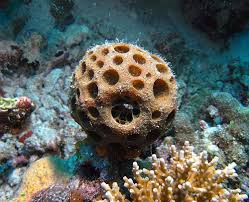
It’s been confirmed: the first animal to ever evolve on Earth is…the sea sponge. We realize this might be a little disappointing, but wait, there’s more! Real life sea sponges will never be as popular as Sponge Bob, but they are much more interesting than you might first assume.


The news broke in a research paper published on February 22 by MIT biologists. The comb jelly (which, at first glance, is more intriguing) was previously thought to be the first animal on Earth, but the new paper’s authors argue that life went back much, much further.


When the researchers found a biomarker (24-isopropylcholestane, a type of cholesterol) excreted by the sea sponge in rocks from the Cryogenian period, they were able to discern that the sponge was alive a staggering 640 million years ago, 250 million years earlier than previously thought. And, furthermore, the sea sponge still exists today, which is a mighty impressive feat.


So what else is so interesting about them? Well, first off, it’s important to note that they are indeed animals, not plants. In fact, they remain the most primitive animals living on the planet today: They are multi-cellular, but they lack organs, muscles, and nerves.


Despite being such simple creatures, there are more than 5,000 unique sponge species, ranging in size from a single inch to four feet long. No matter their size, sea sponges have the distinction of being the only animals in the world that don’t have any body symmetry at all.


And it turns out that, despite their appearance, they’re the romantic type as well. You might not think it, but they reproduce sexually in an act called “buddying,” in which sperm is released into the ocean by a sponge, and then nearby sponges suck it up, fertilizing an internal egg. Sea sponges really know how to get around.


If all that doesn’t give you a little more respect for the humble sea sponge, just keep in mind that the whole of evolution, including the fact that every one of us is here and alive today, might look a whole lot different without them.

>Related articles

Researchers claim they have discovered the “gay gene”!

How was cancer treated in ancient Greece?

Reptilian-mammal fossil changes the timeline of supercontinent breakup


Source


Ask me anything

Explore related questions

#nature discovery#sponge
> More nature

Follow en.protothema.gr on Google News and be the first to know all the news

See all the latest News from Greece and the World, the moment they happen, at en.protothema.gr

> Latest Stories

Erfan Soltani confirmed alive by Iranian Human Rights Group after days of uncertainty

January 18, 2026

Rescue operation underway for eight hikers on Mount Taygetus; four injured

January 18, 2026

Piers Morgan recovering in hospital after serious fall in London

January 18, 2026

Prime Minister Mitsotakis’ agenda: From talks with farmers’ representatives to Davos for investment outreach

January 18, 2026

Iraq veterans report long-term health concerns after a lack of medical screening for toxic exposure

January 18, 2026

Skirtsos: ‘After years of efforts, the first results on maritime safety are starting to become visible’

January 18, 2026

Politico: Europe for the first time considers tough response to Trump on Greenland tariffs, what is the Anti-Brexit Act

January 18, 2026

The backstory behind Trump’s decision not to attack Iran: The camps in the White House, the SMS from Tehran, and the calls from Arab allies

January 18, 2026
All News

> Economy

Greek exports broke records with a record 37 billion euros

With one of the strongest performances in the last decade for Greek non-oil exports, while a new upward cycle is expected in 2026

January 18, 2026

Where affordable housing falls short in Greece: IOBE proposes a cap on rent increases

January 17, 2026

Greek firms secure key roles in Libya’s reconstruction

January 16, 2026

Latsis Group: This is the new project of Aura Residential’s 219 apartments in Elliniko

January 16, 2026

Industry: Energy deadlock after Commission’s “no” to Italian pricing model

January 16, 2026
Homepage
PERSONAL DATA PROTECTION POLICY COOKIES POLICY TERM OF USE
Powered by Cloudevo
Copyright © 2026 Πρώτο Θέμα