




A top aide to Turkish President Recep Tayyip Erdogan hinted Wednesday that U.S. commandos in northern Syria could be targeted by Turkish rockets if they continue to work with Kurdish fighters along the border with Turkey.
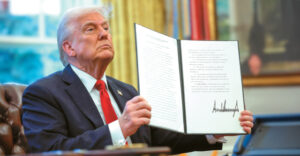
The comments by Ilnur Cevik, a senior political advisor to Erdogan, came the same day the president sat down with Russian President Vladimir Putin to discuss plans for “safe zones” meant to stop the violence in Syria. And they come two weeks before Erdogan visits Washington for his first meeting with President Donald Trump.
If the Kurds and Americans continue to work together, Cevik said during a radio interview, “we won’t be considering the fact that there are armored American vehicles…All of a sudden, by accident, a few rockets can hit them.”
The veiled threats for a NATO ally to potentially use force against U.S. troops highlight just how risky and complicated U.S. intervention in the Syrian civil war has become, and could further sour relations between Washington and Ankara that have already been strained in the wake of a failed 2016 coup in Turkey.
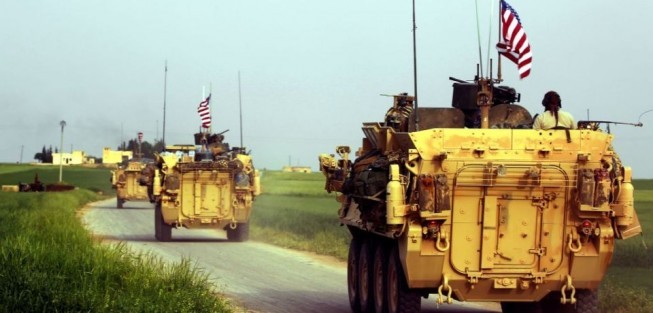
For weeks, U.S. Army Special Forces troops have been a visible presence in Kurdish areas of northern Syria, first showing up in the town of Manbij which was being threatened by Turkish-backed Syrian Arab fighters. Over the weekend, Americans troops were again photographed driving through the town of Qamishli, near the site of last week’s Turkish airstrikes which killed 18 U.S.-backed Kurdish militias.
The U.S. show of force is a very public reminder of American support for the Kurds, who make up a majority of the Syrian Democratic Forces, a 50,000-strong collection of local militias currently moving on the Islamic State stronghold of Raqqa. U.S. military commanders say the Kurds are the only viable military option to defeat ISIS on the ground in Syria.
Ankara is deeply uneasy over the continued U.S. relationship with Kurdish YPG in northern Syria, who the Turks consider to be terrorists. Further muddying the picture, Russia has also moved some forces into northern Syria, and have forged some local agreements with the Kurds, which has also alarmed the Turkish government.
Col. John Dorrian, spokesman for the U.S.-led coalition in Iraq and Syria, said the Americans were only deployed “because we had heard of reports of skirmishes between Turkish forces and our partner forces around the border.” U.S. commanders wanted to “assess these reports for ourselves, so that we can determine what is the appropriate next step and make,” he said.
Meanwhile, Trump and Putin spoke about Syria by phone on Tuesday, and agreed to work to “find ways to stabilize the ceasefire and make it durable and manageable,” according to a readout from the Kremlin.
Following his meeting with Erdogan at the Russian report town of Sochi on Wednesday, Putin pressed his ambitions for Syria further, calling for the creation of “safe zones,” something he said he discussed with President Trump. The White House readout of the call made no mention of that part of the discussion.
Four specific areas in the western part of the country would become “no-fly” zones, Putin said, save for operations against the Islamic State or al Qaeda-related groups.
That proposal went nowhere at peace talks in Kazakhstan between the moderate Syrian opposition, the Syrian regime, Russia, Iran, and Turkey. Representatives of the Syrian opposition walked out of the talks Wednesday over continued Syrian government bombing of hospitals and civilian targets, and the role Iran is playing in the Syrian civil war.
“Iran is an aggressor state, and enemy of the Syrian people. It is part of the problem and we do not accept any role in the present and future of Syria as a guarantor or sponsor,” a statement from the opposition read.
The United States is an observer at the talks and is represented by State Department’s Acting Assistant Secretary for Near Eastern Affairs, Stuart Jones. A State Department official confirmed to FP that Jones met Wednesday with all of the participants of the talks, “excluding the Syrian regime and the Iranians.”
Russia expressed hope that a ceasefire memorandum can still be signed Thursday, and that opposition representatives would come back to the table.
Even if an agreement is signed however, there is little to suggest that it would be any more effective than previous failed ceasefires, especially with no clear way to keep Syrian jets from bombing civilians.
“There is no real basis for people to believe that this is going to be sustainable,” said Charles Lister, senior fellow at the Middle East Institute. “It’s another agreement based entirely on trust, and there’s no trust between the forces on the ground.”
Ask me anything
Explore related questions