

×
GreekEnglish

×
  • Politics
  • Diaspora
  • World
  • Lifestyle
  • Travel
  • Culture
  • Sports
  • Cooking
Saturday
17
Jan 2026
weather symbol
Athens 8°C
  • Home
  • Politics
  • Economy
  • World
  • Diaspora
  • Lifestyle
  • Travel
  • Culture
  • Sports
  • Mediterranean Cooking
  • Weather
Contact follow Protothema:
Powered by Cloudevo
> Civilization

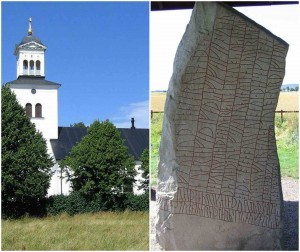
Once thought to depict heroic Viking deeds, the Rök Runestone is being investigated in a new light (VIDEO)

The Rök Runestone was used as Church building material in the 12th century, and it stayed there until 1843!

Newsroom May 15 08:45

The Rök Runestone doesn’t appear to describe great heroics deeds from the Viking period, but instead seems to refer to itself.

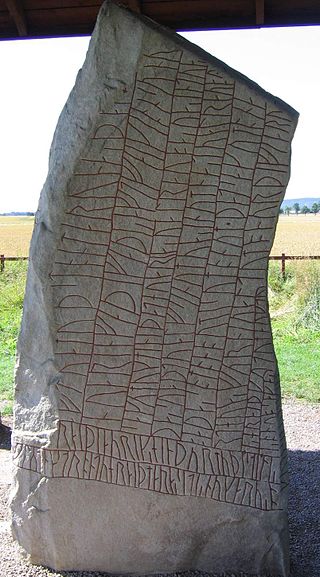
The stone was cut in the 800s in the province of Östergötland, Sweden and it is the world’s most known and visited runestone. The surface has been etched in runes that contain numbers, and for a long time, it was thought that its interpretations centered around heroes, kings, and deeds. It was considered as the hardest-to-understand piece of runic history due to the long length of the runic inscriptions.
r2

(The front of the stone. The beginning of the inscription is read by tilting your head to the left)


Per Holmberg, who is an associate professor of Scandinavian languages from the University of Gothenburg, believes he has solved the ancient riddle and states that it was not so hard to solve it as everyone first thought.

It seems that you need to read the riddles in daylight and follow them numerically around the stone block. Even ten years ago the linguist Professor Bo Ralph indicated that a possible linguistic error had been made in the previous readings of the runestone.
r3

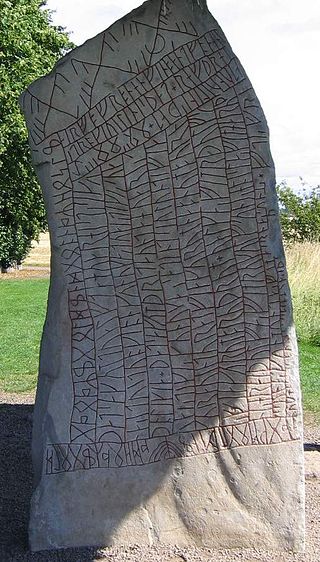
(Rök Runestone)


The Rök Runestone was used as Church building material in the 12th century, and it stayed there until 1843, when construction workers found out that the funny-shaped rock had etchings on all five sides. They drew a sketch of what they saw and re-embedded the stone back into the wall.

Finally, in 1862 the stone was removed and put on display in the churchyard, where it stands today. It was a very common practice to recycle runestones into building materials in Christian churches. Etymologists have traced the name of the stone back to the people who discovered it on the wall; they had named it after the nearby village. The village was probably named after the rock before it ended up in the wall, and then the rock was named after the village in 1843.
r4

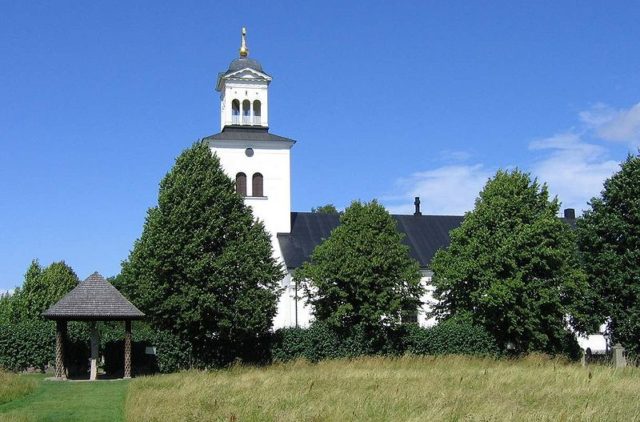
(The stone is housed under a roof and is located near the church in which it was discovered)


Holmberg used the study of social semiotics to help decode the runes. This is a theory about using language as a potential for creating meanings in a variety of texts and contexts. In the past, the researchers have read it in the wrong order, as they had assumed the work was about heroes and the only way to make that fit is by reading it out of order, Mail Online reported.

>Related articles

“All cash”: Netflix is preparing a strategic move to accelerate its $83 billion deal with Warner Bros.

Why Gen Z is returning to religion: what new research in the United Kingdom shows

Natalia Kapodistria, the last descendant: “The film was extraordinary — It took my breath away”

The actual message of the runestone might be about how writing gives us the opportunity to commemorate those who have passed away.

Source

Ask me anything

Explore related questions

#archaeology#culture#Rök Runestone#runes#sweden#vikings
> More Civilization

Follow en.protothema.gr on Google News and be the first to know all the news

See all the latest News from Greece and the World, the moment they happen, at en.protothema.gr

> Latest Stories

War, diplomacy, or insurrection: What’s next in Iran

January 17, 2026

New tensions in the Middle East as Trump invites regional leaders to the Gaza Peace Council

January 17, 2026

Weather: A return to winter in the coming days – Cold and strong northerly winds – Kolydas’ post

January 17, 2026

A view of Nikolaos Stasinopoulos of Viohalco – The “enduring imprint” of Greece’s greatest industrialist

January 17, 2026

The horror of the “Tariff of the Dead”: how the Iranian regime prices the bodies of protesters

January 17, 2026

Mitsotakis on the Karystianou party: “There is a long distance between being the parent of a tragedy victim and being the leader of a political party”

January 17, 2026

Patras in carnival mode – This evening, the city’s official opening ceremony

January 17, 2026

Greenland as the first line ofdefense for the U.S. and NATO:

January 17, 2026
All News

> Economy

Where affordable housing falls short in Greece: IOBE proposes a cap on rent increases

The factors that exacerbate the housing problem in Greece, international practices and proposals for the Greek housing market

January 17, 2026

Greek firms secure key roles in Libya’s reconstruction

January 16, 2026

Latsis Group: This is the new project of Aura Residential’s 219 apartments in Elliniko

January 16, 2026

Industry: Energy deadlock after Commission’s “no” to Italian pricing model

January 16, 2026

ENFIA discounts explained: How home insurance unlocks up to 20% off – 21 answers from AADE

January 16, 2026
Homepage
PERSONAL DATA PROTECTION POLICY COOKIES POLICY TERM OF USE
Powered by Cloudevo
Copyright © 2026 Πρώτο Θέμα