

×
GreekEnglish

×
  • Politics
  • Diaspora
  • World
  • Lifestyle
  • Travel
  • Culture
  • Sports
  • Cooking
Friday
16
Jan 2026
weather symbol
Athens 11°C
  • Home
  • Politics
  • Economy
  • World
  • Diaspora
  • Lifestyle
  • Travel
  • Culture
  • Sports
  • Mediterranean Cooking
  • Weather
Contact follow Protothema:
Powered by Cloudevo
> technology

Scientists overlooked a major problem with going to Mars — and they fear it could be a suicide mission

The scientists stress more research is needed before a crewed mission to Mars

Newsroom June 30 05:56


Scientists have long known high levels of radiation exists on Mars. But could it be so high that humans won’t be able to handle when we get there?

Going to Mars may be more dangerous than we thought. The major problem is high-energy space radiation. Scientists know that cosmic rays can damage DNA. They had just overlooked how bad it could get.

A team re-examined how damaged DNA can cause cancer. They then estimated levels of radiation exposure in space and on Mars. Their results are devastating.

The risk of cancer on Mars is twice as high as previously thought.

It comes down to how damaged DNA spreads throughout the body. A detailed study in mice reveals a sinister side to radiation. Damaged DNA doesn’t just keep to itself.

It sends signals to nearby healthy cells, which triggers the healthy cells to mutate, which could cause more cancer.

Previous models hadn’t accounted for this domino effect. Even radiation shielding only moderately reduces the risk. Luckily on Earth, we’re protected from this danger.

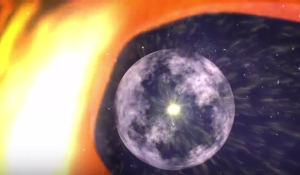
Earth’s magnetic field traps most harmful space radiation. But in deep space, and on Mars, there is no such protection.

Right now, there’s limited studies of just how great this risk is. The scientists stress more research is needed before a crewed mission to Mars.

>Related articles

Elon Musk: Don’t save for retirement – It won’t matter

Sick astronaut on mission – NASA considers early return of International Space Station crew

NASA published a new map of the universe; the “SPHEREx” space telescope changes the data landscape

The big question now is:  if the risk is too great, will we still try?

Source

Ask me anything

Explore related questions

#dna#Mars#nasa#planet exploration#planets#radiation#science#space#technology
> More technology

Follow en.protothema.gr on Google News and be the first to know all the news

See all the latest News from Greece and the World, the moment they happen, at en.protothema.gr

> Latest Stories

One dead after train–bus collision at the Port of Hamburg – see photos

January 16, 2026

President of Air Traffic Controllers: Another communications blackout possible in the near future

January 16, 2026

Trump threatens tariffs against those who oppose U.S. plans for Greenland

January 16, 2026

X is down, thousands report problems

January 16, 2026

“Her father cut her hair because she asked to go to a hair salon, they never gave her money”: New testimonies about Laura

January 16, 2026

Rama persists after rant at Greek journalist and questions the link between “Greek speakers” and Plato and Aristotle

January 16, 2026

CIA chief in Venezuela meets with Rodriguez

January 16, 2026

Less alcohol and lower speeds with the new Highway Code and strict fines

January 16, 2026
All News

> World

One dead after train–bus collision at the Port of Hamburg – see photos

Ten people were injured in the collision, including the bus driver, who is in critical condition

January 16, 2026

Trump threatens tariffs against those who oppose U.S. plans for Greenland

January 16, 2026

X is down, thousands report problems

January 16, 2026

Rama persists after rant at Greek journalist and questions the link between “Greek speakers” and Plato and Aristotle

January 16, 2026

CIA chief in Venezuela meets with Rodriguez

January 16, 2026
Homepage
PERSONAL DATA PROTECTION POLICY COOKIES POLICY TERM OF USE
Powered by Cloudevo
Copyright © 2026 Πρώτο Θέμα