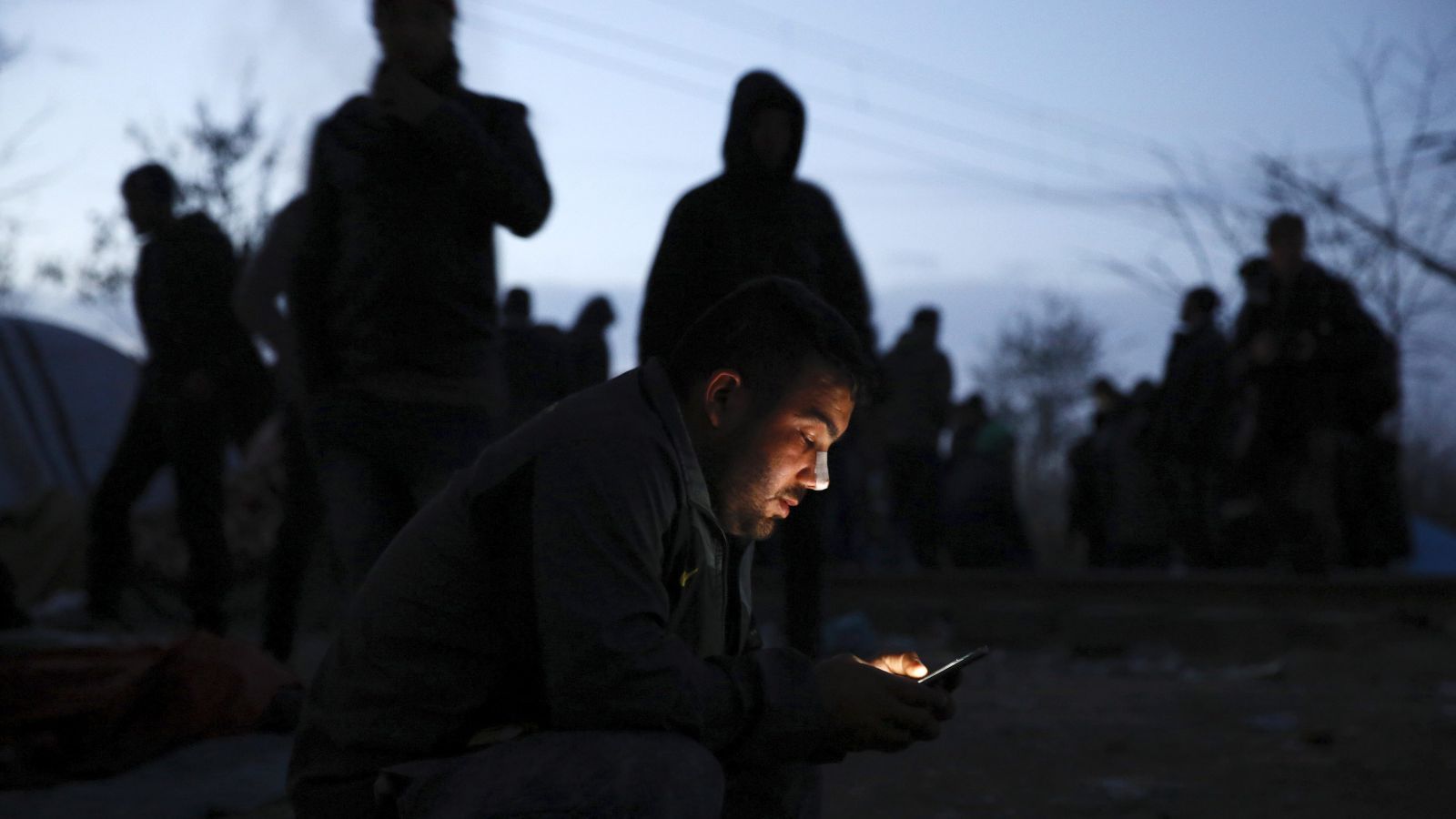
The continuing gush of refugees from troubled areas around the world has been catching governments around the world by surprise.
In 2014, US immigration authorities were overcome by a wave of Central Americans immigrants, many of them women and children fleeing violence and poverty at home. Farther south, in Mexico, the city of Tijuana was taken aback by the arrival last year of thousands of US-bound Haitians, some of whom had to temporarily sleep in the streets. And in Europe, officials were unprepared to handle the biggest refugee crisis in recent memory, the exodus of hundreds of thousands of citizens from Syria and other conflict-torn countries in 2015 and 2016.
Had these governments been monitoring Google searches, they might have been better prepared for what was coming—at the very least in the case of Europe. A study released by the Pew Research Center this week found that the search terms used by Middle Easterners en route to Europe were pretty close predictors of their movements.
While traveling, many immigrants carry mobile phones and use them along the way to navigate their way. Because more than a third of the refugees were from Arabic-speaking countries, the researchers were able to isolate Google searches by language—and follow their digital trail.
The Pew analysis starts off in Turkey, a springboard for the refugees’ journey. Using Google Trends, a free tool that tracks searches by volume, language, and location, they looked at how often Arabic speakers in Turkey used the search term “Greece.” Those searches started to climb steeply at the beginning of the summer of 2015. A couple of months later, tens of thousands of immigrants were landing on Greek shores.
The searches even conveyed how and at what time of the day the travelers planned to leave. The term “smuggler” was often paired with “Greece,” and the searches peaked in the middle of the night, when migrants often started their trips.

The “Greece” searches also mirrored the immigrant caravan as it moved farther west, and predicted many of the ups and downs of asylum applications in European countries, as the chart below shows.

The Google data followed the refugees to their final destination. Asylum applications in Germany closely tracked Arabic-language searches for “Germany.”

Search volumes and applications ultimately diverged, as the immigrants settled in Germany but continued to Google the name of the country, according to the researchers.
This gap is just one example of the limits of using Google Trends as a government tool to prepare for immigrant surges.
Another challenge is that Google Trends does not disclose the most popular search terms by language, so authorities wanting to use it to track immigrants would already need to have a good understanding of their trajectory in order to pick the most telling search terms. That’s going to make it trickier to track people trying to sneak into countries rather than refugees arriving at foreign borders by the thousands, as in the Pew example.
Because the Middle Eastern refugees spoke a different language than the locations along the route, it was also easier to separate their searches from those of non-refugees. Distinguishing Spanish-language searches made by Central Americans in Mexico, for example, would be much harder.
Still, the findings suggest it might be useful for governments to start looking at Google search trends in addition to the other methods they use to map immigration flows. US Border Patrol already looks for physical footprints in the sand along the US-Mexico border to determine how many immigrants cross it. Digital footprints may provide even more clues.
Ask me anything
Explore related questions