




A few weeks before Thursday’s attack in Barcelona, the Islamic State’s main online magazine posted an illustrated article with advice on acquiring a special kind of truck — specifically, the kind best suited for mowing down large numbers of pedestrians.
The “ideal vehicle,” the article in Rumiyah said, would be “large in size, heavy in weight,” and with a raised chassis that can clear curbs and barriers. It also should be “fast in speed, or rate of acceleration,” the magazine said, to ensure maximum momentum before striking.
Whether the men behind Thursday’s attack in Barcelona saw the article is unknown, but they appear to have tried to follow the advice to the letter. The suspects sought to rent a large, heavy truck — later opting for a cargo van only because they lacked the required permits — and then drove to a plaza crowded with pedestrians, precisely as the article instructed.
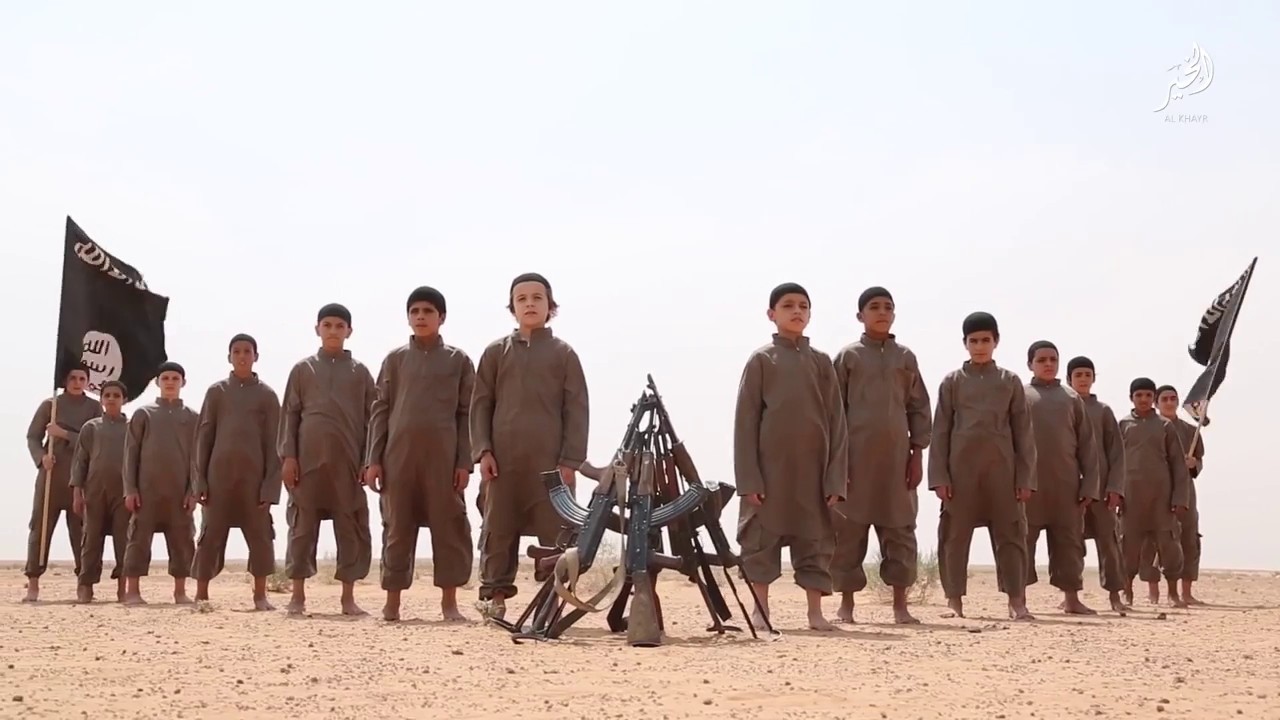
Spanish authorities are still investigating whether the killings in Barcelona were directed by the Islamic State, but terrorist experts say that the group’s stillformidable propaganda machine, with its detailed prescriptions on how to kill large numbers of innocent people, remains a principal driver of terrorist acts around the world, even as the militants suffer crippling losses on the battlefield.
Although the Islamic State has lost more than half of its former sanctuary in Iraq and Syria, its Internet presence remains strikingly robust, analysts say. In the weeks preceding the Barcelona attack, the terrorist group issued at least a dozen new videos or online articles a day, most of them aimed at rallying supporters or encouraging sympathizers to kill and maim in its name. Many of the recent postings have explicitly urged followers to turn trucks and vans into weapons of terror.
Attacks like the one in Barcelona are painful reminders that the Islamic State is “more than a collection of territories” — it is also a virtual network that inhabits swaths of cyber-terrain that are “just as consequential as the spaces it holds in Syria, Iraq and elsewhere,” said Rita Katz, founder of the SITE Intelligence Group, a private company that monitors jihadist websites around the world.
“It cannot be stressed enough how much ISIS needs the Internet to push its propaganda out to the world,” said Katz, using another name for the Islamic State. “The world can win all the military battles it wants in Iraq and Syria, [but] the group will persist until its propaganda machine is effectively blocked.”
The Islamic State quickly claimed responsibility for this week’s attacks along Spain’s popular northeastern coast, hailing “soldiers” of the caliphate who killed at least 14 people in separate attacks in Barcelona and the nearby resort town of Cambrils. Operational links with the assailants, however, had not yet been independently established. Islamic State officials have occasionally sought to take credit for strikes by lone wolves who were inspired by the group’s propaganda but received little or no practical support.
A new posting on Friday on a pro-Islamic State social media channel urged more such attacks, appealing to supporters to create Barcelona-like mayhem in cities around the globe.
“No need to travel the world,” stated the posting on the social media messaging service Telegram. “Just pick the main city. Find a hub spot for tourists. Choose you (sic) weapon.”
The continuing incitements defy years of efforts to silence the group’s propaganda efforts online. Indeed, U.S. officials say the Islamic State’s information networks have suffered steep losses in recent months, because of military attacks and improved policing by social media companies to block jihadists’ messages.
With the fall of former Iraqi strongholds such as Mosul and Fallujah, the group has lost studio and production facilities as well as at least a half-dozen key officials who helped direct propaganda campaigns, U.S. counterterrorism officials say. As a result, the number of social media channels used by the militants has plummeted in the past two years, from 40 active sites in 2015 to just 19 by this past spring.
Still, even in its diminished form, the group’s media arm remains remarkably prolific, producing on average about 20 unique media products every day, from videos showing executions of hostages to step-by-step instructions for building a bomb, according to an analysis this week by two scholars with the Netherlands-based International Center for Counter-Terrorism in The Hague. The analysis, published by the national security website War on the Rocks, says the volume and quality of the jihadist content is testament to an extensive, sustained investment by an organization that has long recognized the power of the Internet to attract followers and spread ideology.
The group’s senior officials have been deliberately preparing for the loss of the physical caliphate by pouring still more resources into its online network, to “ensure that its ideology will live on even as its territorial sway declines,” the article states.
“They’ve invested strategically in this capability and it’s paying off, in terms of longevity,” said Colin Clarke, a political scientist with the nonprofit Rand Corp., who co-authored the essay with Charlie Winter, a senior research fellow at Kings College London. The crumbling of the group’s physical strongholds means that the propaganda campaign is becoming more important as a way to perpetuate the caliphate as an eternal ideal, and to thus “keep the drumbeat going,” Clarke said in an interview.
The group’s messages have shifted in recent months, experts say, reflecting changing circumstances. The heavy rotation of videos extolling the virtues of life inside its self-proclaimed caliphate in 2015 have moved to more warlike missives focused on terrorist attacks against the West, analysts say. Taken as a whole, the messages suggest that the terrorists fully expect to continue to fight, though the nature of the battle will change, said Tara Maller, a former CIA military analyst and a senior policy adviser at the Counter Extremism Project, a nonpartisan organization that promotes strategies to counter extremist ideology.
“It shows that the ‘virtual’ caliphate is going to continue, and actually seems to be operating at a high level,” Maller said. “So it’s not a surprise that they are continuing to try to inspire attacks overseas.”
The enduring nature of the propaganda campaign should dispel any notion that the defeat of the Islamic State is at hand, now that the group’s Syrian and Iraqi sanctuaries have been significantly undermined through the loss of territory, Maller said.
“We need more than just a military effort, because safe havens also exist online,” she said. “We shouldn’t assume that this group is going away just because we’re beating them up on the battlefield.”
Ask me anything
Explore related questions