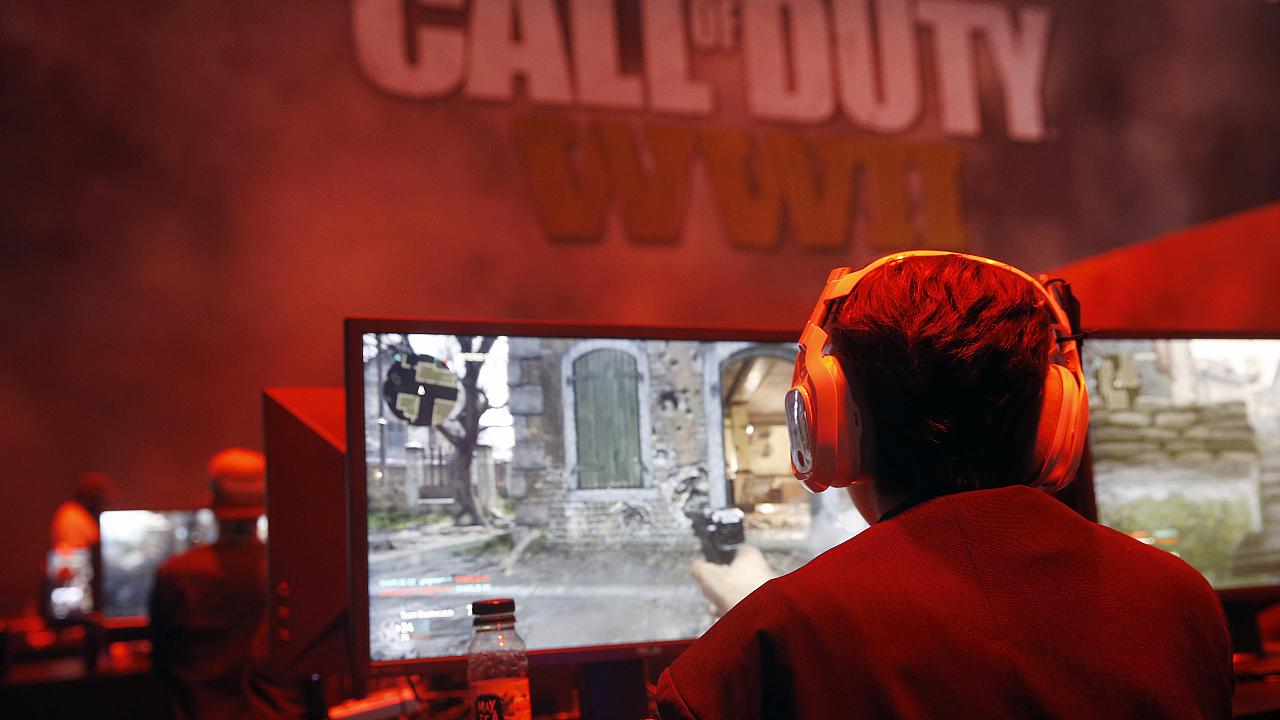
The World Health Organization proposed adding gaming disorder to its new comprehensive manual of disease classifications Monday, raising an immediate debate over whether it merits a separate designation.
Some U.S. experts said it will make little difference when it comes to helping people with the disorder, at least in the United States, but others said it would give legitimacy to a disorder than many people are reluctant to recognize.
WHO added both online and offline gaming disorder to its latest draft of the International Classification of Diseases manual, called ICD-11.
This isn’t about kids spending a few hours in the basement playing “Fortnite” or “Call of Duty”. As with any medical disorder, the person affected must be seriously impaired.
“Gaming disorder is characterized by a pattern of persistent or recurrent gaming behavior (‘digital gaming’ or ‘video-gaming’), which may be online or offline,” the manual says.
The symptoms listed by WHO echo symptoms for other addictive or compulsive disorders. They include: a lack of control over gaming; giving gaming precedence over other life interests and daily activities; and continuation or escalation of gaming despite negative consequences.
“The behavior pattern is of sufficient severity to result in significant impairment in personal, family, social, educational, occupational or other important areas of functioning,” WHO said.
“Having recognition from the WHO is significant,” said Dr. Petros Levounis, chair of psychiatry at the New Jersey Medical School at Rutgers University.
WHO’s ICD-11 is used widely outside the United States for classifying all disease. In the U.S., the American Psychiatric Association’s Diagnostic and Statistical Manual of Mental Disorders (DSM) is used to define mental illness. It mentions gaming disorder in its latest edition (DSM-5) but says more research is needed before listing it as a separate disorder.
“The ‘gamers’ play compulsively, to the exclusion of other interests, and their persistent and recurrent online activity results in clinically significant impairment or distress. People with this condition endanger their academic or job functioning because of the amount of time they spend playing,” it says.
The American Psychological Association has long fought to get the WHO’s ICD used over the DSM when determining health insurance coverage.
Levounis said he hoped WHO’s designation would boost research that got sidelined in the 1980s, when tobacco companies, then being sued for selling addictive and deadly products, argued that tobacco was not unique and that companies should not be penalized for selling addictive products.
“They basically were saying that any behavior can be addictive,” Levounis said. “This whole mayhem set us back maybe 20-30 years. Now there is renewed interest and excitement.”
Why does it even matter?
In the U.S., it’s important for one major reason. Health insurance won’t pay for treating someone for a disorder that doesn’t exist.
“That’s where the rubber meets the road,” said Keith Whyte, executive director of the National Council on Problem Gambling.
And even if there is a designation, it can be difficult to find treatment and to get insurance companies to pay for it.
“Gambling addiction has been in the DSM since 1980 and we still struggle to get routine reimbursement,” Whyte said.
For one thing, health insurance companies don’t have to cover mental and behavioral disorders.
“This is something the Affordable Care Act was going to address but it’s still [regulated] at a state-by-state level,” Whyte said.
“What we have found is that when you are dealing with insurance companies, it depends on what state you are in and who your therapist is.”
And that presumes people even recognize that they have a problem, Whyte added.
Just as with gamblers, gamers may think they are “professionals”. That makes a gambling or gaming disorder different from a substance abuse disorder.
“You can’t become a professional drinker or a professional smoker,” Whyte said.
“But gamblers feel like the more they play, the better they get. The better they get, the more they win. So quitting is the last thing you want to do. You’re one bet away from winning everything.”
‘Addiction is not about winning’
In the end, however, winning is not the goal. Someone who gambles once or twice for fun will buy an island if they win a big jackpot. A gambling addict, Whyte said, puts it right back into the game.
“Addiction is not about winning. Addiction is about staying in action,” he said.
The Entertainment Software Association was preparing a statement but in the past has fought against any classification of gaming addiction.
“Legitimate science, objective research, and common sense all prove video games are not addictive. By misusing the word addiction, which is a medical term, society demeans real compulsive behaviors, like alcoholism and drug abuse, which deserve treatment, compassion, and care,” the ESA said in a recent statement to NBC News.
Source: euronews
Ask me anything
Explore related questions