
×
GreekEnglish

×
  • Politics
  • Diaspora
  • World
  • Lifestyle
  • Travel
  • Culture
  • Sports
  • Cooking
Monday
12
Jan 2026
weather symbol
Athens 6°C
  • Home
  • Politics
  • Economy
  • World
  • Diaspora
  • Lifestyle
  • Travel
  • Culture
  • Sports
  • Mediterranean Cooking
  • Weather
Contact follow Protothema:
Powered by Cloudevo
> technology

Telescopes pick up huge number of unexplained signals coming from alien galaxies

The blasts of radio waves are still unexplained & some blame extraterrestrial intelligent life!

Newsroom October 11 09:19


Telescopes have picked up a huge number of mysterious signals coming from deep in space, Australian researchers have announced.

The radio telescopes have nearly doubled the number of the known “fast radio bursts” – bright flashes of radio waves that make their way to Earth from deep space.

And the signals represent the closest and brightest of the bursts that have ever been found.

Fast radio bursts are one of the most mysterious phenomena in the universe. They are blasts of incredible energy – equivalent to the amount released by the Sun in 80 years – that last for just a moment, and come from a mysterious source.

Some have suggested they are being emitted by an extraterrestrial intelligence. Harvard University scientists suggested last year that they could be leaks from vast transmitters that are usually shooting at light sail ships to push them across the universe.

Others have suggested that less intelligent but equally spectacular causes, such as black holes or dense stars smashing into each other.

Now scientists have far more examples to study as they attempt to find where the blasts are coming from.

>Related articles

Sick astronaut on mission – NASA considers early return of International Space Station crew

Who were the predators on Earth before the dinosaurs

NASA published a new map of the universe; the “SPHEREx” space telescope changes the data landscape

“We’ve found 20 fast radio bursts in a year, almost doubling the number detected worldwide since they were discovered in 2007,” said lead author Dr Ryan Shannon, from Swinburne University of Technology and the OzGrav ARC Centre of Excellence.

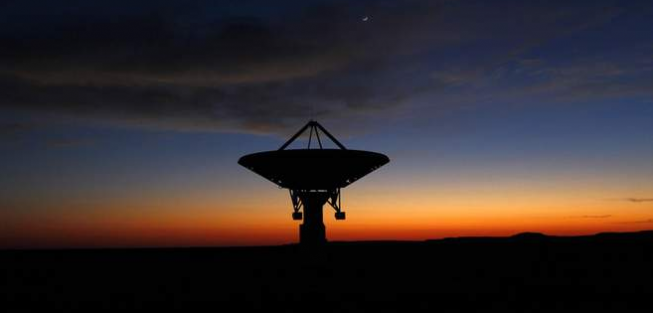
“Using the new technology of the Australia Square Kilometre Array Pathfinder (ASKAP), we’ve also proved that fast radio bursts are coming from the other side of the Universe rather than from our own galactic neighbourhood.”

Read more HERE

Ask me anything

Explore related questions

#aliens#earth#Extraterrestrial#galaxies#mystery#planets#radio waves#science#signals#space#technologies#telescopes#unexplained
> More technology

Follow en.protothema.gr on Google News and be the first to know all the news

See all the latest News from Greece and the World, the moment they happen, at en.protothema.gr

> Latest Stories

Hits on Russian Lukoil oil platforms from Ukraine

January 11, 2026

In the shadow of the bribery video, Christodoulides’ wife resigns from the Independent Social Support Agency, denounces “relentless” attacks

January 11, 2026

Cartel de los Soles at the Presidential Palace of Caracas: The drug-trafficking network that Chávez set up with Sinaloa and that kept Maduro in power

January 11, 2026

Trump “weighs” a strike on Iran: Military not ready, fears of retaliation – “Foreign terrorists” kill civilians & burn mosques, Pezeshkian says

January 11, 2026

Urgent Weather Alert from the Hellenic National Meteorological Service: Severe cold wave from this afternoon – Areas where snowfall is expected

January 11, 2026

Mitsotakis’ first review for 2026: The international community cannot ignore authoritarian regimes

January 11, 2026

Bob Weir, co-founder of the Grateful Dead, dies at 78

January 11, 2026

Sports broadcasts of the day: Aris – AEK and the Real Madrid – Barcelona final stand out

January 11, 2026
All News

> Greece

Urgent Weather Alert from the Hellenic National Meteorological Service: Severe cold wave from this afternoon – Areas where snowfall is expected

A rapid deterioration of the weather is expected from Sunday afternoon, with snow in mountainous, semi-mountainous, and lowland areas of northern Greece. The Risk Assessment Committee of Civil Protection convened

January 11, 2026

Weather: Temperature plunge of up to 10 degrees from today through Tuesday – Where it will snow

January 11, 2026

Three-day cold spell hits the country with a sharp temperature drop – Where it will snow (videos)

January 10, 2026

Severe weather arriving from tomorrow with temperatures dropping by up to 10°C – where it will snow

January 10, 2026

Tornado lifts moving car into the air, moments of terror for the driver (video)

January 9, 2026
Homepage
PERSONAL DATA PROTECTION POLICY COOKIES POLICY TERM OF USE
Powered by Cloudevo
Copyright © 2026 Πρώτο Θέμα