×
GreekEnglish

×
  • Politics
  • Diaspora
  • World
  • Lifestyle
  • Travel
  • Culture
  • Sports
  • Cooking
Wednesday
14
Jan 2026
weather symbol
Athens 7°C
  • Home
  • Politics
  • Economy
  • World
  • Diaspora
  • Lifestyle
  • Travel
  • Culture
  • Sports
  • Mediterranean Cooking
  • Weather
Contact follow Protothema:
Powered by Cloudevo
> World

Turkey’s S-400 delay is about more than just the economy and COVID-19

Turkey’s deepening economic woes are widely seen as one -but not the only- reason behind the delay the activation of the S-400s

Newsroom April 29 08:56

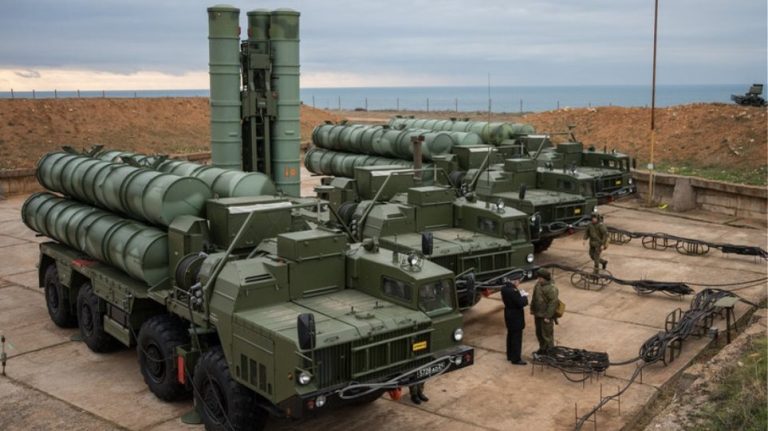
When Russia began delivering the S-400 air defense systems to Turkey last summer, the NATO member country was almost in a festive mood, with television channels broadcasting live the arrival of cargo planes to an air base outside of Ankara from July to August. Around that time, President Recep Tayyip Erdogan announced the systems would become operational in April 2020 — a timetable he would confirm at least seven times thereafter despite US moves to dissuade and penalize Turkey. The missiles arrived by sea in December as Ankara was already testing the systems. In January, air force officers who received training in Russia on operating the systems were officially assigned to their new duties.

With April already rolling along, the S-400s remain unpacked at Murted Airfield Command. The way Ankara chose to disclose the “delay” was a low-key statement to Reuters. “There is no going back on the decision to activate the S-400s, [but] due to COVID-19 … the plan for them to be ready in April will be delayed,” an anonymous official told the news agency April 20.

The delay should have pleased Washington, though it reiterated its concerns. “We continue to stress at the highest levels that the S-400 transaction is the subject of ongoing CAATSA sanctions deliberations, and it remains a major obstacle in the bilateral relationship and at NATO,” State Department spokeswoman Morgan Ortagus said, referring to the Countering America’s Adversaries Through Sanctions Act. “We are confident that President Erdogan and his senior officials understand our position,” she added.

See Also:

>Related articles

JPMorgan: Greece one of the most attractive markets for the Emerging Europe category

Tuesday the 13th: Why everyone thinks it’s bad luck

Mitsotakis at meeting with farmers opens the way for meaningful dialogue on the future of the primary sector

Pentagon officially releases UFO videos!

Obviously, the reason for Ankara’s decision to delay the activation of the S-400 regiment, made up of four batteries worth $2.5 billion, is not technical. And even though the coronavirus pandemic is cited as the reason, the decision is utterly political. Tellingly, the pandemic has not disrupted any Turkish military operations either at home or in Syria and Iraq. It has had no impact in military terms that requires postponing the activation of the systems.

Turkey’s worsening economic woes are widely seen as the prime reason behind the postponement. Indeed, any sanctions under CAATSA would heighten the grave economic risks the pandemic is posing to Turkey. Of note, Ankara has already approached the US Federal Reserve for a currency swap deal, seeking up to $10 billion amid a drawdown in foreign reserves. Due to domestic political concerns, Ankara is reluctant to seek help from the International Monetary Fund. In short, activating the S-400s could have a big economic cost for Turkey akin to the currency crisis in the summer of 2018, which was triggered by a row with Washington over the detention of an American pastor.

Read more: al-monitor

Ask me anything

Explore related questions
#CAATSA (Countering America’s Adversaries Through Sanctions Act)#diplomacy#economy#F-35#libya#negotiations#politics#russia#S-400#syria#turkey#usa#world
> More World

Follow en.protothema.gr on Google News and be the first to know all the news

See all the latest News from Greece and the World, the moment they happen, at en.protothema.gr

> Latest Stories

What farmers gained from the meeting with Mitsotakis: The package for electricity, fuel, and income support – The message to the “hardliners” at the roadblocks

January 13, 2026

“Digital noise” from outdated technology caused chaos in the Athens FIR – What the committee’s findings say

January 13, 2026

JPMorgan: Greece one of the most attractive markets for the Emerging Europe category

January 13, 2026

Kimon arrives at Faliro as Europe’s heavily armed frigate enters Greek waters

January 13, 2026

ELSTAT: Inflation up to 2.6% in December

January 13, 2026

Spain aims to control deepfakes created with AI

January 13, 2026

Le Pen’s party’s appeal to decide her presidential future begins

January 13, 2026

Pyrgos: man attacked his wife with a knife and then threatened to kill himself

January 13, 2026
All News

> Economy

JPMorgan: Greece one of the most attractive markets for the Emerging Europe category

Suggests increasing positions - Piraeus Bank plays a key role in Greece's investment narrative with the upcoming transition to the MSCI Developed Markets indices - Piraeus Bank is the only Greek stock in the CEEMEA Strategy Top 10 list

January 13, 2026

ELSTAT: Inflation up to 2.6% in December

January 13, 2026

Athens Stock Exchange: Maintains 16-year highs – Buyers insist for fifth day

January 13, 2026

And formally the end of the line for Tsantali: the historic winery in bankruptcy

January 13, 2026

Greece returns to markets with new 10-year bond issue

January 13, 2026
Homepage
PERSONAL DATA PROTECTION POLICY COOKIES POLICY TERM OF USE
Powered by Cloudevo
Copyright © 2026 Πρώτο Θέμα