
×
GreekEnglish

×
  • Politics
  • Diaspora
  • World
  • Lifestyle
  • Travel
  • Culture
  • Sports
  • Cooking
Wednesday
14
Jan 2026
weather symbol
Athens 7°C
  • Home
  • Politics
  • Economy
  • World
  • Diaspora
  • Lifestyle
  • Travel
  • Culture
  • Sports
  • Mediterranean Cooking
  • Weather
Contact follow Protothema:
Powered by Cloudevo
> Politics

BESA: The Turkish Air Force – Flying into the Abyss?

What can Ankara do to sustain aerial firepower? A Russian fighter seems the only feasible option, but even that may come too late

Newsroom January 23 08:46

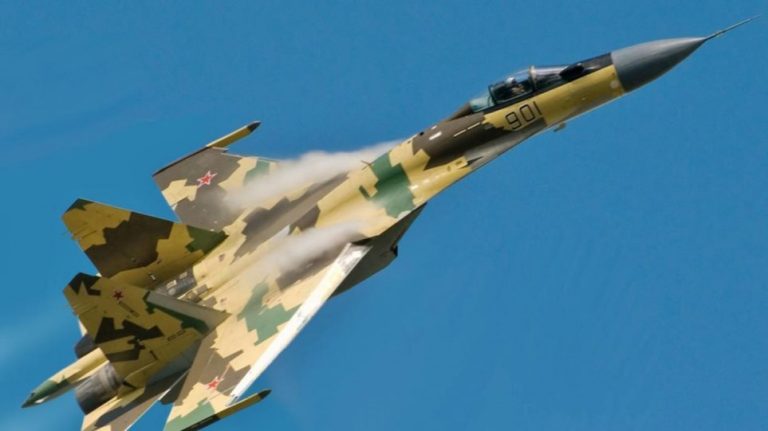
NATO’s second-biggest army had a deterrent air force both during and after the Cold War. In 2020, the Turkish Air Force (TuAF) was the world’s 21st biggest air power. The most dramatic moment in the history of the force was on July 15, 2016, when Turkey’s own jets bombed designated targets in Ankara, including the parliament building, as part of a failed putsch against President Recep Tayyip Erdoğan.

The coup attempt led to tens of thousands of purges from government offices, including thousands of military officers. The number of generals in the TuAF dropped from 72 before the failed coup to 44 after. The force quickly lost half its pilot pool—from 1,350 to 680. Resignations and retirement petitions of TuAF pilots followed the purge, bringing the number of pilots to fewer than 400 and further weakening the command and operational capabilities of the force. The TuAF had to recruit Pakistani pilots to fly F-16 missions.

Two years after the traumatic coup attempt, most wounds had healed, and the air force looked forward to restoring its firepower with the planned acquisition of the world’s most advanced fighter jet in the making: the F-35 Lightning II. Between a new command structure and the anticipated new hardware, everything was coming up roses.

See Also:

Larry King, legendary talk show host, dies at 87

Twitter refused to remove child porn because it “didn’t violate its policies”, lawsuit says

At that time, Turkey was still a member of the US-led multinational Joint Strike Fighter (JSF) consortium, which is building the F-35. By partnering in the world’s largest aircraft program, Ankara gained critical access to strategic aerospace technologies, and as the F-35 program required the supply of nearly 1,000 parts, Turkey’s local aerospace industry was flourishing. Ankara committed to buy at least 100 F-35s at a cost of an estimated $16 billion. In May 2014, Turkey officially ordered two F-35 aircraft, not knowing it would not get them.

>Related articles

“Digital noise” from outdated technology caused chaos in the Athens FIR – What the committee’s findings say

JPMorgan: Greece one of the most attractive markets for the Emerging Europe category

Kimon arrives at Faliro as Europe’s heavily armed frigate enters Greek waters

But then Erdoğan went forward with his reckless Russian gambit, and in so doing exposed Turkey to the risk of becoming a weakened air power. His love affair with the Russian-made S-400 long-range air and anti-missile defense system has jeopardized the TuAF’s future firepower.

Turkey’s decision to acquire the S-400 system and the country’s subsequent suspension, in 2019, from the JSF program will bring an additional $500-600 million burden to the F-35 production cycle. It will cost Turkish aerospace manufacturers nearly $10 billion over the next 10 years. But what about the potential operational costs for a country that fights asymmetrical wars both at home and abroad?

Read more: BESA Center

Ask me anything

Explore related questions

#air-force#analysis#aviation#Besa Center#cyprus#defence#diplomacy#F-35#greece#israel#military#politics#russia#S-400#Su-30#Su-57#THK#turkey#Turkish air-force#usa#war#world
> More Politics

Follow en.protothema.gr on Google News and be the first to know all the news

See all the latest News from Greece and the World, the moment they happen, at en.protothema.gr

> Latest Stories

What farmers gained from the meeting with Mitsotakis: The package for electricity, fuel, and income support – The message to the “hardliners” at the roadblocks

January 13, 2026

“Digital noise” from outdated technology caused chaos in the Athens FIR – What the committee’s findings say

January 13, 2026

JPMorgan: Greece one of the most attractive markets for the Emerging Europe category

January 13, 2026

Kimon arrives at Faliro as Europe’s heavily armed frigate enters Greek waters

January 13, 2026

ELSTAT: Inflation up to 2.6% in December

January 13, 2026

Spain aims to control deepfakes created with AI

January 13, 2026

Le Pen’s party’s appeal to decide her presidential future begins

January 13, 2026

Pyrgos: man attacked his wife with a knife and then threatened to kill himself

January 13, 2026
All News

> Culture

Tuesday the 13th: Why everyone thinks it’s bad luck

Bad luck and tradition: Why we are afraid of Tuesday and 13, the historical and folkloric interpretation

January 13, 2026

Agatha Christie’s 1958 visit to the Acropolis captured in unpublished photo

January 12, 2026

Erich von Däniken, Swiss bestselling author who linked ancient civilizations to extraterrestrials, dies at 90

January 12, 2026

Golden Globes: Paul Thomas Anderson’s ‘One Battle After Another’ and Netflix’s ‘Adolescence’ dominate the awards

January 12, 2026

Bob Weir, co-founder of the Grateful Dead, dies at 78

January 11, 2026
Homepage
PERSONAL DATA PROTECTION POLICY COOKIES POLICY TERM OF USE
Powered by Cloudevo
Copyright © 2026 Πρώτο Θέμα