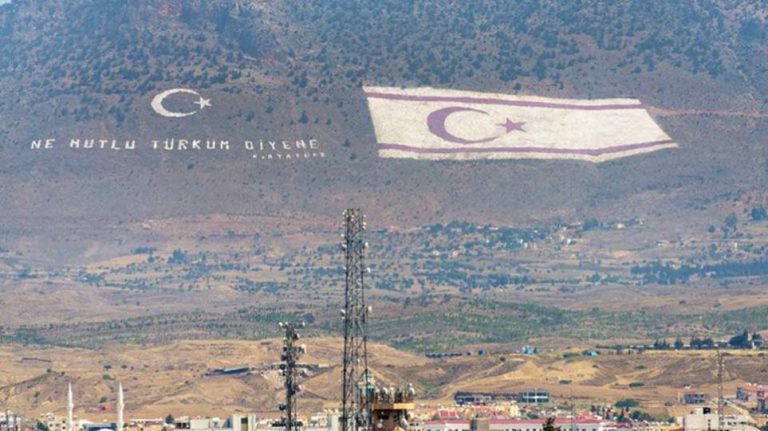
The international community may be unaware of it, but Europe includes a ghost town located in the Republic of Cyprus. Since 1974, it has been under Turkish occupation, which has looted and ethnically cleansed its indigenous population.
Designated a military zone by the Turkish army 46 years ago, when Greek Cypriots were forced to flee invading Turkish forces, a part of the Cypriot district of Famagusta has remained deserted.
Turkish President Recep Tayyip Erdogan declared in October 2020:
“[T]he two main streets and the coast in the ‘Maraş region’ [Famagusta in Turkish-occupied northern Cyprus], which were closed since the 1974 peace operation, have recently been opened to the use of the Cypriot people….. The closed Maraş region belongs to the Turkish Cypriots; it should be known this way…
“I call out to our fellow Turks in northern Cyprus, to my Turkish brothers. This land is yours. You have to lay claim to these lands. You also need to protect the political will that lays claim to these lands. If we can put this out fully, I believe that the future in Cyprus will be very different.”
On November 15, 2020, Erdogan visited a part of Famagusta after joining the ceremony celebrating the 37th anniversary of the unilateral declaration of the “Turkish Republic of Northern Cyprus” (TRNC), the illegally-occupied northern part of Cyprus that is not recognized under international law.
Anyone who is clueless about the history of Cyprus and who listens to Erdogan would be misled to think that the opening of this coast is a positive development, and that even Turkey’s 1974 invasion of Cyprus was a good development. But what have Turks really done to Cyprus?
1000 years of English literature to be scrapped as British university “decolonises” curriculum
Spotify Expands Its Global Footprint (infographic)
The 1570 Ottoman Invasion
The Turkish presence in Cyprus dates to the sixteenth century.
In an article entitled “The Battle of Lepanto: When Turks Skinned Christians Alive for Refusing Islam,” historian Raymond Ibrahim describes how “Muslim Turks — in the guise of the Ottoman Empire — invaded the island of Cyprus in 1570 and captured Famagusta:”
“After promising the defenders safe passage if they surrendered, Ottoman commander Ali Pasha — known as Müezzinzade (‘son of a muezzin’) due to his pious background — had reneged and launched a wholesale slaughter. He ordered the nose and ears of Marco Antonio Bragadin, the fort commander, hacked off. Ali then invited the mutilated infidel to Islam and life: ‘I am a Christian and thus I want to live and die,’ Bragadin responded. ‘My body is yours. Torture it as you will.’
“So he was tied to a chair, repeatedly hoisted up the mast of a galley, and dropped into the sea, to taunts: ‘Look if you can see your fleet, great Christian, if you can see succor coming to Famagusta!’ The mutilated and half-drowned man was then carried near to St. Nicholas Church — by now a mosque — and tied to a column, where he was slowly flayed alive. The skin was afterward stuffed with straw, sown back into a macabre effigy of the dead commander, and paraded in mockery before the jeering Muslims.”
The Ottoman Turks converted many historic churches into mosques, such as St. Nicholas Cathedral, the most majestic structure in Famagusta. “In 1570 the Ottoman invasion which took Nicosia, then Famagusta, in hideous and bloody sieges, marked the end of the natural life of the edifice as a place of Christian worship,” according to Michael Walsh, a professor of art and archaeology. St. Nicholas Cathedral, still used as a mosque in Turkish-occupied Famagusta, is now named “Lala Mustafa Pasha Mosque” after the commander of the 1570 Ottoman invasion.
Read more: Gatestone Institute
Ask me anything
Explore related questions