

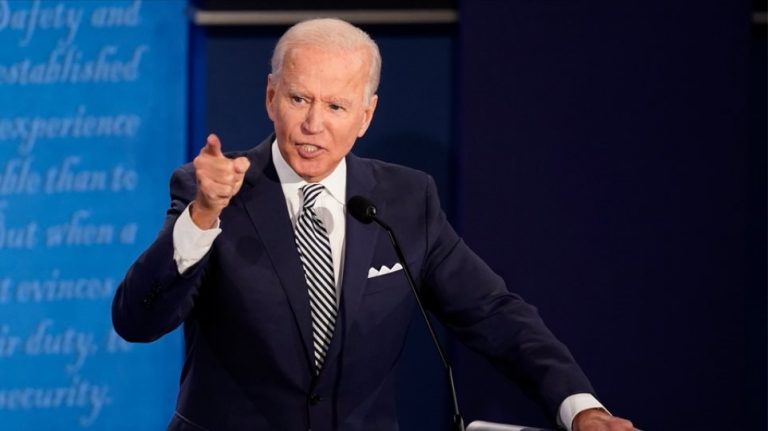
On February 22nd, 2021, Politico ran a story revealing the Biden administration is deprioritizing the Middle East. It was an interesting read. Yet even without the reporting from Natasha Bertrand and Lara Seligman—two of the best journalists anywhere covering national security and foreign policy—the signs were clear that team Biden was going to try to do what it could not to get wrapped around the axles of Arabs, Israelis, Turks, Kurds, and Iranians. It took four weeks for U.S. President Joe Biden to call Israeli Prime Minister Benjamin Netanyahu and then another week or so for him to phone the Iraqi prime minister and the Saudi king. The White House likewise does not seem in a hurry to make calls to the Egyptians, Turks, Emiratis, Qataris, and others.
The National Security Council has adjusted accordingly, downsizing the Near East directorate, and U.S. executive agencies are not hiring as many Middle East hands as in previous administrations. These changes are happening against the backdrop of nonstop, foreign-policy discussions about “great-power competition” and China. If 2001 to 2020 was the golden age of the Middle East analyst, it is clear that Washington is now entering the era of the China expert (and public health specialist). This is a good thing. The Middle East has sucked up a lot—too much—time, attention, and resources of decision-makers who were often chasing unrealistic goals and pursuing poorly thought-out policies. This came at a cost, deflecting attention from other important issues like the implications of China’s ambitions, Russia’s return to the world stage, Europe’s stability, and the impacts of climate change.
At the same time, it is easy to exaggerate. It took a little more than a month before President Biden ordered up airstrikes in the region, hitting Iranian proxies in Syria after Iran’s allies hit a base in Iraqi Kurdistan, where American forces are located. Also, the folks who advocate for the United States’ withdrawal, reduction, or retrenchment from the Middle East tend to downplay the risks of these approaches. There is no doubt that the United States’ Middle East policy needs to evolve; there are issues in the region that no longer seem as urgent as they once did and countries that are not as important as they once were. Part of the challenge of crafting a new approach to the region is determining who and what is important to the United States.
The Turkish research vessel Cesme sails for central Aegean Sea
Dutch Parliament calls for the recognition of Armenian and Greek Genocides
So, in the spirit of helping clarify these issues—and aping “The List,” the annual Washington Post feature—here is an entirely subjective ranking of the Middle East. Countries that are IN need the Biden administration’s attention. OUT countries would like to think they matter, but they should prepare for a future of being ignored.
Saudi Arabia is IN—but mostly because it’s on the outs. During the presidential campaign, then candidate Joe Biden had tough words for the Saudis. A good deal of Washington has been up in arms about the Saudis since the murder of journalist Jamal Khashoggi in 2018. (It was only then that Saudi Arabia’s disastrous intervention in Yemen received sustained attention in Washington.) There was also, of course, the blockade of Qatar and the mistreatment of Saudi activists. It is all coming home to roost now for Crown Prince Mohammed bin Salman. The White House announced it will not talk to him, has docked the Saudi military weapons that could be used to prosecute the war in Yemen, and released a report detailing what the U.S. intelligence community knows about Khashoggi’s murder. Human rights campaigners, Saudi dissidents, analysts, and members of Congress have all welcomed these moves, but…but…Saudi Arabia remains the United States’ primary interlocutor in the Arab world. If Biden wants to get a new deal with Iran and hopes to relieve the suffering in Yemen with an eye toward ending the conflict, he is going to need to elicit Saudi cooperation.
Read more: Foreign Policy
Ask me anything
Explore related questions