×
GreekEnglish

×
  • Politics
  • Diaspora
  • World
  • Lifestyle
  • Travel
  • Culture
  • Sports
  • Cooking
Sunday
18
Jan 2026
weather symbol
Athens 7°C
  • Home
  • Politics
  • Economy
  • World
  • Diaspora
  • Lifestyle
  • Travel
  • Culture
  • Sports
  • Mediterranean Cooking
  • Weather
Contact follow Protothema:
Powered by Cloudevo
> Culture

The Philistines were likely of Greek origin, according to new DNA evidence

According to scientists there was a European-related gene flow that took place during the transition from the Bronze to the Iron Age

Newsroom October 15 11:01

The Ancient Egyptians are thought to have been descendants of the Ancient Cretans. The Palestinians have claimed the same. Scientists are searching for the truth, but the evidence is growing towards this theory.

In the case of the Philistines, however, the tribe that was accused more than any other in the Hebrew texts, the investigation provided tangible evidence that they were not only related to the Ancient Greeks, but may have been their descendants.

According to DNA found in a large mass grave of Philistines, the tribe was proven not to be indigenous, but they had migrated to the area of ​​today’s Middle East in 1,200 BC, from southern Europe and probably the Aegean, as at that time, the Greeks were powerful and crossed the Mediterranean with their ships.

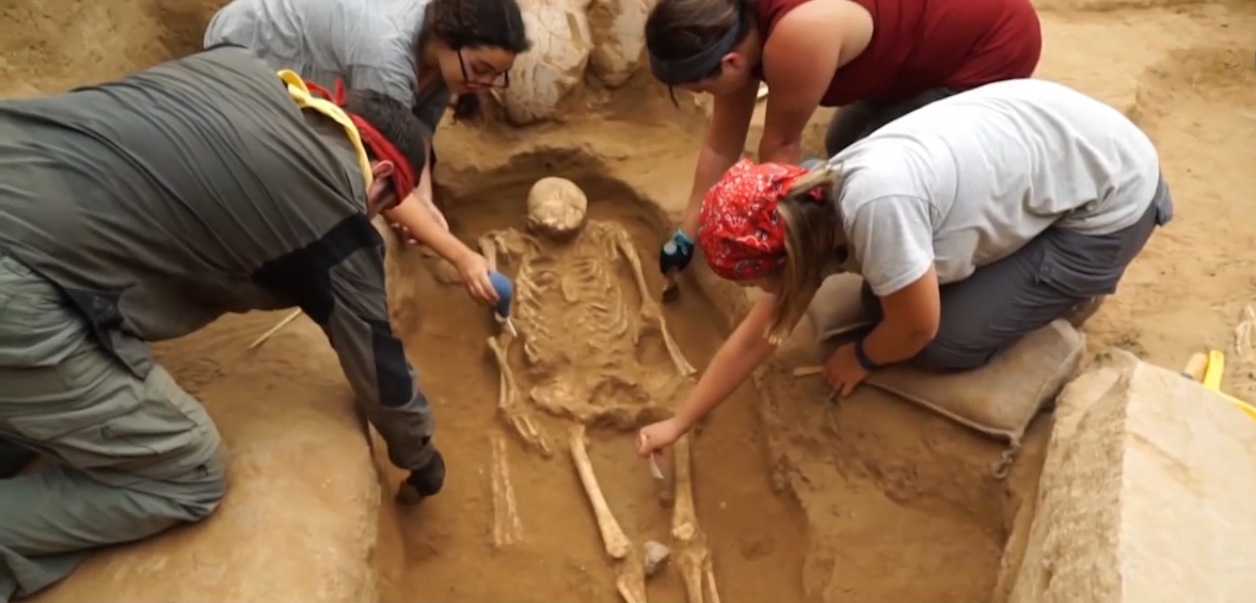
The genetic findings came from skeletons discovered by archaeologists in Israel in 2016, including the bones of newborns buried under Philistine homes.

The Philistines were one of the great enemies of the Israelites, as they are always referred to as criminals in the Bible, with the giant Goliath being a prime example.

“Our study showed for the first time that the Philistines migrated to this area in the 12th century BC”, said Daniel Master, director of the Leon Levy mission to Ashkelon, a coastal city where the first Philistine cemetery was found.

“We did not prove it by presenting a similar style of ceramics, we did not show it by looking at texts, we showed it by looking at the DNA of the people themselves”, added the head of the scientific team.

See Also:

Never underestimate the intelligence of trees

“We can see in Ashkelon new DNA coming from this migratory population that is really changing the whole region”, he said, in an effort to highlight the significance of the discovery.

The Ashkelon team sent more than 100 skeletal specimens to the German Max Planck Institute for the Science of Anthropological History. The DNA was found in ten people, especially in the bones of the inner ear.

>Related articles

President of Air Traffic Controllers: Another communications blackout possible in the near future

Trump threatens tariffs against those who oppose U.S. plans for Greenland

X is down, thousands report problems

The findings, published Wednesday in the journal Science Advances, showed three stages: before migration, after migration, and after a thinning of the genetic imprint in the local population, a few hundred years later.

“Although genetic modeling suggests southern Europe as a region of origin, there are some limitations to the 3,000-year-old DNA test”, said Michael Feldman, an archaeologist who worked on the study at Max Planck.

“This ancestral element comes from Europe or more specifically from southern Europe. The ancestors of the Philistines must have traveled to the Mediterranean and arrived in Ashkelon sometime between the end of the Bronze Age and the beginning of the Iron Age”, Feldman said. “We could say a lot more if we had more data, for example we could pinpoint the source of this migration,” he added.

Ask me anything

Explore related questions

#aegean sea#archaeology#culture#discovery#dna#europe#greece#Greeks#israel#Max Planck Institute#mediterranean#Middle East#Philistines#world
> More Culture

Follow en.protothema.gr on Google News and be the first to know all the news

See all the latest News from Greece and the World, the moment they happen, at en.protothema.gr

> Latest Stories

Skirtsos: ‘After years of efforts, the first results on maritime safety are starting to become visible’

January 18, 2026

Politico: Europe for the first time considers tough response to Trump on Greenland tariffs, what is the Anti-Brexit Act

January 18, 2026

The backstory behind Trump’s decision not to attack Iran: The camps in the White House, the SMS from Tehran, and the calls from Arab allies

January 18, 2026

Mitsotakis: Greece will not be challenged by anyone with the Belharra frigates – Our goal is to support farmers with transparent subsidies

January 18, 2026

Akylas receives rave reviews for his Eurovision 2026 Greek final entry: “We might actually win with this little gem,” Fans write

January 18, 2026

What Trump is seeking with the extra tariffs on eight European countries for Greenland, the trade deal with the EU is in the air

January 18, 2026

The global era of Messinia: How the film Odyssey and the lists of major media praise it for 2026

January 18, 2026

Greek exports broke records with a record 37 billion euros

January 18, 2026
All News

> Culture

The historic cafes of Athens: 12 legendary hangouts lost to time

The café-patisseries that set the rhythm of cosmopolitan Athens – “Flokas,” “Papaspirou,” “Sonia,” “Alaska,” “Lentzos,” “Floral,” “Blue Bell,” “Prapas,” “Pachos,” “Galaxy,” “Caprice,” “Centaur” were the most popular meeting points where modern Greek history was written, became songs and books, and left their mark with their famous culinary creations

January 16, 2026

Actress Melpo Zarokosta dies at 93

January 16, 2026

Cycladic Identity Initiative launches fourth funding phase to preserve the Cultural and Natural Heritage of the Cyclades

January 16, 2026

Grief in Crete for the loss of Yannis Xylouris

January 15, 2026

“A Picasso for 100 euros” — Christie’s for a million-euro painting

January 15, 2026
Homepage
PERSONAL DATA PROTECTION POLICY COOKIES POLICY TERM OF USE
Powered by Cloudevo
Copyright © 2026 Πρώτο Θέμα