×
GreekEnglish

×
  • Politics
  • Diaspora
  • World
  • Lifestyle
  • Travel
  • Culture
  • Sports
  • Cooking
Thursday
15
Jan 2026
weather symbol
Athens 12°C
  • Home
  • Politics
  • Economy
  • World
  • Diaspora
  • Lifestyle
  • Travel
  • Culture
  • Sports
  • Mediterranean Cooking
  • Weather
Contact follow Protothema:
Powered by Cloudevo
> Culture

Genetic Study Examines Europe’s Hunter-Gatherers – The Balkan link

Migrants from the Balkans as early as 17,000 years ago are likely to have produced Epigravettian culture

Newsroom March 8 07:12

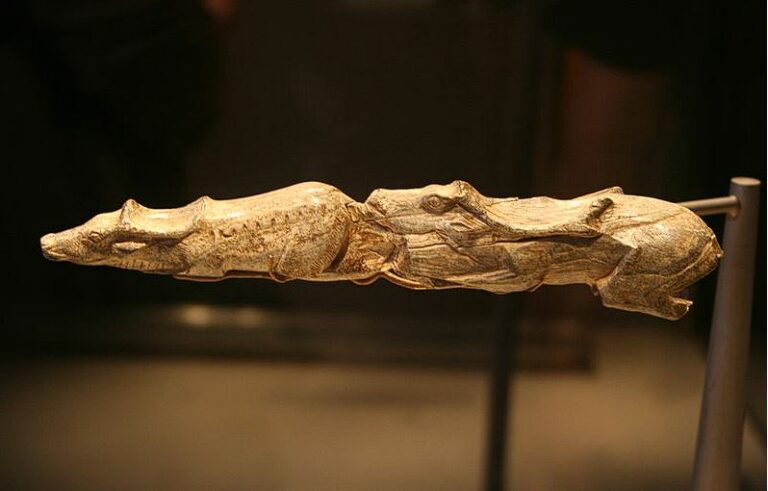
According to a Live Science report, an analysis of the genomes of 356 European hunter-gatherers who lived between 35,000 and 5,000 years ago suggests that two genetically distinct groups comprised the Gravettian culture, which produced similar weapons and art known today between 33,000 and 26,000 years ago.

>Related articles

Storm Goretti sweeps France, Britain, Germany and the Netherlands: Thousands of households without power and flight cancellations

Any Western troops in Ukraine will be considered “legitimate targets”, Russia warns

Wave of bankruptcies in Germany: Which businesses are hit hardest

Cosimo Posth of the University of Tübingen said that one of these lineages, dubbed Fournol after a site in France, belonged to a group of people whose remains have been recovered in France and Spain, while the other, named Věstonice for a site in the Czech Republic, came from the Czech Republic and Italy. He added that the Fournol were descended from the Aurignacians, who lived in Europe between 43,000 and 33,000 years ago. Ancestors of the Věstonice came from western Russia, however.

The study also indicates that the Fournol survived the Last Glacial Maximum, but the Věstonice died out. It had been previously thought that the Věstonice lived in Italy during the Last Glacial Maximum, with their descendants producing what is known as Epigravettian culture after the glaciers retreated. Instead, migrants from the Balkans as early as 17,000 years ago are likely to have produced Epigravettian culture. Finally, the study suggests that as the climate warmed and forests spread across Europe some 14,000 years ago, the Epigravettians spread northward as the descendants of the Fournol died out.

source archaeology.org

Ask me anything

Explore related questions

#Balkans#europe#hunter gatherers
> More Culture

Follow en.protothema.gr on Google News and be the first to know all the news

See all the latest News from Greece and the World, the moment they happen, at en.protothema.gr

> Latest Stories

Bayern – Panathinaikos, Live from Munich: 35–38 (2nd quarter)

January 15, 2026

“You think you are descendants of Plato and Aristotle, but you’re not” – Rama’s tirade against Greek journalist, watch video

January 15, 2026

“Aunt Pecu,” who lived outside all protocol: Who the unconventional and eccentric princess Irene was

January 15, 2026

High-tech fraud – SMS blaster attack: Bank data stolen using special equipment installed in a car’s trunk

January 15, 2026

Ballistic missile strike hits pier in Ukraine

January 15, 2026

Ursula von der Leyen from the Green Line: Pushing for a solution to the Cyprus issue is a priority

January 15, 2026

The ordeal of a 28-year-old Greek man in Australia: He went on holiday to visit relatives, was injured at a beach, and is at risk of quadriplegia

January 15, 2026

Princess Irene dies at the age of 83

January 15, 2026
All News

> Culture

Grief in Crete for the loss of Yannis Xylouris

The artistic world of Crete is poorer after the loss of Psarogiannis

January 15, 2026

“A Picasso for 100 euros” — Christie’s for a million-euro painting

January 15, 2026

New cultural route at the Acropolis highlights the historic Koili Odos

January 15, 2026

“All cash”: Netflix is preparing a strategic move to accelerate its $83 billion deal with Warner Bros.

January 14, 2026

Why Gen Z is returning to religion: what new research in the United Kingdom shows

January 14, 2026
Homepage
PERSONAL DATA PROTECTION POLICY COOKIES POLICY TERM OF USE
Powered by Cloudevo
Copyright © 2026 Πρώτο Θέμα