×
GreekEnglish

×
  • Politics
  • Diaspora
  • World
  • Lifestyle
  • Travel
  • Culture
  • Sports
  • Cooking
Monday
12
Jan 2026
weather symbol
Athens 6°C
  • Home
  • Politics
  • Economy
  • World
  • Diaspora
  • Lifestyle
  • Travel
  • Culture
  • Sports
  • Mediterranean Cooking
  • Weather
Contact follow Protothema:
Powered by Cloudevo
> Culture

How scientists reconstructed a huge statue of Emperor Constantine the Great in Rome

Originally some 11 metres tall, it was later broken up and pillaged for bronze

Newsroom February 15 11:49

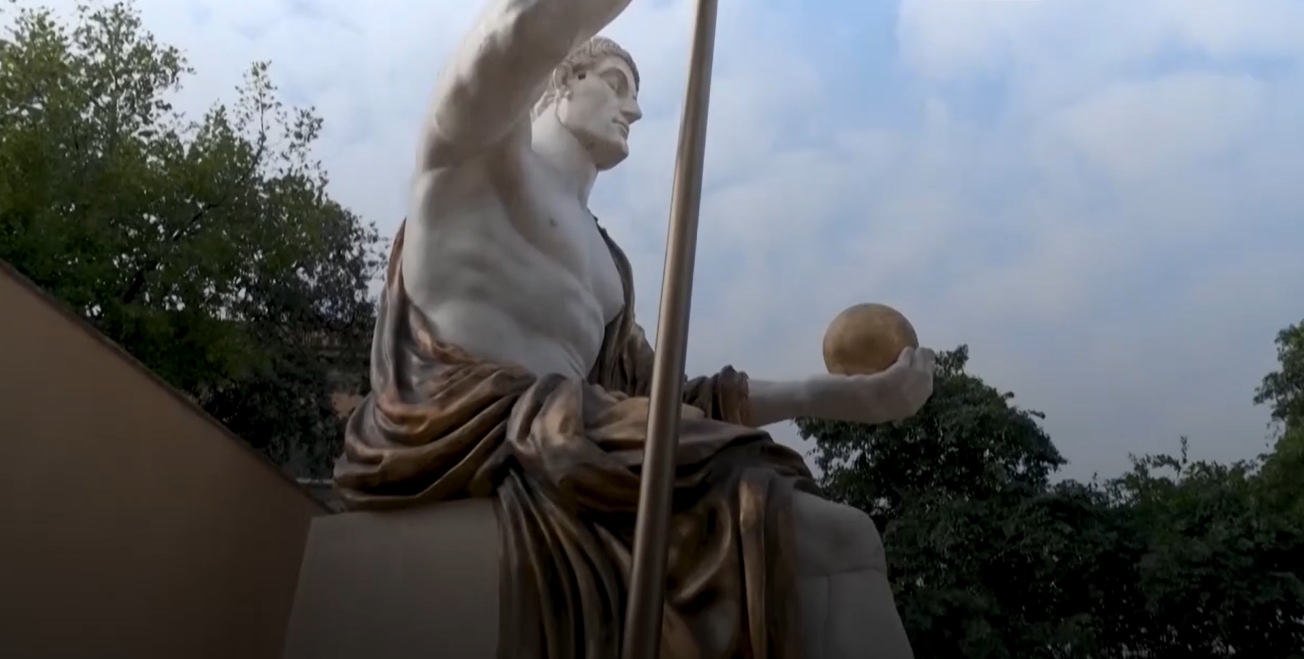
The ancient 11-meter structure was recreated using high tech software to scan a handful of surviving fragments.

It once sat majestically at the heart of ancient Rome.

Now a vast statue of Emperor Constantine the Great is returning to the Eternal City thanks to a high-tech reconstruction based on surviving marble fragments.

“It’s somewhere between documenting and recreating and interpreting. But I really hope that this is the beginning of a revolution, about how to share and how to show,” explains Adam Lowe, the director of Factum Foundation, who oversaw the meticulous reconstruction process.

Born in 306 AD in Naissus, now part of Serbia, Constantine became one of the most influential Roman leaders of all time, strengthening the empire enormously.

But he is perhaps most famous for having converted to Christianity, and experts believe the enormous statue of him served as a recognition that Christianity had become the empire’s religion.

See Also:

Putin announced that Russian scientists are close to creating a cancer vaccine

The so-called Colossus of Constantine, which dates to the early 4th century, was a monumental statue erected to celebrate Constantine’s reign.

>Related articles

Hits on Russian Lukoil oil platforms from Ukraine

Cartel de los Soles at the Presidential Palace of Caracas: The drug-trafficking network that Chávez set up with Sinaloa and that kept Maduro in power

Trump “weighs” a strike on Iran: Military not ready, fears of retaliation – “Foreign terrorists” kill civilians & burn mosques, Pezeshkian says

Originally some 11 metres tall, it was later broken up and pillaged for bronze. In the 15th century, the few surviving fragments were found: the head, right arm, wrist, right hand, right knee, right shin, right foot and left foot.

Despite the surviving fragments being rediscovered in 1486, it was initially mistaken for a statue of Emperor Commodus. It was only at the end of the 1800s that the fragments were correctly identified as being part of the Colossus of Constantine.

Continue here: Euronews

Ask me anything

Explore related questions
#ancient Rome#archaeology#christianity#Constantine the Great#constantinople#culture#Emperor#history#rome#science#statue#technology#world
> More Culture

Follow en.protothema.gr on Google News and be the first to know all the news

See all the latest News from Greece and the World, the moment they happen, at en.protothema.gr

> Latest Stories

Hits on Russian Lukoil oil platforms from Ukraine

January 11, 2026

In the shadow of the bribery video, Christodoulides’ wife resigns from the Independent Social Support Agency, denounces “relentless” attacks

January 11, 2026

Cartel de los Soles at the Presidential Palace of Caracas: The drug-trafficking network that Chávez set up with Sinaloa and that kept Maduro in power

January 11, 2026

Trump “weighs” a strike on Iran: Military not ready, fears of retaliation – “Foreign terrorists” kill civilians & burn mosques, Pezeshkian says

January 11, 2026

Urgent Weather Alert from the Hellenic National Meteorological Service: Severe cold wave from this afternoon – Areas where snowfall is expected

January 11, 2026

Mitsotakis’ first review for 2026: The international community cannot ignore authoritarian regimes

January 11, 2026

Bob Weir, co-founder of the Grateful Dead, dies at 78

January 11, 2026

Sports broadcasts of the day: Aris – AEK and the Real Madrid – Barcelona final stand out

January 11, 2026
All News

> Economy

AADE: Six new digital “weapons” against tax evasion in 2026

Target: 72,800 audits and additional revenues of €2.5 billion with Artificial Intelligence, real-time monitoring, and preventive risk analysis

January 11, 2026

Opening access to a market of 300 million consumers for Greek products through the EU–Mercosur agreement: Benefits for olive oil, cheeses, kiwifruit, peaches and bakery products

January 10, 2026

JP Morgan: STOXX will upgrade Greece this year – Which stocks will see significant inflows

January 9, 2026

How Greek producers and the 21 Greek PDO products will be protected under the Mercosur Agreement

January 9, 2026

“Turbulence, yes; problems, no” is what the Mercosur agreement is expected to bring for Greece

January 9, 2026
Homepage
PERSONAL DATA PROTECTION POLICY COOKIES POLICY TERM OF USE
Powered by Cloudevo
Copyright © 2026 Πρώτο Θέμα