





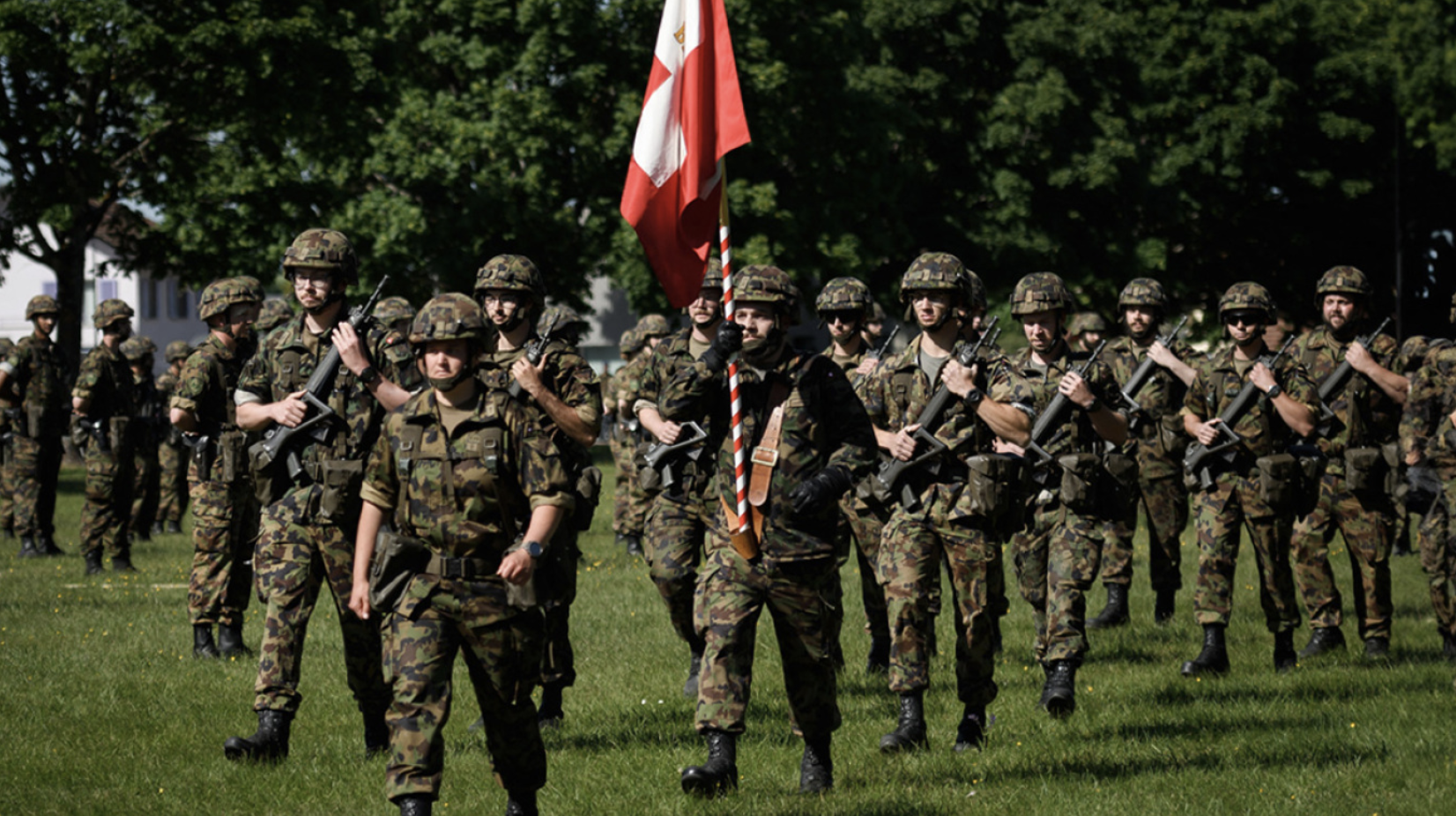
Switzerland, after five centuries of neutrality, is contemplating a major shift in its defense policy due to growing threats from Russia, as outlined in a recent report covered by Politico. The report suggests that Switzerland should strengthen its cooperation with the European Union and NATO, which would mark a significant departure from its long-standing stance.
Historically known for its strict neutrality, Switzerland has avoided entanglements in wars while maintaining its economic interests. However, the ongoing Russian aggression in Ukraine and the perceived threat from Russian President Vladimir Putin have sparked debates about whether Switzerland should reconsider its defense strategy. The expert report advises the Swiss government to develop a “joint defense capability” in collaboration with the EU and NATO.
This proposal has ignited political discussions within Switzerland, a country that has strictly maintained neutrality since 1515. The report emphasizes the need to clarify Switzerland’s position in light of increasing pressure both domestically and internationally. The suggested review of neutrality is seen as crucial, particularly concerning the sale of weapons and the country’s ability to defend itself in a region surrounded by NATO and EU members.
The report also addresses Switzerland’s current ban on the re-export of weapons, which has strained relations with countries wishing to supply arms to Ukraine that contain Swiss components. The experts recommend lifting this ban to better support European defense needs.
These recommendations have already faced backlash, especially from right-wing and left-wing parties that oppose closer ties with NATO. Critics argue that the composition of the expert panel, which includes NATO and EU advocates, was biased from the start.
While the report does not propose full NATO membership for Switzerland, it does call for deeper military cooperation with NATO and the EU, including joint training, missile defense, and participation in bilateral and multilateral exercises. The report also suggests increasing military spending to 1% of GDP by 2030, compared to the current 0.76%.
Despite the low likelihood of an invasion, the report highlights that Switzerland is already a target of hybrid warfare, including disinformation, espionage, and cyberattacks. As a result, the experts advocate for a “total defense” strategy, preparing the entire society—not just the military—for potential conflict.
Switzerland’s federal council has shown a willingness to engage more closely with NATO and the EU on security issues. Recently, a Swiss delegation visited NATO’s Support and Procurement Agency in Luxembourg to explore possible collaborations. Additionally, the council approved Switzerland’s participation in two EU Permanent Structured Cooperation (PESCO) programs focused on military mobility and cyber defense.
Jean-Marc Rickli, Head of Global and Emerging Risks at the Geneva Centre for Security Policy, noted that Switzerland seeks to demonstrate its active participation to avoid being perceived as exploiting its neutrality without contributing to European defense efforts. If Switzerland wishes to receive military aid from the EU or NATO, it must also be willing to contribute something in return.
Ask me anything
Explore related questions


