





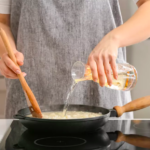
The first cookbook I ever bought in my life as a student was titled “Cooking with Wine” in English. Ever since then, I have considered wine a unique and almost essential cooking ingredient in the majority of recipes.
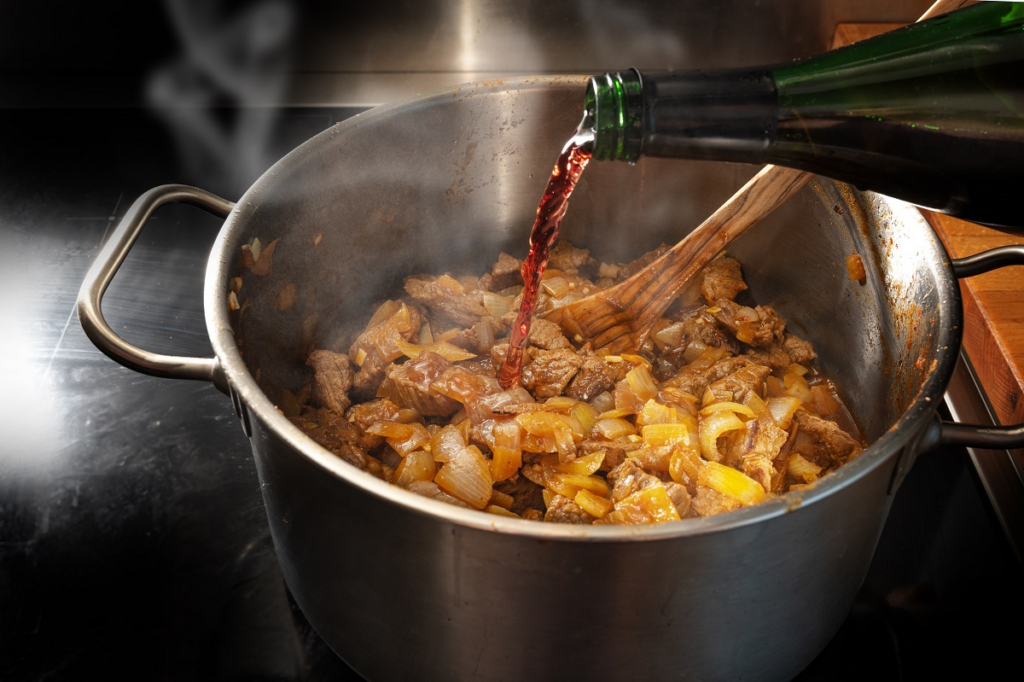
The expression “deglaze with wine” is characteristic of the culinary language in our country. Essentially, it means that in a dish that has reached a high temperature, usually at the end of browning a piece of meat, we pour in wine to lower the temperature and initiate a slower cooking process, while simultaneously reducing the heat intensity. In this process, the alcohol in the wine evaporates mostly within the first few minutes, leaving behind the aromas and flavors of the wine, somewhat indeterminately woven into the sauce.
Wine enhances the flavor and enriches the aromas in all stewed dishes that contain meat, chicken, or even fish. The minimal alcohol that remains after cooking helps carry the aromas to our palate, but it certainly isn’t enough to intoxicate us or harm a child, despite what I hear in exaggerated reactions.
It also provides acidity, which is a desirable element in many recipes both for taste and technically in certain cases. For example, in my version of briam, I intentionally avoid any trace of water (which is alkaline) and instead use wine, which is acidic, so that the vegetables that are roasting do not disintegrate, remain firm, and retain their flavors.
It may not be widely known that the difference between using white, rosé, or red wine in cooking primarily relates to the color that the dish will take on corresponding to the wine, and less so to the flavor. It is known that in blind tastings, many people confuse whether they have tasted white or red wine, especially when both are fresh and have not been aged in barrels.
In everyday cooking, if you use a simple fresh wine, the flavor difference between white and red is minimal. However, pairing is done based on the color of the sauce. There are, of course, exceptions where the intensity of flavor richness (e.g., Barolo) or the uniqueness of a wine (e.g., Sherry) makes a significant difference in the recipe.
Historically, French culinary culture has imposed the rule that the wine accompanying the meal must be the same wine that goes into the dish. I find this logic outdated, “pretentious,” and aimed at vain wealthy people, encouraging them to buy more good French wine. In a modern everyday kitchen, it makes sense to use a fresh wine that we can drink, but that isn’t expensive.
I always have a bag of white wine and a bag of red wine in my kitchen, both of which are single varietals. For whites, I usually find Sauvignon Blanc, Malagouzia, or Moschofilero. For reds, I look for Agiorgitiko, Cabernet Sauvignon, or Merlot. The fact that it is from a known varietal means that the wine has some recognized flavor characteristics that will contribute to the taste of the food because if it’s a blend of mediocre varietals, the result is often not good.
The reason I choose bagged wine isn’t just about cost. It’s mainly because cooking wine will sit in my kitchen cabinet for several weeks. If I chose a bottle, it would inevitably oxidize. The bag, by preventing oxygen from coming into contact with the wine, ensures it won’t spoil.
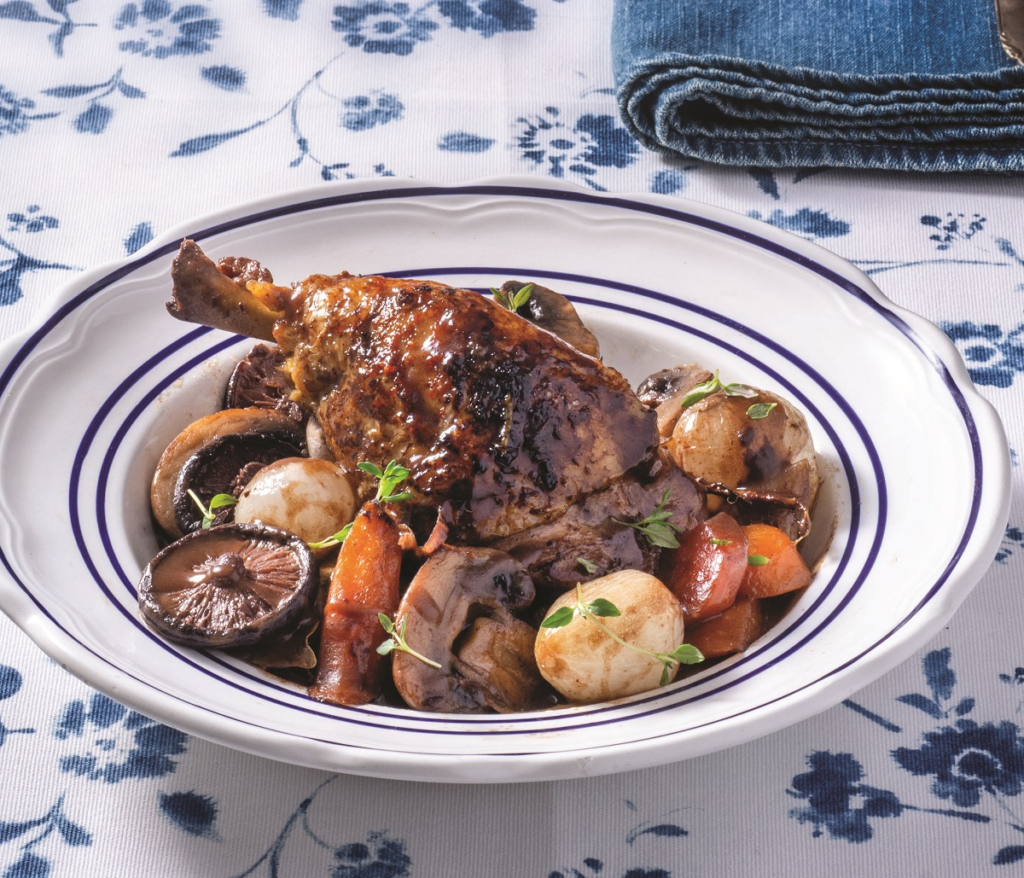
There are many recipes where wine is the primary liquid in which the meat will simmer. Even in those, such as in Bourguignon, coq au vin, or stifado, we shouldn’t overdo the amount we use, as it can upset the flavor balance. I suggest that in addition to one bottle (750ml) of wine, we supplement with broth to balance the final taste.
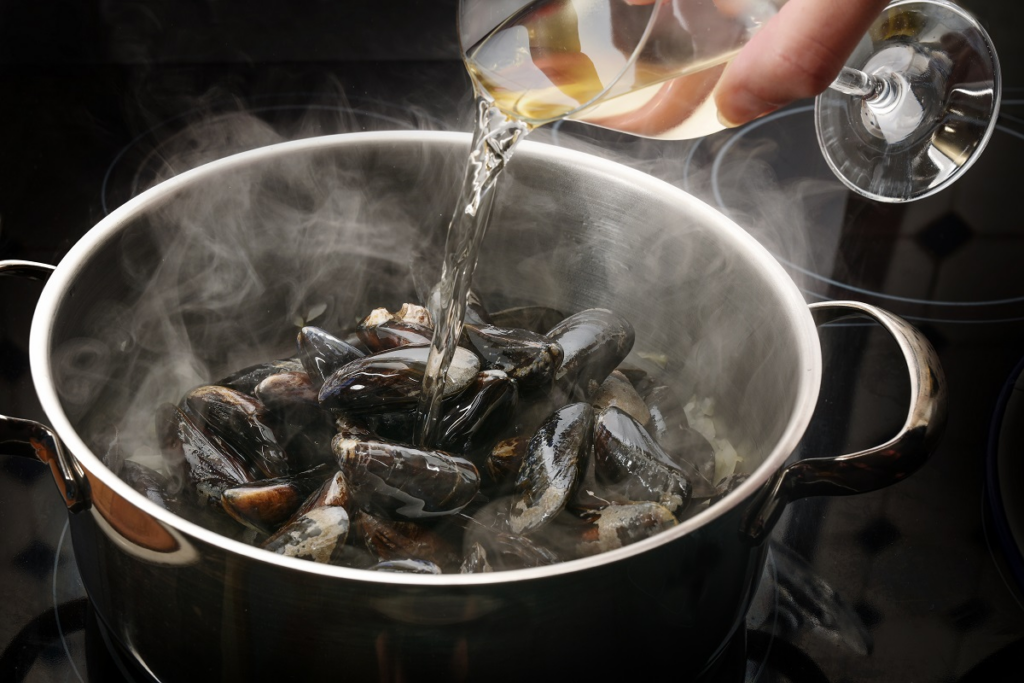
A very useful technique in using wine for sautéing dishes is deglazing. Here, let’s imagine that we have some meat or poultry in our pan, breaded or not, and there are some flavorful bits stuck to the bottom of the pan. After removing the main ingredients from the pan, we pour in wine and scrape with a spatula all those bits bursting with flavor, incorporating them into the sauce. Usually, by adding butter and as the wine evaporates, we achieve a velvety sauce full of flavor, as well as a nice texture, especially if there was breading on the meat beforehand.
I will address the crucial role of wine in marinating in a future article. Until then, enhance your everyday flavors with a little wine in the pot, pan, or oven, and you won’t regret it!
Ask me anything
Explore related questions


