






For the first time, two Greek researchers from the Technical University of Crete are preparing to travel to Antarctica, representing Greece in a pioneering scientific mission with international impact.
Christina Balomenaki and Eukhari Gourounti, architects-engineers and researchers at the Transformable Intelligent Environments Laboratory (TUC TIE Lab) of the School of Architectural Engineering, spoke to protothema.gr about how architecture can improve living conditions in confined and extreme environments, with applications spanning from space exploration to critical living zones on Earth.
Christina Balomenaki and Eukhari Gourounti are at the forefront of scientific research in the fields of neuroarchitecture and participatory design, examining how space impacts human psychology and daily life under extreme conditions.
“Antarctica is a natural laboratory. The conditions there mimic those of space and absolute isolation. We can gather valuable data to help improve living conditions both in space missions and in critical situations here on Earth,” explains Christina Balomenaki.
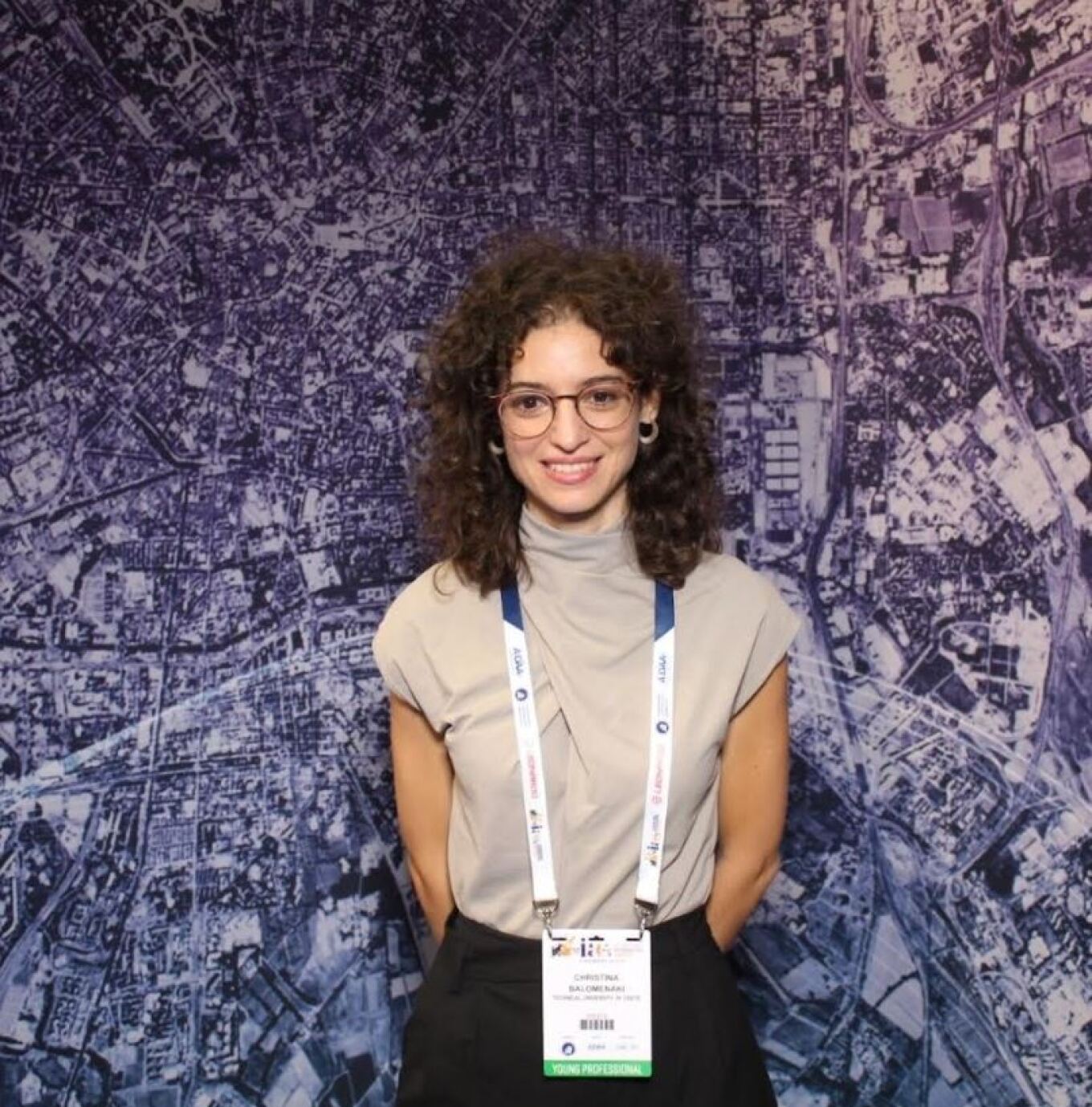
Christina Balomenaki
Their research focuses on two complementary approaches. Christina Balomenaki is developing audiovisual environments aimed at reducing stress and the psychological effects of isolation through personalized image and sound projections.
“We want to see if customized content, based on each individual’s experiential background, can positively influence their psychology and enhance their stability in such a demanding environment,” she notes.

Eukhari Gourounti
On her part, Eukhari Gourounti is investigating the spatial and psycho-spatial parameters that affect living conditions in extreme environments.
Using participatory design workshops, interviews, and observations, she studies the relationship between people and space, as well as their needs.
“The perception of space is subjective and changes significantly under extreme conditions. Our goal is to understand how space can be adapted to support the daily life and psychological comfort of those living there,” says Eukhari Gourounti.
Their research belongs to a new scientific field, neuroarchitecture, which connects neuroscience with architecture, examining how space affects the human brain and behavior.
Under extreme conditions, such as those in Antarctica, where isolation and environmental challenges are intense, maintaining psychological stability is crucial for the success of any mission.
The team’s personalized audiovisual stimuli, combined with technologies like EEGs and biometric devices, are innovative tools for addressing the psychological effects of isolation.
The results of this research are not limited to Antarctica but have broader applications. The development of adaptive and functional spaces that support mental well-being can be applied to space missions, temporary infrastructure for natural disasters, and urban environments.
“The experience we will gain in Antarctica will be invaluable for designing spaces that adapt to real human needs, enhancing psychological and social balance,” emphasizes Balomenaki.
The Bulgarian Antarctic Institute, with years of experience in the region, is actively supporting the mission, providing access to scientific infrastructure and expertise.
This collaboration integrates the Greek mission into a broad international research network, allowing the two scientists to collaborate with colleagues from other countries and benefit from the results of previous missions.
The presence of Greek researchers in Antarctica paves the way for strengthening the Greek scientific community and establishing new collaborations on a global scale.
The scientific director of the TUC TIE Lab is Professor Konstantinos-Alketas Ouggrinis, Ph.D., who is also the current Vice Rector of Research and Innovation at the Technical University of Crete.
The research program’s design and management are overseen by Marianthi Liapi, MSc, MIT. The laboratory is unique in its research focus in Greece, having completed 73 research projects, implemented 32 pilot programs, and employed over 500 researchers to date.
Supported by the scientific team of TUC TIE Lab and their collaborators in Greece and abroad, the two researchers declare themselves ready to face the challenges of the polar environment. From selecting equipment that can withstand extreme temperatures to managing daily communication and isolation, every detail has been carefully planned.
“Preparation is key. The conditions there demand discipline, resilience, and organization. We are ready to overcome any difficulty and bring back valuable data for our research,” concludes Eukhari Gourounti.
The Greek mission to Antarctica is not just an important scientific step but also an opportunity to showcase the innovative research conducted at Greek universities.
The mission is carried out in collaboration with the Hellenic Society for Polar Regions and has as its main sponsor the shipping company Laskaridis Shipping Company Ltd., which covers the travel expenses of the two researchers, the provision of appropriate clothing and equipment, as well as their safety.
Ask me anything
Explore related questions


