On a rooftop in Kyiv in late November, a small group of volunteers in mismatched uniforms watches anxiously. By day, they are all judges at Ukraine’s highest courts, but once every two weeks, they gather as an improvised air defense unit, armed only with a pair of Soviet-era machine guns to shoot down swarms of drones.
“It’s the cheapest way,” said Yurii Chumak, one of the volunteers and a sitting judge at the Supreme Court, emphasizing Ukraine’s avoidance of using expensive Western missiles against comparatively low-cost unmanned aerial vehicles (UAVs).
Chumak and his companions assess the risks, keeping their spirits up with tea and jokes during their 24-hour shifts. But it is clear their task has become exponentially more dangerous in recent months as Russia has intensified its drone attacks, terrorizing Ukrainian cities almost daily.
In the past six months, Russian drone attacks have risen from about 400 in May to more than 2,400 in November, according to data compiled by CNN from Ukraine’s armed forces. So far in December, at least 1,700 drone attacks have been recorded.
As the offensive escalates, CNN has uncovered new details about the expansion of a secret factory fueling Moscow’s drone war.
The Transformation of the Alabuga Factory into a Military Hub
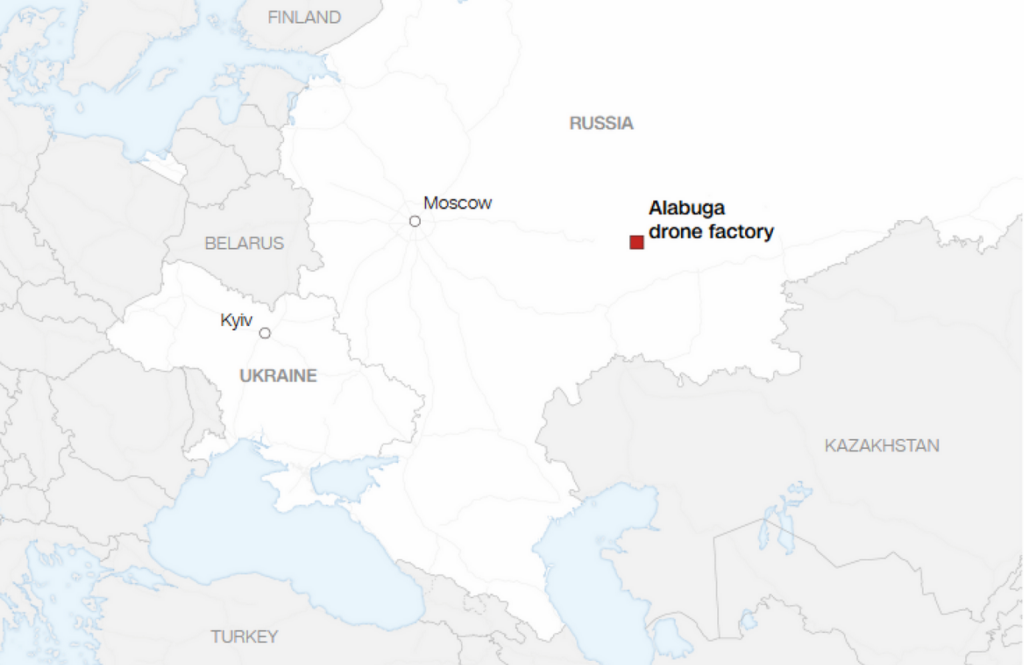
The factory, located in the Alabuga Special Economic Zone in the southern Tatarstan region of Russia, has significantly ramped up the production of Iranian-designed attack and surveillance drones, utilizing a range of Chinese components and employing a very young, low-skilled workforce, including Russian teenagers and African women, according to CNN’s analysis.
After initially importing Iranian Shahed-136 drones following the full-scale escalation of the conflict in 2022, Russia signed a $1.75 billion agreement in 2023 for domestic production of the drones. By September 2025, the Alabuga factory was slated to produce 6,000 units.
However, according to Ukrainian defense intelligence sources, this target was achieved a year early. In 2023 alone, 2,738 drones were manufactured, while production from January to September 2024 exceeded 5,760.
The factory does not limit itself to Shahed-136 drones. It has begun producing low-cost decoy drones, known as Gerbera, made from plywood and foam. These drones are used to deplete Ukrainian air defense resources by creating multiple false targets. Russia plans to produce up to 10,000 Gerbera drones by the end of 2024, with their production costs being ten times lower than those of the Shahed drones.
Chinese Involvement
China plays a pivotal role in supporting the Alabuga factory. According to Ukrainian defense sources, 34 Chinese companies collaborated with Alabuga between September 2023 and June 2024, signing contracts worth a total of 700 million yuan ($96 million). These companies supply components, production equipment, and UAV technology. Additionally, the Gerbera drones are based on a Chinese prototype developed by Skywalker Technology.

Despite Beijing’s assurances that it does not provide lethal weapons to Russia, the United States has already imposed sanctions on two Chinese companies and dozens of others supplying equipment suitable for military use. Alabuga continues to strengthen its cooperation with China by building a new transportation hub, the “Deng Xiaoping Logistics Complex,” to serve as a transfer center for components between the two countries.
Workforce: Russian Teens and African Women
Facing a severe labor shortage due to battlefield losses and the mass exodus of draft-age men, Russia has turned to teenagers and migrants. The factory employs students from the Alabuga Polytechnic School and attracts young women from African countries through its “Alabuga Start” program.

Recruitment videos promise high salaries, careers in technology, and modern facilities.
However, there are serious allegations regarding working conditions. Investigations reveal that students work under harsh conditions for long hours with strict penalties, while monthly wages for apprentices and migrants start at about $820. Meanwhile, the factory offers substantial salaries—up to $3,480 per month—for specialized workers, underscoring its strategy to attract talent.
Threats and International Reaction
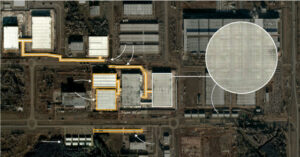
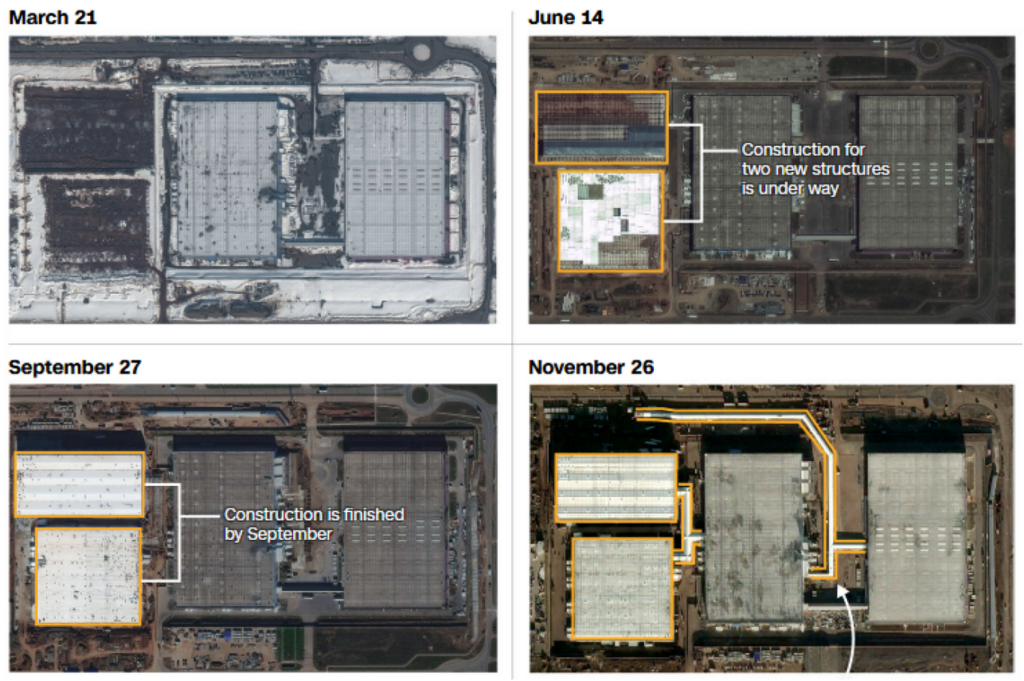
The increase in drone production at Alabuga has been accompanied by heightened security measures. Satellite image analyses show the factory’s footprint expanded by 55% in just a few months, with anti-drone grids and increased guards in place. Meanwhile, a “mysterious” fire destroyed a warehouse containing drone components worth $16 million, highlighting targeted attacks on the factory.
Ukraine continues its efforts to intercept the attacks, with just 5% of Shahed drones reaching their targets between August and October. However, the increasing frequency of attacks and the use of new technologies, such as thermobaric warheads, make defense more challenging.
Ask me anything
Explore related questions