




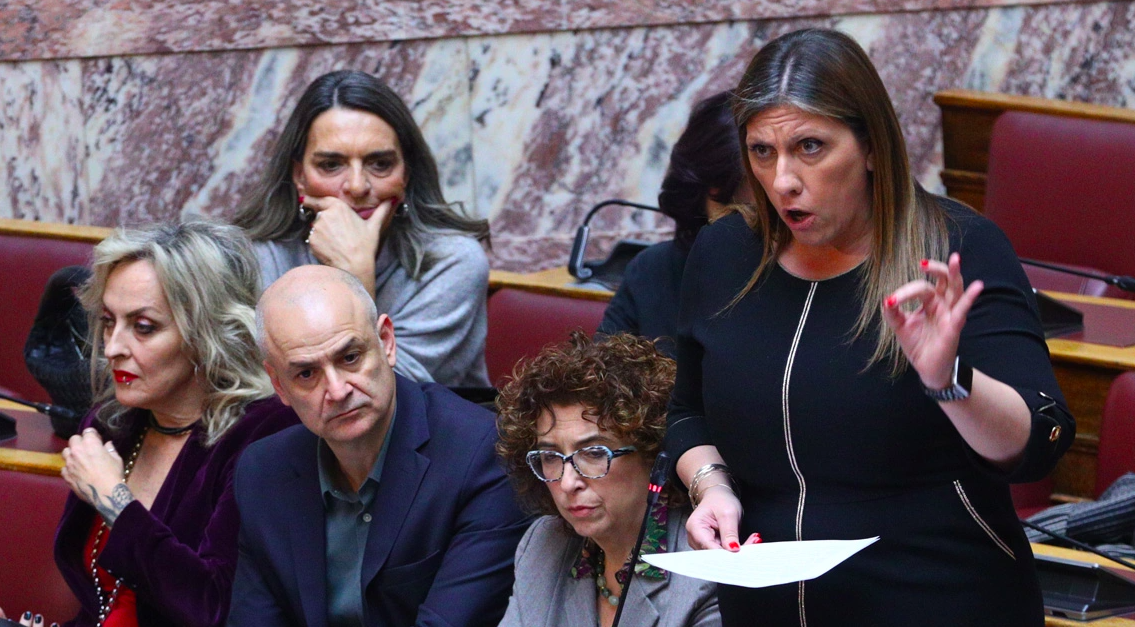
When polling companies Interview and Real Polls reported that Zoi Konstantopoulou’s party had surpassed PASOK and climbed to second place, PASOK officials dismissed the results as “tricks from Maximos Mansion” and said they would wait for the major polling firms before forming an opinion.
SYRIZA officials echoed the same sentiment, as both polls placed their party at 5-6%. However, their hopes were dashed when a third poll, conducted by Opinion, confirmed the trend: Plevsi Eleferias in second place (15.9%), PASOK in third (14.3%), and SYRIZA falling to sixth (6%). Even if Opinion is not considered a major firm, PASOK has often relied on its findings in the past—especially when, after Androulakis’ election, it was the only company that showed PASOK at 20.5%.
Now, two of the major polling firms, Metron Analysis and Pulse, have also placed Zoi Konstantopoulou in second place ahead of PASOK. Across all surveys, Plevsi Eleferias is experiencing explosive growth, while PASOK and SYRIZA are losing ground. This shift appears consistent across multiple polling agencies.
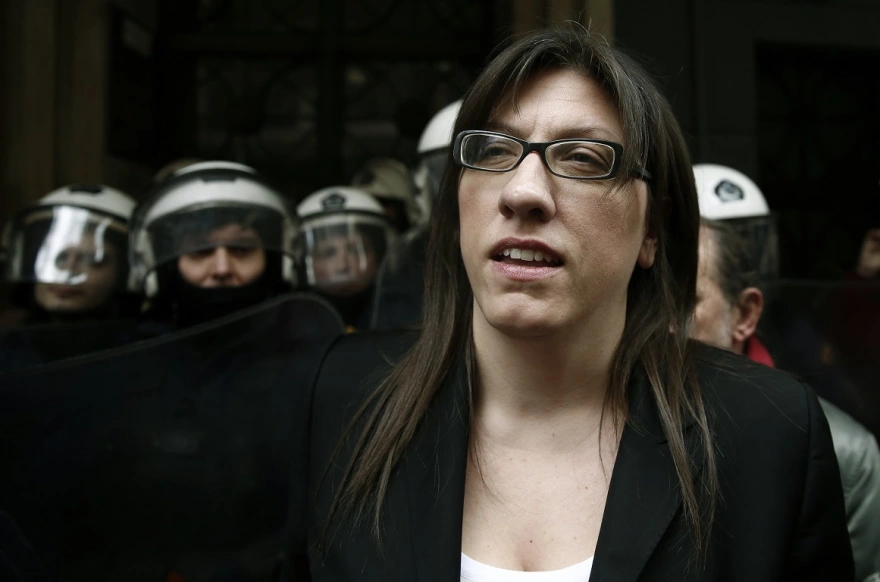
The rise of Zoi Konstantopoulou
The first major conclusion is that Zoi Konstantopoulou is solidifying her position in second place. Whether this will last remains to be seen. If the Tempi train tragedy fades from the public agenda and other issues dominate, Plevsi Eleftherias might lose traction. However, for now, PASOK and the rest of the opposition are trailing behind Konstantopoulou.
A second key takeaway is that her party is drawing votes from all directions—New Democracy, PASOK, SYRIZA, and even KKE—while simultaneously sidelining three smaller parties (Nea Aristera, Democracy Movement, and MeRA25), all of which originated from SYRIZA’s base. This signals a major shift in the balance of power among progressive and anti-right forces. A once-marginal party that barely entered parliament is now the primary recipient of public outrage over Tempi.
Konstantopoulou’s rise is not just due to her political and legal advocacy for the victims’ families but also because her rhetoric and behavior operate “outside the box,” unlike the leadership of the other opposition parties. Many citizens, especially younger voters and the digital generation, seem disillusioned with traditional party formalism and are looking for something different.
The challenge for PASOK and SYRIZA
Konstantopoulou leads in popularity among all party leaders and ranks second in preference for prime minister. Even more striking, among voters under 34, Plevsi Elefterias is the leading party—even ahead of New Democracy. Pollsters note that younger voters rarely change their minds and often influence older family members’ choices, further solidifying Konstantopoulou’s appeal.
Another notable trend is Freedom Voyage’s strong penetration into centrist voters, second only to New Democracy. PASOK, once dominant in the center, has now fallen to third place in this demographic. Coupled with Androulakis’ declining popularity—he now ranks fourth in both leadership approval and prime ministerial preference—this signals a serious concern for PASOK.
Additionally, while PASOK’s leader has a lower approval rating than his own party, Konstantopoulou is the main beneficiary of voter dissatisfaction with Mitsotakis’ government, rather than the official leader of the opposition. The most worrying factor? The growing number of voters who prefer “None of the Above.”
Internal strife within PASOK
This trend has triggered alarms within PASOK, particularly among Androulakis’ rivals. Figures like Doukas, Geroulanos, and Diamantopoulou are under pressure to act before the party’s scheduled congress in the fall—possibly as early as June—if PASOK’s stagnation continues. Some factions even anticipate leadership challenges, internal splits, or expulsions if Androulakis’ standing worsens.
Veteran PASOK members acknowledge that losing the center means losing their role in reconstructing the center-left. As one senior party official put it: “If we lose the Center, we lose the lead in rebuilding the Center-Left.” Many doubt Androulakis’ ability to restore PASOK as a governing party, believing his leadership will keep PASOK a mid-tier party, competing not for first place but for third—especially as Konstantopoulou and Velopoulos continue to rise.
SYRIZA’s identity crisis and Tsipras’ absence
Meanwhile, SYRIZA faces its own leadership vacuum. Neither interim leader Sokratis Famellos nor any other figure has emerged as a unifying force for the broader center-left. Efforts by figures like Dionysis Temponeras, Louka Katseli, Nikos Kotzias, and Christos Spirtzis to form a progressive electoral alliance remain fruitless. Some see potential in Maria Karystianou, a grieving mother who has become a prominent voice following the Tempi tragedy.
Within SYRIZA, an internal committee is being proposed to steer the party toward political and electoral cooperation with other opposition forces. However, with SYRIZA fragmented and stagnant, any alternative government formation now seems impossible without Konstantopoulou—a stark contrast to previous center-left coalition strategies.
Adding to the disarray, Alexis Tsipras, instead of intervening in Greece’s political crisis, is focusing on personal rebranding through lectures at Harvard. This strategic distancing prevents him from becoming a target for his political opponents but also sidelines him from reclaiming leadership of the opposition.
The failure of opposition strategies
Another key takeaway is that opposition parties have failed to capitalize on the government’s struggles. Their recent no-confidence motion against the government and the proposed investigation into Deputy Minister Triantopoulos backfired. The government, rather than suffering losses, emerged stronger.
The opposition expected a political victory but instead faced setbacks. New Democracy did not need a confidence vote—it simply blocked the opposition’s motion. Additionally, PASOK’s handling of the Triantopoulos case was weak, as the charges were minor, allowing the government to dismiss the accusations.
Even within SYRIZA, some members, including Giannis Dragasakis, are calling for an honest reassessment of their 2015-2023 tenure. They propose forming a committee of prominent figures to lead a broader political and electoral front against the government. However, the upcoming SYRIZA congress and the ongoing legal investigations into the Tempi disaster will determine how viable this approach is.
The opposition is running out of oxygen
Despite past efforts to form a progressive alternative government, PASOK, SYRIZA, and the New Left are now struggling to remain relevant. According to polling data, Freedom Voyage is absorbing all the political momentum from the Tempi tragedy, leaving the traditional center-left parties gasping for air.
With the current trajectory, no alternative government formation seems feasible without Konstantopoulou’s participation. This marks the end of the traditional governing center-left as an electoral strategy.
Ask me anything
Explore related questions