World Environment Day today, and the fir forests and plane trees in the heart of mainland forests are sounding the alarm. The trees are drying out en masse, infected by pathogenic fungi and bark beetles. The phenomenon is directly linked to climate change, as extreme temperatures and prolonged droughts favor the development of these threats, which attack and ultimately dry out the trees down to the roots. The only solution for containing the phenomenon appears to be the logging of affected trees and their removal from the forests. However, as the climate crisis creates favorable conditions for disease development, the threat of forest extinction cannot be eliminated.
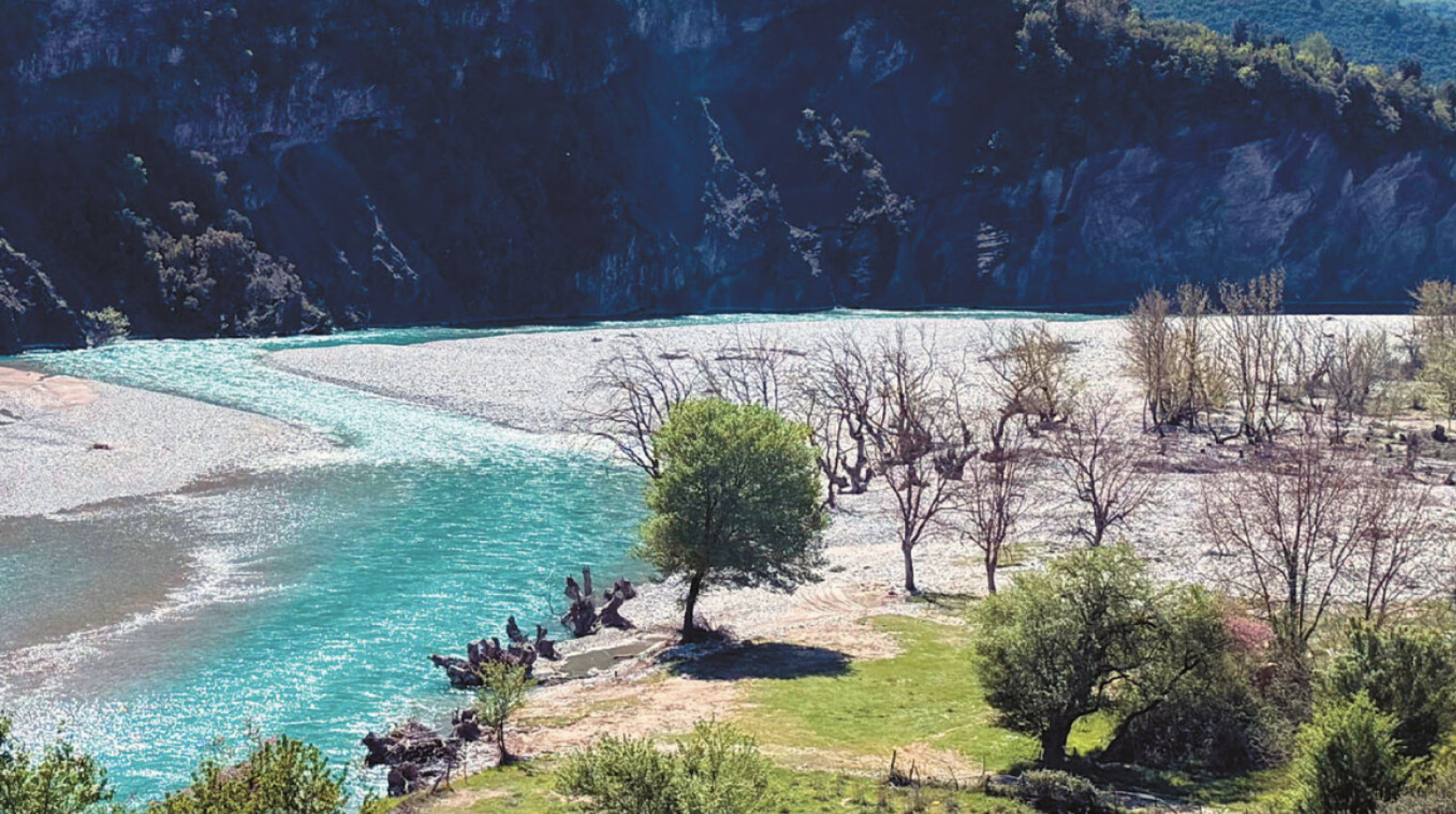
The problem is present in all mountainous areas of Greece and in recent years has intensified in Tzoumerka, the Achelous Valley, and Agrafa, also affecting Kitheronas – to a lesser extent – Helicon, parts of Epirus, and the Peloponnese.
Imported disease
Specifically for the plane trees, the disease that is now drying them out en masse was first recorded in 2003 in Messinia. At that time, the fungus Ceratocystis platani (which causes canker stain disease) had been isolated in dying or dead trees. Analyses conducted then showed that the strain found in Greece is identical to those reported in Italy, France, and Switzerland, indicating that the plane tree disease was likely imported from those countries, most likely Italy, from where nurseries were being imported. After Messinia, it spread throughout the Peloponnese. It moved to Epirus and Thessaly, and then to Central Greece and Euboea.
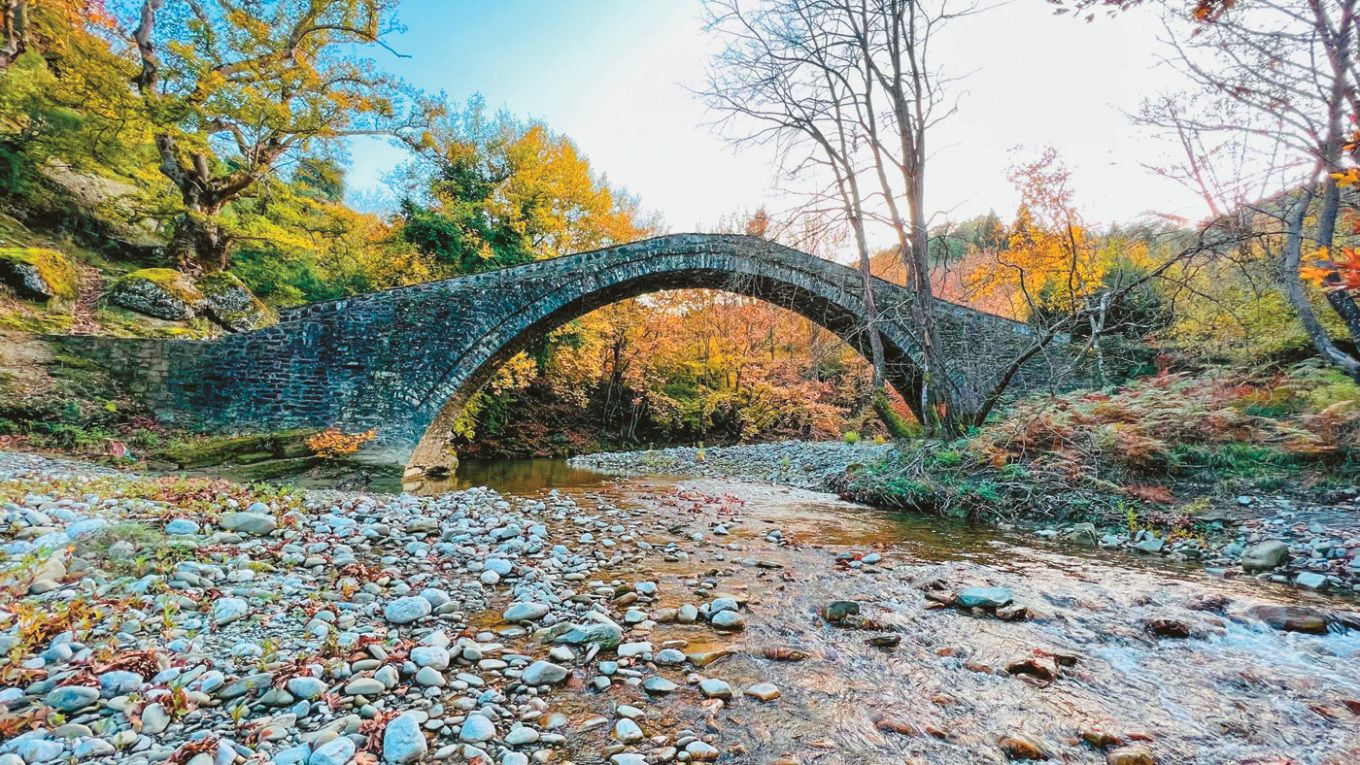
The pathogenic fungus has killed thousands of plane trees across Greece, several of which were centuries old, while it also affects younger trees, altering the landscape in riparian areas.
The pathogenic fungus has killed thousands of plane trees across Greece, several of which were ancient and massive. It has been found that the primary factor in its spread is human activity, through excavation machinery and tools for cutting trees and branches. The canker stain disease caused by the fungus develops inside the wood and attacks roots, trunks, and branches. The wood of felled infected trees, however, is prohibited from being used for firewood, as its transport risks spreading the disease to other areas. The problem is already very severe, says the mayor of Agrafa, Alexis Kardambikis, and describes: “You see dead trees even in the stream beds, in Granitsa the situation is very bad, in the fir trees we have a new disease, and the plane trees began drying out en masse over the past 3-4 years in our regions. You understand that the consequences are manifold. Forests are disappearing, the landscape of entire areas is changing, and we all know how important trees are for the ecosystem as a whole.”
“The problem extends throughout Central Greece where there are firs, and we fear that for the infected plane trees, there is no salvation,” says Ms. Katerina Kalantzi, a forester and Deputy Regional Governor of Mountainous and Forest Policy of Central Greece.
According to her, the plane tree die-off phenomenon has been observed in the forests of Central Greece for about a decade. However, there are infection hotspots throughout Greece where firs are found. The region turned to the Forest Research Institute of ELGO “Dimitra” and its Research Director, Mr. Dimitris Avtzis. According to the laboratory analysis results on the causes of fir and pine die-off, the drying is due to the combined presence of wood-boring and bark beetles, which are experiencing a population explosion.
Logging
As a way to curb the spread of insects, the Forest Research Institute of ELGO “Dimitra” proposes timely logging and removal of dead and especially infected pines and firs, to the extent possible. This would reduce both the insect population and the available food source that sustains them.
“The most appropriate period for such intervention is from autumn to spring, as during this time the insects are under the bark and inside the wood, so interventions have a direct impact on their population,” says Ms. Kalantzi, adding that significant measures to limit disease spread include strict control over nursery imports and thorough disinfection of chainsaws and other tools used for logging, to prevent transferring pathogens from infected to pristine, healthy areas.
Additional Measures
ELGO “Dimitra” also proposes that in cases where access is difficult and transporting logged trees is not possible, only the bark of infected trees should be removed. “In this way, the bark beetles will be exposed to external biotic and abiotic factors that will gradually have a negative effect on their population,” it is specifically noted in the report delivered in early May to the Region of Central Greece, which faces a severe problem with the die-off of firs, pines, and plane trees, particularly in Fthiotida, Evrytania, Phocis, and Boeotia. According to Ms. Kalantzi, “the research results were officially communicated to the Ministry of Environment and Energy, so that, in cooperation with the Forest Policy Implementation Inspectorate and local forest committees responsible for logging and removing dead and infected trees, the necessary funds can be secured, and required actions expedited to address and contain the phenomenon as soon as possible.”
Spread
Tree die-off is not limited to Greece – the canker stain disease caused by fungi that threatens plane trees throughout the country has also been recorded in many Mediterranean countries. Similarly, fir die-off (Abies cephalonica) has been observed in recent years in many areas. Symptoms include discoloration, branch drying, and ultimately death. It has been established that climate change, with rising temperatures and periods of drought, worsens the situation, making fir forests more vulnerable to diseases and pests.
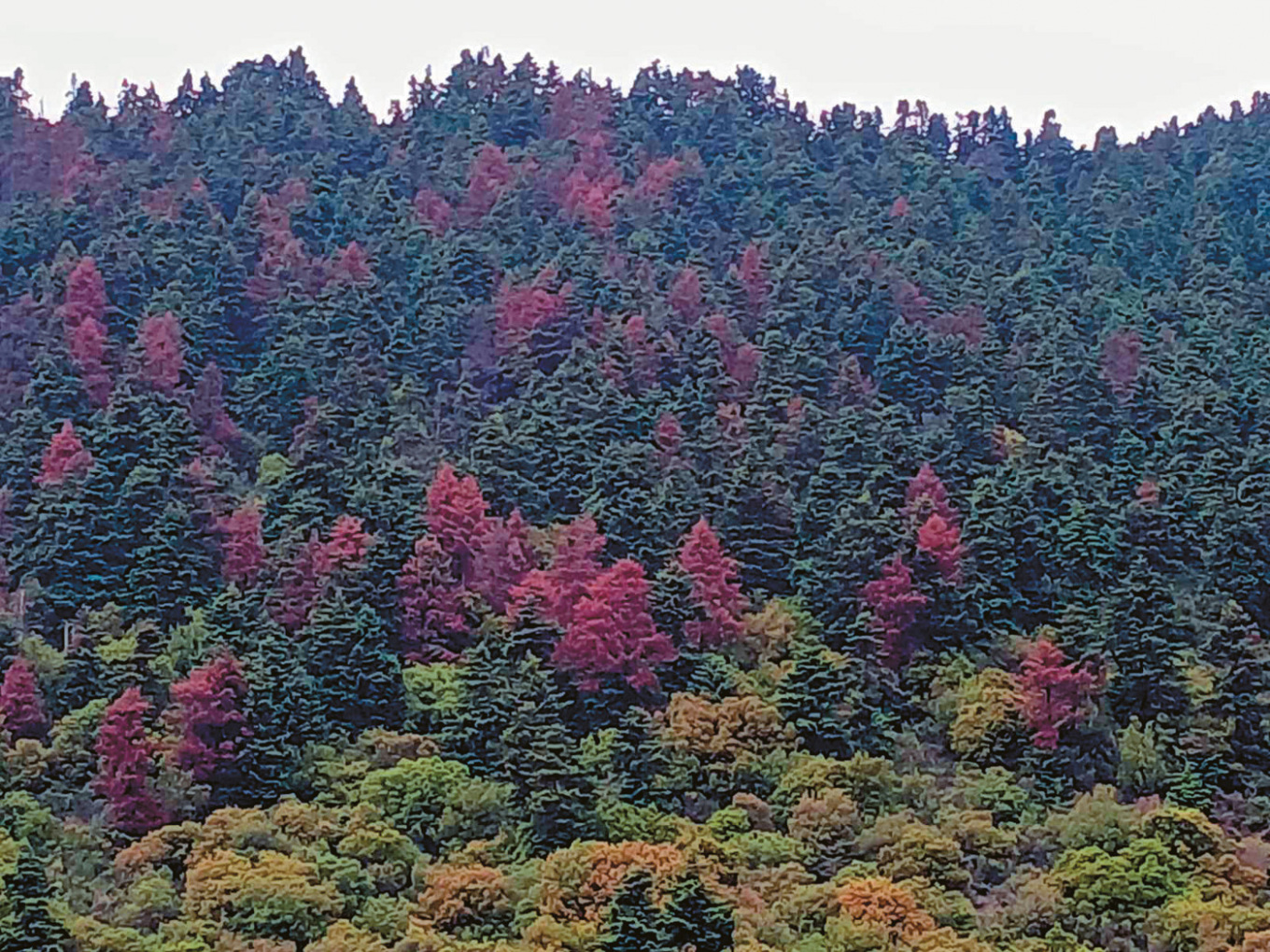
Infected firs are recognizable by their characteristic reddish-brown color. Laboratory analyses show that die-off is due to the combined presence of wood-boring and bark beetles experiencing a population explosion.
The fungus Ceratocystis platani, which causes canker stain disease (affecting only plane trees), according to dasarxeio.com (a website focused on forestry and environmental issues), was introduced to Europe from North America and likely brought via platanus wood crates by American troops during World War II to Italy and France.
The request to the Commission
“The extensive die-off of trees seems to be linked both to climate change and to biotic factors such as attacks by bark beetles and pathogenic fungi,” notes PASOK MEP Sakis Arnaoutoglou, who raised the issue with the European Commission. “The result of this widespread infestation is the destabilization of forest ecosystems, loss of biodiversity, increased wildfire risk, and acceleration of desertification,” he notes and calls on the Commission to monitor the phenomenon in sensitive areas of the EU as a whole, mobilize European funding tools for research, prevention, and restoration of affected forests, and strengthen cooperation with member states to create early warning and intervention mechanisms to protect forest ecosystems from the consequences of the climate crisis. “The disappearance of trees is not just a natural phenomenon; it is a warning sign for ecological balance, the quality of life of people in mountainous areas, and the future of nature in Europe.”
Ask me anything
Explore related questions