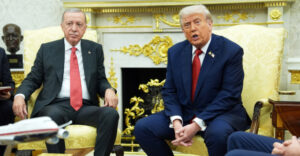





Donald Trump’s abrupt change of stance on the war in Ukraine has rattled Kyiv more than Moscow. Twenty-four hours after his dramatic turn, the U.S. president shows no sign of following up his words with concrete action — economic sanctions, military aid, or diplomatic pressure.
Meanwhile, the meeting between U.S. Secretary of State Marco Rubio and Russian Foreign Minister Sergey Lavrov in a New York hotel lasted less than an hour. That brevity, analysts note, suggests two things: the Kremlin is not alarmed by Trump’s comments and sees no need for deeper negotiations, while Washington is also reluctant — at least for now — to push further.
Kremlin Signals and Trump’s Calculations
Moscow’s response — couched in animal metaphors (“we are bears, not tigers”) — underlined its single, consistent line: the war in Ukraine remains non-negotiable. The U.S. position, by contrast, has shifted repeatedly for reasons known only to the president himself.
Since the mid-August Trump–Putin meeting in Anchorage, Alaska, diplomacy and fighting alike have intensified. Yet Trump’s latest move has left even seasoned diplomats struggling to interpret it. Many believe the surprise was aimed as much at domestic and allied audiences as at Vladimir Putin.
For now, the lack of follow-up makes Trump’s pivot appear less like a strategic push and more like a step back from direct U.S. involvement. Still, observers detect in his remarks a desire to pressure Moscow — not out of concern for international law or civilian suffering, but from personal grievance. As one analyst put it, Trump’s message boiled down to: “Putin has disappointed me.”
Zelensky Pushes Back
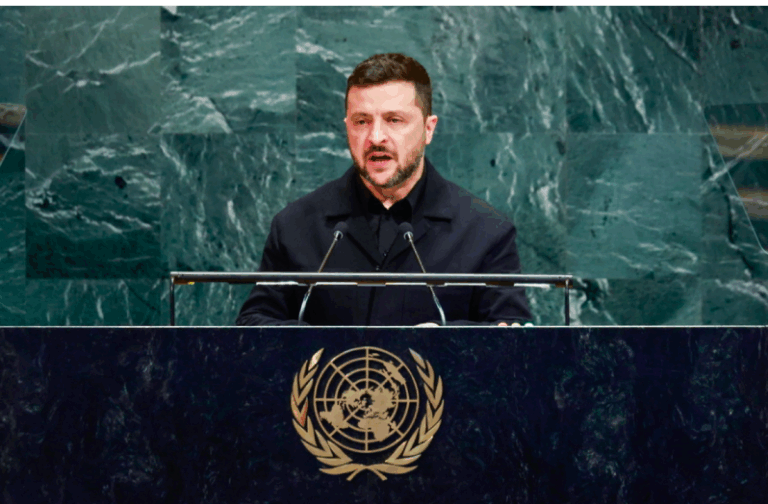
If Trump hoped to unsettle Ukraine’s leadership, President Volodymyr Zelensky showed no sign of slowing down. From the UN stage, he doubled down on appeals for global support, repeatedly stressing that Ukraine is “the first line of defense” between Moscow’s ambitions and the rest of Europe.
Zelensky also borrowed a page from Trump’s own playbook: salesmanship. In a seven-minute stretch of his speech, he promoted Ukraine’s booming drone industry, framing it as a symbol of resilience and openly courting foreign investors. The performance drew both praise for boldness and criticism from Western commentators — some even suggesting, half-jokingly, that the Ukrainian leader showed signs of “Stockholm syndrome” in adopting Trump’s style.
What Comes Next
Trump’s unpredictability has made him a known quantity — often in his most combative form — even to those he now claims to support. For Ukraine, Zelensky’s ability to adapt has become his defining trait. Nearly four years into Russia’s invasion, he has evolved into what some call a political chameleon: battered by circumstances, but still finding new ways to keep Kyiv at the center of global attention.
Ask me anything
Explore related questions