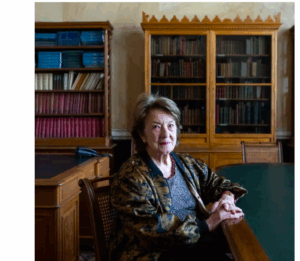
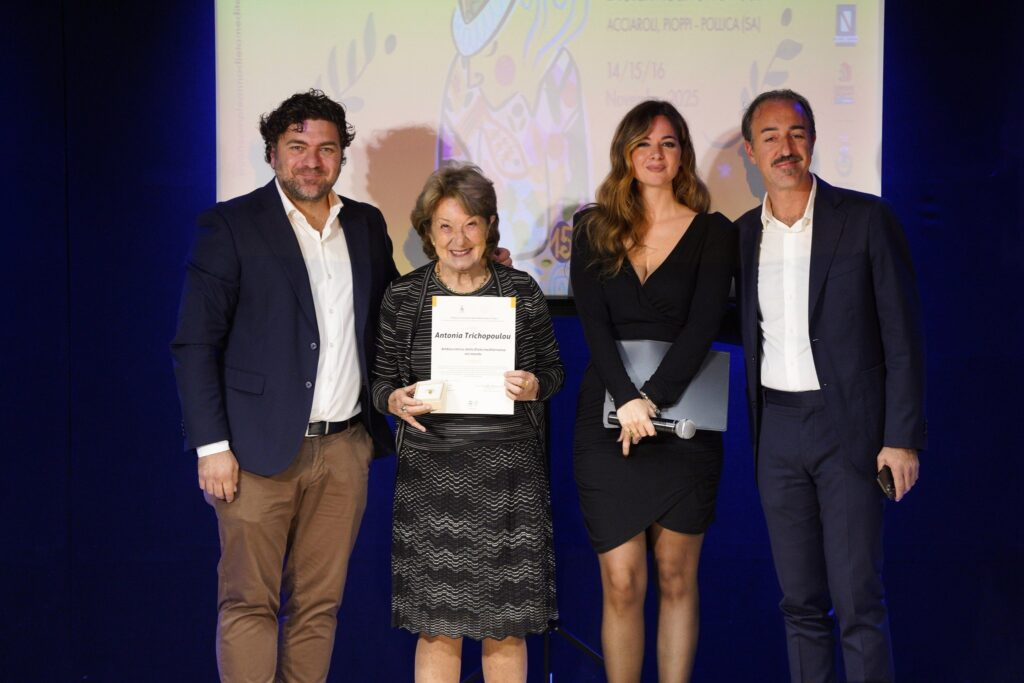
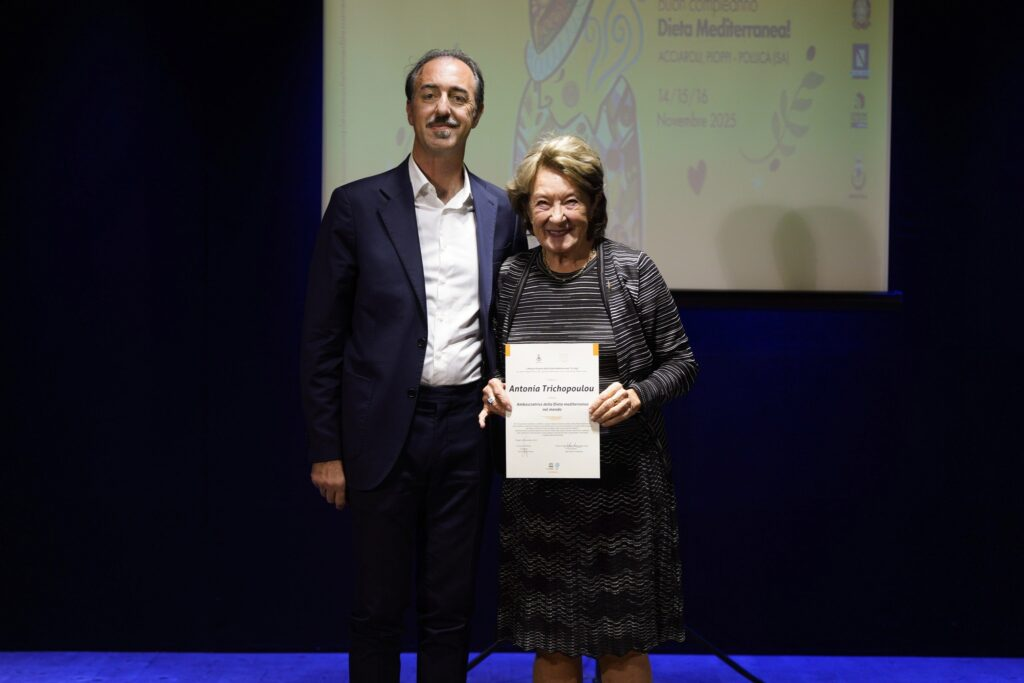
Fifteen years have passed since the Mediterranean Diet was recognized by UNESCO as an element of the Intangible Cultural Heritage of Humanity, and the small town of Pollica in Campania once again became the center of a global narrative about food, health, and culture. On the 15th anniversary of the historic 2010 decision in Nairobi, four personalities from the fields of science and gastronomy were named ambassadors of the Mediterranean Diet.
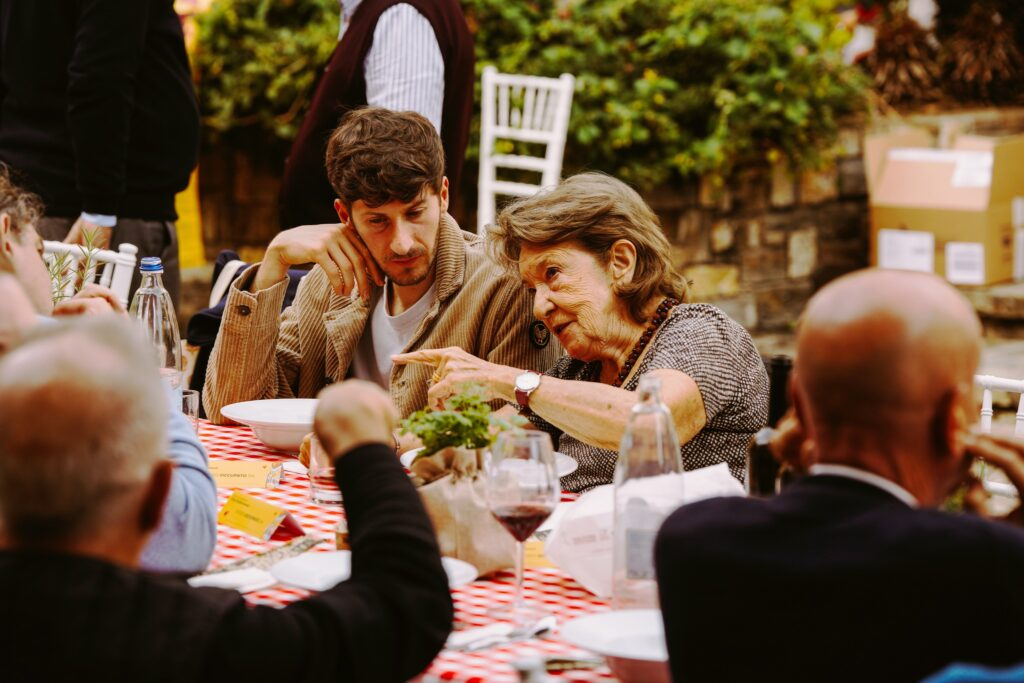
Among them was the Greek academic Antonia Trichopoulou, one of the most internationally recognized researchers in nutritional epidemiology. Her award at the historic Castello dei Principi Capano continues a career that has been crucial in establishing the Mediterranean Diet, alongside traditional Greek cuisine, as a model of sustainability, public health, and longevity.
Mediterranean Diet – The 15-Year Celebration and the Place Where the Story Began
The anniversary of November 16 holds special significance for Pollica. It is where American physiologist Ancel Keys and his wife Margaret Haney lived and worked for decades, conducting the majority of the research that led to the theoretical foundation of the Mediterranean Diet. In the Italian village of Pioppi, Keys documented seasonality, dietary practices, and social habits, elements he later incorporated in his study on cardiovascular diseases and longevity.
The “Seven Countries Study” is a long-term, pioneering epidemiological study investigating the relationship between diet, lifestyle, and cardiovascular diseases across various populations.
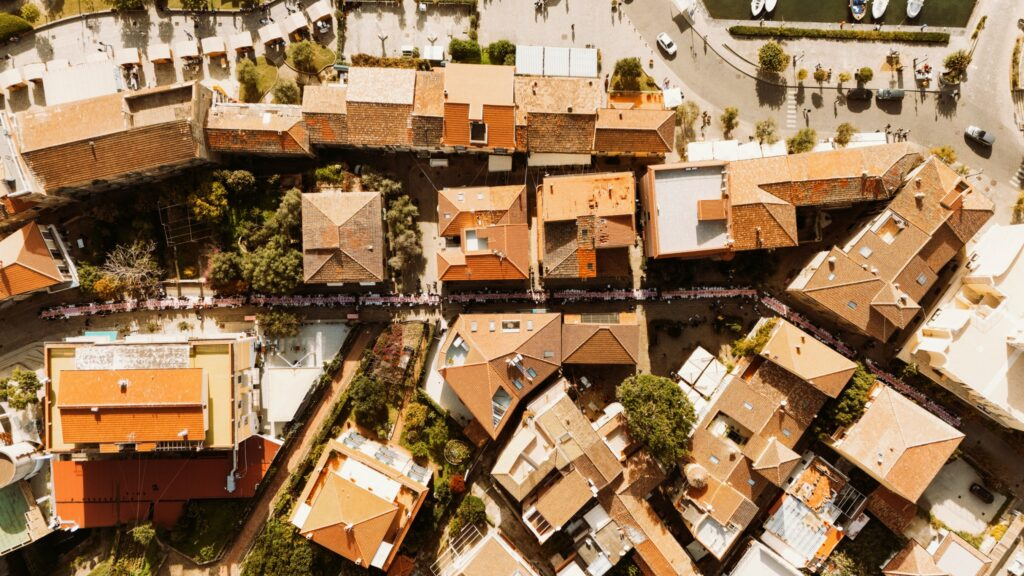
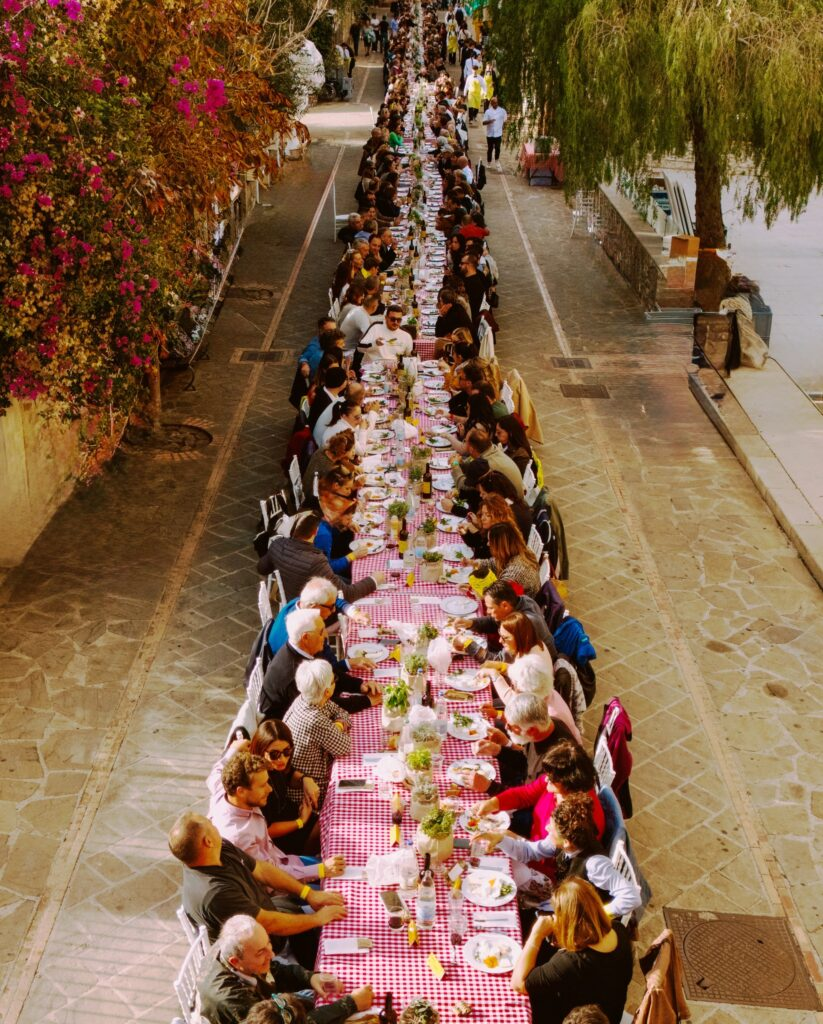
It is no coincidence that Pollica was recognized by UNESCO as one of the emblematic communities of the Mediterranean Diet. Today, the town functions as a “living lab” and annually becomes a meeting point for scientists, organizations, and producers. This year, to mark 15 years since the 2010 recognition, the celebration extended over three days in the areas of Pollica, Pioppi, and Acciaroli, featuring conferences, workshops, communal meals, and a large open “tavolata” (a single table with 650 seats) dedicated to the relationship between food, community, and the local ecosystem.
The Greek Woman Who Contributed More Than Most to the International Understanding of the Mediterranean Diet
The presence of Greek academic and nutritional epidemiologist Antonia Trichopoulou at this year’s celebration carried special weight. As president of the Hellenic Health Foundation and director of the WHO Collaborating Centre for Nutrition, she has mapped Greek diet extensively: from legumes and wild greens to local varieties, microclimates, and, of course, the olive tree and extra virgin olive oil. Her research team was among the first to link the quality of extra virgin olive oil with health indicators and biological aging, with much of her work published in top international scientific journals like The Lancet.
In our conversation, Ms. Trichopoulou highlighted a point often lost in public discourse: “The Mediterranean Diet stands out because it is sustainable for the planet, thanks to seasonality, locality, and its balance with the environment.” She also emphasized the essence of the Mediterranean philosophy: “It is a diet of moderation. It doesn’t say ‘no’ to anything, as long as there is balance.”
However, what worries her most is the future and the gradual distancing of young people in Greece from the tastes and practices that make up this dietary model. “If the new generation doesn’t gain taste experience, there will be no next generation, at least not Mediterranean,” she says pointedly. Taste is built through exposure and repetition. Without it, diet loses its cultural content and becomes limited.
At the same time, paradoxically, abroad the Mediterranean Diet is considered a model for modern food systems and continues to be studied as a framework that can address public health and climate crisis challenges.
The Other Three Ambassadors of the Mediterranean Diet
Alongside Antonia Trichopoulou, Peppe Guida, a Michelin-starred chef from Vico Equense; Domenico Galzerano, a cardiologist and scientific communicator; and Alessio Fasano, a Harvard researcher working on microbiome and immunology, were honored.
Two Wishes for the Future of the Mediterranean Diet
Closing our discussion, Ms. Antonia Trichopoulou shared two very specific wishes on how Greece could reconnect with its dietary heritage.
The first concerns the center of Athens. “We don’t need to do difficult or grandiose things. Where there are so many unused buildings in the historic center of Athens, let ‘The Cafe Hellas’ be created.” A place where visitors could drink ironwort or sage tea, taste pies with our wild greens or simple trachanas (a traditional wheat-based dish). “People should be exposed to real, traditional food. This is the best advertisement we can make abroad.”
The second, more feasible, involves the institution of the farmers’ market. For Ms. Trichopoulou, the market should be “the living knowledge of Greek diet,” relying exclusively on local products and producers. “It’s unacceptable to find products from overseas countries at the farmers’ market stalls. There must be a strong consumer-producer relationship, everyone should know where their food comes from, and ideally be able to visit the farm with their children.”
Ask me anything
Explore related questions