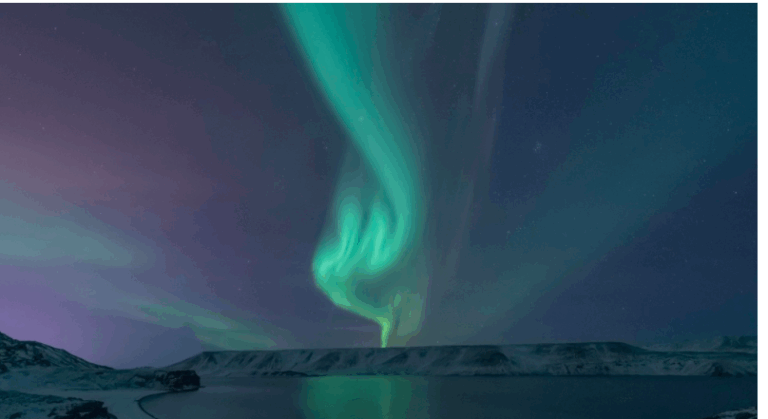
From antiquity to the present day, the strange, shimmering lights that dance across the night sky have inspired awe, fear, and at times, profound political and religious interpretations.
When the Aurora Terrorized Europe
In January 1716, shortly after the suppression of the Jacobite uprising in England, eyewitnesses reported “flames,” “organ-shaped lines of light,” and “bloody rains” streaking across the heavens. Some claimed to see giants wielding flaming swords; others spoke of armies battling above the clouds. An English clergyman of the era observed that people interpreted these visions as “the fate of nations,” filtered through their political and religious convictions.
Similar reactions recurred, such as during the last Jacobite uprising in 1745, when the aurora was once again regarded as a divine omen.
The Earliest Records of a “Burning Sky”
For years, the oldest documented reference to the phenomenon was thought to be a Chinese record from 193 BCE, where an emperor of the Jin dynasty noted that “the sky opened in the northeast.” Yet recent research reveals far older possible accounts:
- Aristotle (330 BCE) described “flames,” “moving torches,” and nocturnal luminous displays, now interpreted as auroras.
- Babylonian tablets (567 BCE) recorded “red skies” and “red clouds,” alongside omens foretelling future events.
- Assyrian archives from the 7th century BCE mention similar sightings.
- The Bamboo Annals of China (circa 10th century BCE), according to a 2023 study, depict a “five-colored” night light—possibly an extreme space weather event.
Scientists cross-reference these ancient texts with data on solar activity and Earth’s magnetic field to confirm these are indeed descriptions of the aurora.
Myths, Fears, and Warnings
In cultures where the aurora is a common sight, entire spiritual systems have evolved around it.
Scandinavia and the Arctic
The Sámi people often regarded the aurora as a force demanding respect: no loud talking or provocations were allowed, and women were cautioned to cover their hair. In some Alaskan communities, the lights were said to “play football with human heads”—a tale elders used to scare children into returning home early.
Australia and New Zealand
Indigenous peoples associate the southern aurora with fire, blood, and death. In some communities, it is taboo, interpreted only by initiated elders.
“Fox Fires,” “Merry Dancers,” and Other Names
The northern lights have inspired a myriad of names:
- Revontulet in Finnish—“fox fires,” drawn from a myth where an arctic fox sweeps the snow with its tail.
- Mirrie dancers in the Shetland dialect—“bright dancers.”
- Guovsahasat in the Sámi language—“the lights you can hear,” referring to the strange sounds some claim accompany the display.
From Myth to Science
The term aurora borealis was coined in the 17th century by Galileo, who linked the Roman goddess of dawn, Aurora, with Boreas, the north wind. The southern aurora became known as aurora australis, named after Auster, the god of the south wind.
Scientific understanding—that charged particles from the Sun interact with Earth’s magnetic field to create these lights—came much later. Even the mysterious sounds some report alongside the aurora were once dismissed as illusions until researchers seriously studied Arctic indigenous knowledge and theorized that static electricity discharges might be responsible.
The Modern Era and the “Tourism Myths”
Despite modern science, myths around the aurora endure. A Norwegian historian notes a popular urban legend: that Japanese tourists travel to Scandinavia to conceive a child “under the aurora,” believing it brings luck—a tale likely born from marketing efforts.
As science continues to unravel the aurora’s mysteries, anthropologists and historians highlight that countless untold stories remain hidden in endangered languages or guarded traditions.
These enigmatic lights—once feared as ominous signs, revered as divine warnings, and now appreciated as a breathtaking natural spectacle—remain one of humanity’s most captivating ways of interpreting the heavens.
Ask me anything
Explore related questions