





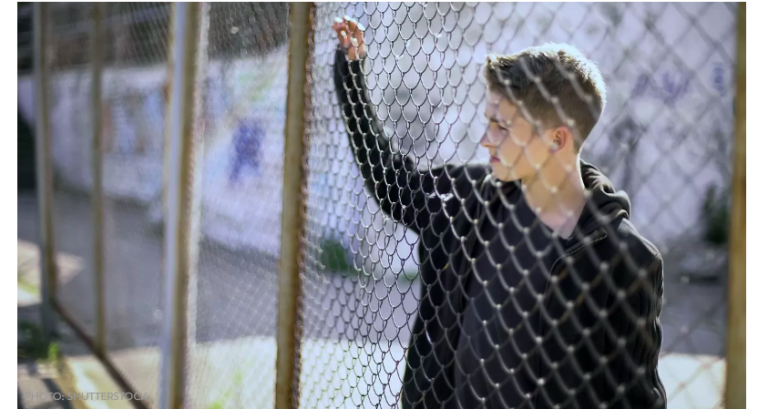
At the beginning of 2025, approximately 1,200 minors were living in child protection institutions in Greece. Added to this number are dozens of young adults who have aged out of the institutions but remain there because the state refuses to ensure a sustainable transition to adult life. These numbers do not simply reflect a social pathology. They reveal a child protection model based on confinement as a normalized response to child poverty, abuse, neglect, and the erosion of the welfare state.
Institutional care in Greece does not function as a temporary emergency measure. It operates as a permanent storage mechanism for children for whom no alternative pathway was ever provided to ensure equal opportunities. Most institutions lack unified standards, stable staffing, and effective supervision—not by chance, but as a result of chronic underfunding and privatization of social policy. Children’s daily lives are organized around disciplinary routines, collective rules, and constant control that cancels individuality, privacy, and autonomy. The child learns to obey, not to choose. To adapt, not to claim. To endure, not to dream.
The consequences of this experience are deep and long-lasting. The lack of stable emotional bonds, frequent staff turnover, and absence of a reference adult undermine children’s emotional growth and psychological resilience. Institutionalization is not neutral; it produces trauma, dependency, and social invisibility. It is a mechanism for disciplining the most vulnerable bodies, who learn early that their poverty makes them manageable. When the child becomes an adult, the system abandons them almost immediately—without housing, without support, without social capital. Thus, institutional confinement becomes a gateway to poverty, insecurity, risk of delinquency, and social exclusion.
At the same time, alternative care policies remain limited and unevenly distributed. They are instrumentalized as political fireworks by governments with a superficial framework of implementation. Despite the passing of Law 4538/2018, foster care and adoption have yet to function as real alternatives to confinement. Comprehensive foster care remains minimal compared to the number of children in institutions, while adoption mainly concerns small children, leaving out older children, those with disabilities, and those with complex needs. This creates a silent but clearly class-based hierarchy of children’s value: some are considered “investable” and “rehabilitatable,” while others are condemned to permanent institutional living.
The book Housing and Child Protection. The Pseudo-Deinstitutionalization (Topos publications) highlights that the problem is not technical but deeply political. Understaffing of social services, bureaucratic delays in lifting parental custody, failed foster care, and the return of children to institutions are not accidents. They are the predictable outcome of a state investing more in managing social marginalization than in preventing it. Instead of supporting families before collapse, the state intervenes repressively, removing the child and transferring the problem to a closed institution, away from public view. It ignores whether institutional placement is more destructive than the harmful family environment from which the child was removed.
Deinstitutionalization cannot be limited to announcements and pilot programs. It requires a break with the institution-centered model and the logic of minimal social responsibility. It demands massive investment in community services, substantial support for foster care with scientific monitoring, development of small semi-independent living facilities, and, above all, prevention policies that keep children in their families and communities. Without these, institutions will continue to fill up and children’s lives will be indefinitely suspended.
The question is not whether we know what must be done. We know. The question is whether we are willing to confront a system that has learned to regard confinement as normal and child poverty as disposable. The institution remains the dominant solution because it serves a low-cost, low-political-exposure model that aligns with established interests of charitable and church organizations. Child protection, however, is not a neutral administrative function. It is a political practice with measurable consequences on children’s lives. And these consequences have a signature.
Ask me anything
Explore related questions