





The free trade agreement between the European Union and the Mercosur countries creates the possibility of access to a new market of nearly 300 million consumers, many of whom may come into contact for the first time with high-quality Greek agri-food products.
“Especially in today’s complex geopolitical and geoeconomic environment, our country’s objective is clear: to conclude substantive trade agreements that deliver tangible benefits for producers and businesses, while at the same time ensuring stability and predictability,” said Antonis Filippis, Secretary General for Agricultural Policy and International Relations at the Ministry of Rural Development and Food, speaking to the Athens–Macedonian News Agency.
He noted, however, that “these agreements must also include effective protection and monitoring mechanisms.” Referring specifically to the Mercosur agreement, he emphasized that the bilateral safeguard clause “does not constitute a complete answer to concerns, but it is a key tool for shaping, at least to some extent, fair conditions of competition in the agri-food sector.”
The agreement comes after more than 20 years of negotiations. An initial political framework was formed in June 2019, while the final texts were approved by the College of Commissioners last September.
Its implementation is expected to take place in two stages: initially through the provisional application of the trade pillar of the agreement, with immediate effect after its signature, following approval by the EU Council by qualified majority and by the European Parliament; and subsequently through the final ratification of the overall agreement by the national parliaments of the member states.
Among other provisions, the agreement foresees the gradual abolition of import tariffs, with potential benefits for Greek products such as olive oil, cheeses, kiwifruit, peaches, and bakery products.
At the same time, it includes protection for 20 Greek geographical indications, with special transitional arrangements. For feta cheese, a transitional period of seven years is предусмотрed for existing users of the name, based on the “grandfathering” clause.
The other names to be protected are Ouzo, Tsipouro, the wines Retsina Attica, Amyntaio, Nemea, Naoussa, Mantineia, Santorini and Samos; the olive oils Kalamata, Sitia, Lygourio Asklipiou and Kolymvari Chania; as well as Chios Mastiha, Kozani Saffron, Kalamata olives, Amfissa table olives, Kefalograviera, Manouri, and Corinthian currants “Vostizza.”
According to available data, Greek exports to Mercosur countries currently amount to approximately €34 million. The reduction of tariffs is expected to enable Greek businesses to increase their shipments, strengthening their market share in these markets.
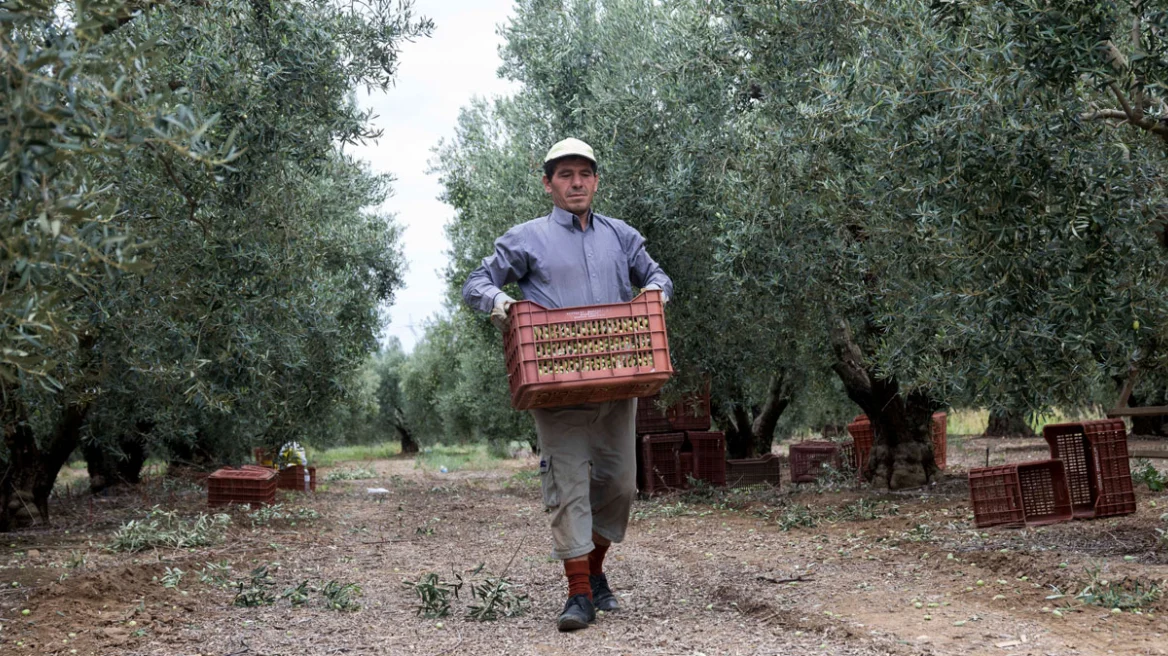
A characteristic example is olive oil, a product expected to benefit directly from the agreement, as the Mercosur countries—Brazil, Argentina, Paraguay, and Uruguay—do not have significant domestic production and currently impose tariffs on the product. The abolition of these tariffs is expected to enhance the attractiveness of Greek olive oil in those markets.
Farmers’ reactions and safeguard measures
At the same time, European farming organizations have expressed opposition to the agreement, arguing that cheaper agricultural products from Mercosur countries—often produced under lower environmental and labor standards—could create unfair competition within the single market.
In response to these concerns, the European Commission presented a draft regulation to strengthen safeguard mechanisms.
Among other measures, it provides for the possibility of intervention within 21 days of identifying disturbances in the agri-food market; the conduct of investigations in cases where imports increase by more than 8% or when imports are 10% lower than domestic production; stricter monitoring by member state; strengthened phytosanitary and health controls; and the activation of the “Unity Safety Net” mechanism amounting to €6.3 billion under the new Multiannual Financial Framework, with an increase in the Agricultural Reserve. These positions also constitute long-standing demands of the Greek state.
In addition, recently adopted measures include stronger protection for products with designation of origin, as well as the introduction of a reciprocity clause, according to which products imported into the EU from South American countries must meet the same standards as those applied to European products.
A list of 13 sensitive products has also been drawn up—such as lemons, oranges, mandarins, meat, eggs, honey, rice, etc.—for which the activation of tariffs or even the suspension of the application of the agreement is foreseen in the event of a significant increase in imports or intense pressure on prices.
As the Minister of Rural Development and Food, Kostas Tsiaras, emphasized during the presentation of measures for farmers last Wednesday, “the safeguard clauses within the EU regulatory framework were voted for in the European Parliament only by the Members of the European Parliament from New Democracy.”
Additional fiscal support
In this context also falls the recent initiative of the President of the European Commission, Ursula von der Leyen, to mobilize additional resources in support of the agricultural sector.
Specifically, in a letter to the Cypriot Presidency and to the President of the European Parliament, Roberta Metsola, she proposes the allocation of approximately €45 billion—namely two thirds of the available resources from the mid-term revision of the seven-year budget—for the direct support of farmers. Member states may apply to make use of these resources through national and regional partnership plans.
The same letter reiterates existing proposals, such as the provision of a €6.3 billion reserve to address market disruptions, as well as increased financial support for rural areas, with at least 10% of the resources of each national and regional plan.
This initiative was welcomed by Prime Minister Kyriakos Mitsotakis, who stated that “the immediate mobilization of significant resources for the agricultural sector constitutes a substantial step in supporting Greek and European farmers,” adding that “Greece continues to support a strong Common Agricultural Policy for the period 2028–2034, as the primary sector is a national priority.”
Ask me anything
Explore related questions


