





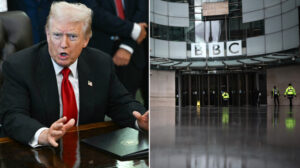
The BBC will ask the U.S. judiciary to dismiss a defamation lawsuit filed by Donald Trump, who is seeking $10 billion in damages from the British public broadcaster over a controversially edited video of one of his speeches.
Trump filed the lawsuit in December in Florida, accusing the BBC of defamation and of violating a trade practices law. He is seeking $5 billion in damages, plus interest, for each of the two claims.
The BBC broadcast the video on its Panorama program shortly before the 2024 U.S. presidential election. The report featured edited excerpts from a speech Trump delivered on January 6, 2021, which made the Republican president appear to encourage his supporters to attack the U.S. Capitol.
According to court documents filed on Monday, lawyers for the British public broadcaster said they will “seek dismissal of the lawsuit for lack of personal jurisdiction” in federal court in Miami, where Trump resides.
They have until March 17 to file the motion to dismiss.
The BBC’s lawyers argue that Trump “will not be able to prove” that the documentary, which was broadcast outside the United States, caused him any legally recognizable harm.
They note that Trump was re-elected on November 5, 2024, after the program aired, winning Florida by a decisive 13-point margin and improving on his performance in both the 2016 and 2020 elections. As a result, they contend that his claim is not legally admissible.
BBC Chairman Samir Shah previously sent a letter apologizing to Trump, but the gesture failed to defuse the dispute. Shah has nevertheless said the broadcaster is determined to contest any defamation lawsuit.
“As we have already clearly stated, we will defend ourselves in this case. We will not make additional comments while the process is ongoing,” a BBC spokesperson said on Tuesday.
The case has reportedly led to the resignations of Director General Tim Davie and Head of Media Deborah Turness.
Trump has previously filed, or threatened to file, lawsuits against U.S. media organizations, some of which have resulted in substantial settlements to bring the disputes to an end.
Ask me anything
Explore related questions