





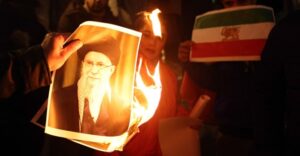
The death toll from protests in Iran has reached 2,571 people, the US-based rights organization HRANA announced today.
The organization said it has so far confirmed the deaths of 2,403 protesters, 147 government-affiliated individuals, 12 people under the age of 18, and nine civilians who were not among the protesters. An Iranian official said yesterday, Tuesday, that about 2,000 people have been killed – the first time authorities have given a total death toll from the crackdown on protests, which has already lasted more than two weeks across the country.
Protests across the country
The protests have reportedly spread to some 180 cities and towns in all 31 provinces of Iran. They were initially sparked by the collapse of the national currency and the exploding cost of living, but soon evolved into open political demands.
Analysts believe it is one of the most serious challenges the theocratic regime has faced since the 1979 Islamic Revolution.
The situation escalated dramatically last Thursday when authorities responded to the protests with deadly violence. The crackdown was accompanied by an almost complete shutdown of the internet and telecommunications, making it difficult to independently confirm the events.
Another organization, the Norwegian Iran Human Rights, said it has confirmed the deaths of at least 734 protesters.
A 26-year-old Iranian protester is expected to be executed today for his involvement in the anti-government protests rocking Iran, just as Donald Trump openly calls on citizens to “keep protesting” and promises that “help is on the way,” prompting a fierce diplomatic response from Tehran.
فوری،
عرفان سلطانی معترض جوان محکوم به اعدام در زندان قزلحصار در آستانه اعدام
بر طبق اطلاعاتی که به سازمان حقوق بشری ههنگاو رسیده است، عرفان سلطانی، معترض بازداشت شده در اعتراضات سراسری ۱۴۰۴، در زندان قزلحصار است و احتمال اعدام او تا ساعاتی دیگر بسیار بالاست.
این… pic.twitter.com/728YuLxmJz
— Hengaw Organization for Human Rights (@HengawO) January 13, 2026
The US president, in fact, when asked in a CBS interview about the execution of Soltani, warned of very tough measures if the young Iranian is executed. “We will take very tough measures. If they do that, we will take very tough measures,” he said, and when asked to clarify what he meant, Trump referred to the recent US operation in Venezuela and the assassination of then Islamic State leader Abu Bakr al-Baghdadi in 2019.
“We don’t want to see what is happening in Iran happen. And, you know, if they want to have demonstrations, that’s one thing. When they start killing thousands of people. And now you’re talking about hangings. We’ll see how that comes out for them. It’s not going to work out for them,” the American president added.
According to the Norwegian human rights organisation Hengaw, Erfan Soltani, from the city of Fardis west of Tehran, is due to be executed later today. Soltani had been arrested in connection with protests in the city of Karaj.
EXCLUSIVE: In an interview with @TonyDokoupil, President Trump says the U.S. will take “very strong action” in Iran if the regime starts hanging protesters. "We don't want to see what's happening in Iran happen," he said. "It's not gonna work out good."
Watch more tonight on the… pic.twitter.com/0q1pu791dt
— CBS Evening News with Tony Dokoupil (@CBSEveningNews) January 13, 2026
The organisation complains that his family was informed of the death sentence but “deliberately kept in the dark” as to the judicial process. It says, “the rushed and non-transparent handling of the case heightens concerns that the death penalty is being used as a tool to suppress protests.”
Indicative of the cruelty of Tehran’s regime, NGOs reported that Soltani had only 10 minutes to say goodbye to his family, with Iranian security officials informing relatives that it would be their last farewell before the young man faced the executioner. According to Iran Human Rights (IHR), Soltani was also denied access to a lawyer or a trial, and “even a close relative who is a lawyer when he tried to take up the case was prevented and threatened by security agents. He was told, “There is no file for examination. We have announced that anyone arrested in the protests will be executed.”
Soltani’s family has also reportedly been threatened with arrest if they try to speak publicly about the case or contact the media, according to Iranwire.
Trump: “Keep protesting, help is on the way”
Keep on the ground, help is on its way.
Donald Trump, in a post on the Truth Social platform, urged Iranian protesters to “keep demonstrating,” warning that “murderers and abusers will pay a heavy price,” but did not specify what form the promised aid might take.
In an interview with CBS News, the US president said he would take “very strong action” if the Iranian regime proceeded to hang protesters. Meanwhile, the US called on its citizens to “leave Iran immediately, preferably through Turkey or Armenia, while J.D. Vance called a meeting of the National Security Council that Trump attended.
Covert contacts and political processes
Trump’s special envoy for the Middle East, Steve Witkoff, reportedly had a secret meeting over the weekend with exiled former heir to the Iranian throne, Reza Pahlavi, who is attempting to emerge as a central figure in the opposition after the outbreak of protests.
At the same time, Iranian diplomacy launched a fierce attack on Trump in a letter from Iran’s permanent representative to the UN, Amir Saeed Iravani, to the Security Council. In the letter, which was also shared with Secretary General Antonio Guterres, Irawani accused the US president of “openly encouraging political destabilisation”, “inciting violence” and “directly threatening the national sovereignty and security of the Islamic Republic”.
According to Tehran, “the United States and the Israeli regime bear direct and undeniable legal responsibility for the loss of lives of innocent civilians, particularly young people.”
Ask me anything
Explore related questions


