Last year’s US operation against Iranian nuclear facilities – in June 2025, which also led to the 12-Day War – was a model of limited military action. Short duration, high precision, no loss of personnel or assets. A classic “surgical strike” with a clear strategic message.
The possibility of a new intervention, however, is placed on a different level. It no longer concerns exclusively strategic infrastructure, but a wider political-military environment, with internal social unrest and an increased risk of escalation.
Targets within the urban fabric
Unlike nuclear facilities, the structures that support the Iranian state’s security apparatus are largely located within cities. Command centers, security bases, communications facilities, and economic hubs.
This radically alters the equation. The possibility of collateral damage increases sharply, and any civilian casualties undermine the political objective of an operation that would be presented as “supporting society.”
Accuracy is not just a technical requirement – it is a political requirement.
Economic objectives and indirect pressure
An alternative operational field concerns the economic power base of the regime. Infrastructure related to commercial networks, energy revenues, and financial mechanisms.
The blow here is not immediate. It is cumulative. The goal is not immediate collapse, but the creation of cracks within the security apparatus – shifting the stress from the political survival of the regime to the physical and economic survival of its cadres.
However, this is a double-edged sword. The economic pressure is spreading first to society, with unpredictable political consequences.
Weapon systems on the table
At the operational level, the range of potential targets favours the use of “stand-off” weapons rather than massive air strikes.
A central role could be played by:
Tomahawk cruise missiles are launched from submarines or surface ships far from Iranian shores. High accuracy, low risk to US forces.
JASSM (Joint Air-to-Surface Standoff Missile), with a penetrating warhead and a long range. They give the capability to strike without entering heavily protected airspace.
Unmanned aircraft, for surveillance, targeting, and selective strikes.
Limited use of long-range bombers, with aerial refueling if a high-symbol strike is required.
In contrast, the use of manned aircraft with free-fall bombs is considered high-risk and operationally difficult in dense urban environments.
Power limitations
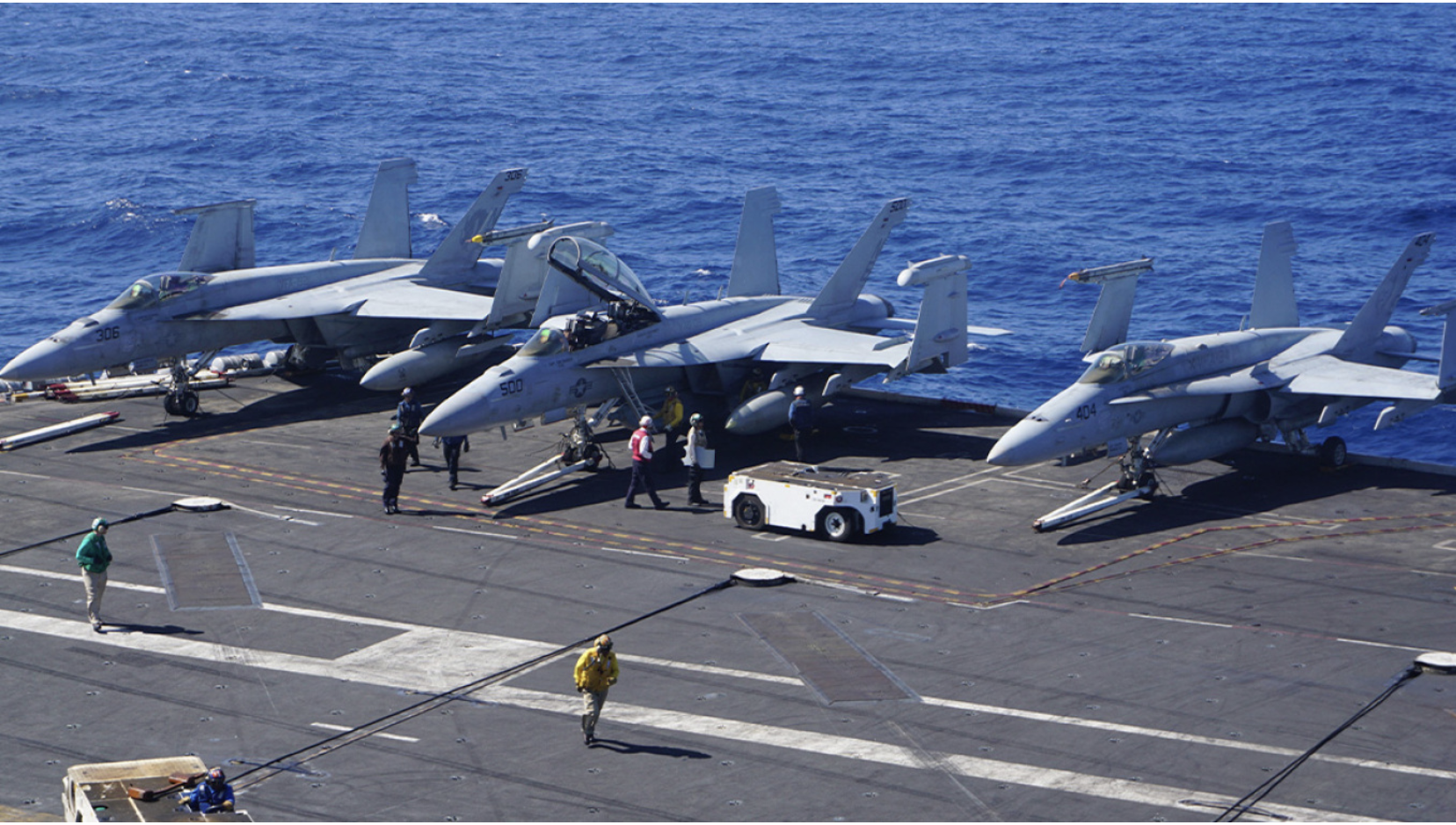
The absence of readily available aircraft carriers – currently, as the Abraham Lincoln has been ordered to the Persian Gulf – in the region reduces flexibility and increases reliance on long-range air assets and bases in the Persian Gulf or even further afield.
The operation, if undertaken, will be designed as a short raid, not a campaign. No prolonged presence. No land engagement. With strict escalation control.
The limit of the “theater.”
Such a strike will inevitably have the character of a show of force. Images, message, shock. Quick footprint in the international media. This is what the White House has shown so far with its actions last summer and recently in Venezuela.
But this is also his limit. Military theater creates pressure, not necessarily political subversion. And the experience of the region shows that regimes collapse not from precision missiles, but from internal attrition.
The United States has the means, technology, and operational experience for another limited, high-precision attack.
The open question is not a military one. It is political.
Whether such an action can change the dynamics inside Iran without reinforcing the narrative of an external threat that would condemn yet another Western effort.
Ask me anything
Explore related questions