




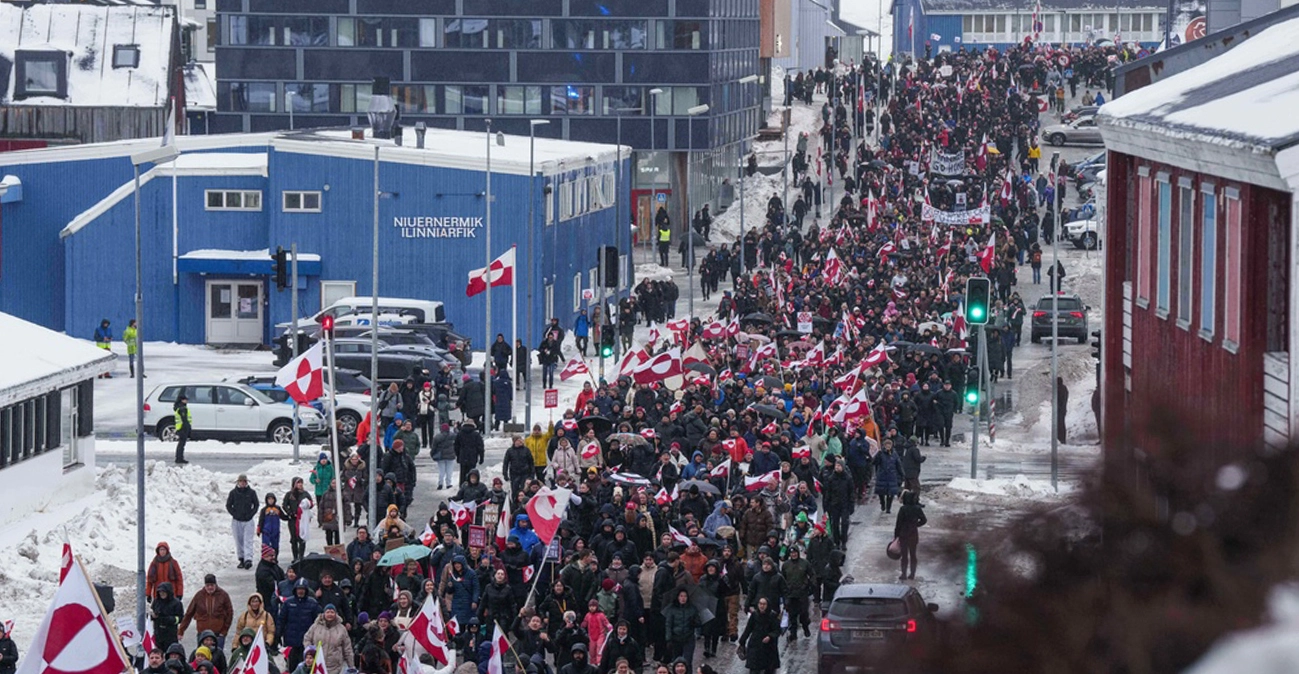
Donald Trump’s decision to impose tariffs on countries that have shown support for Greenland pushes transatlantic relations to a tipping point as EU leaders consider retaliatory measures against Washington that were previously unthinkable, Politico wrote Sunday, hours after the U.S. president’s announcements.
According to the publication, so far, the Europeans have accepted Trump’s backtracking on his support for Ukraine, the pressure to accept an uneven trade deal, and the imposition of increased defense spending as the risk of the U.S. leaving NATO was greater than any bad deal.
But now European leaders are facing increasing calls to abandon their soft approach and prepare for confrontation, especially after Trump imposed the tariffs immediately after the EU signed the deal with Mercosur countries.
One option suggested by centrist and left-wing politicians is for Europe to use the EU’s so-called “bazooka” Anti-Compulsion Instrument – a powerful trade retaliation tool originally designed to fend off China’s bullying tactics that would allow Europe to impose tariffs and investment restrictions on rule-breaking countries.
“The EU must be ready to apply targeted and proportionate countermeasures,” Valerie Heyer, head of the Renew Europe group in the European Parliament, wrote late Saturday on X: “The activation of the EU’s Anti-Coercive Instrument should be explicitly considered, as it was designed precisely for situations of economic intimidation of this nature.”
This is precisely the type of attack that this type of phenomenon is designed to be.
In his own post on X, French President Emmanuel Macron did not explicitly support this request, but hinted at possible retaliation, saying that the Europeans would “respond in a united and coordinated manner in case [Trump’s tariffs] are confirmed.”
The European Parliament is already poised to take action by blocking ratification of the EU-US trade deal agreed last summer after the leader of the European People’s Party, Manfred Weber, said it was “not possible at this stage” to approve the agreement.
However, activating the instrument against coercive pressure would be a much bigger step, as it would mean implementing an instrument originally designed for hostile states against the EU’s biggest ally and NATO’s main benefactor. The fact that it is now being openly discussed – amid the unprecedented deployment of European troops to Greenland – shows how seriously the Europeans take Trump’s claims to the island, which has belonged to the Kingdom of Denmark for hundreds of years, Politico writes.
Calm, carry on
.
Still, exporting European countries may be reluctant to launch a full-blown trade dispute with the United States over Greenland, an island that voted to leave the EU’s predecessor, the European Community, in 1985.
Speaking to Deutsche Welle on Saturday, EU Trade Commissioner Maros Sefkowitz said it would be “very complicated” to approve the EU-US trade deal in light of the current tensions, but made no mention of the implementation of the Anti-Compulsive Practices Instrument.
“What I would like to stress is the fact that this [Mercosur trade deal] will help us offset the negative consequences of the tariff increase imposed by the United States,” Sefkowitz said
With European ambassadors calling an emergency meeting on Sunday to discuss how to respond to the latest tariffs, an EU official told Politico that the mood for such an “explosion” is likely to be much lower in capitals than in the European Parliament, where politicians face pressure from their constituents.
Europe’s strategy for responding to Trump’s Greenland threats was being worked out in the early hours of Sunday morning as European Commission President Ursula von der Leyen, European Council President Antonio Costa and their top advisers returned to Brussels from Latin America, where they had just signed a trade deal with Mercosur.
As they chart a course for the future, leaders are likely to be guided by the Union’s long-term economic and security interests, namely preserving NATO and strengthening Europe’s ability to become self-reliant in defence in the medium term.
However, even the most optimistic observers of EU-US relations admit that the current situation is unprecedented and fraught with risks for the transatlantic alliance. “It is a scary time,” said the EU official. “We have to keep our cool and keep moving forward.”
Ask me anything
Explore related questions