






Greece is in the grip of harsh winter conditions, with polar air masses having already caused a sharp drop in temperatures, confirming forecasts of biting cold.
The coldest day of the cold spell is expected to be tomorrow, with a slight further decrease in temperature. Frost will persist in Northern Greece, while lower temperatures will also be recorded in central and southern regions. Temperatures will remain below 10°C almost throughout the country, with the exception of Western Greece, Crete, and the Dodecanese.
From Tuesday, the weather pattern will change, as warmer air masses begin to move in, leading to a gradual rise in temperature. At the same time, however, winds will strengthen significantly, locally reaching up to 9 Beaufort in the southern Ionian Sea and the maritime area of Kythira.
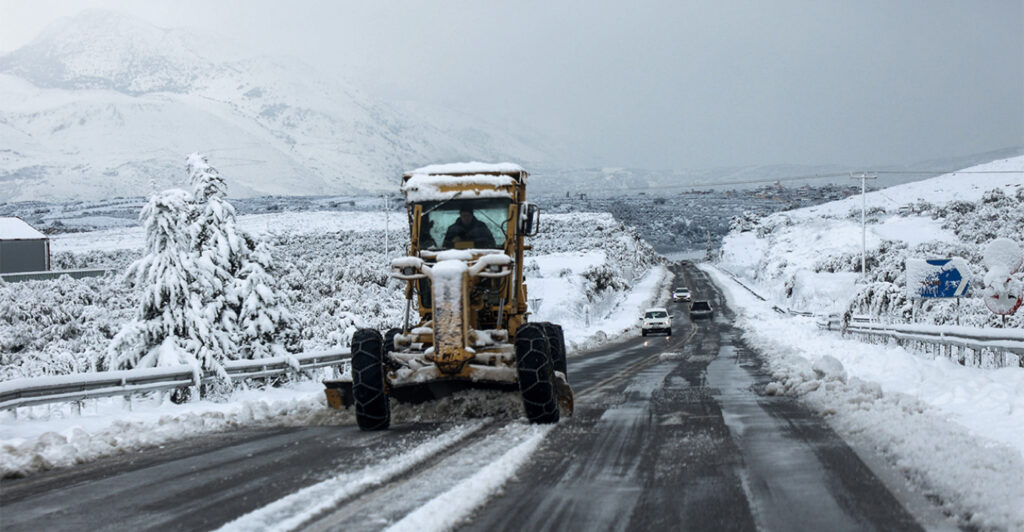
Severe weather coming on Wednesday 21/1 – Warning for dangerous storms in Attica as well
The deterioration of the weather will intensify on Wednesday, with heavy rainfall and thunderstorms across almost the entire country, mainly in central and southern regions. On the same day, heavy snowfall is also expected along the central mainland, both in mountainous and semi-mountainous areas.
For Attica, particular caution is required on Wednesday after the morning hours, as a very strong thunderstorm is forecast with 50 to 80 millimeters of rainfall, significantly increasing the risk of flooding, especially around midday.
What the “Aegean Sea Effect” is, which brings heavy snow to coastal areas and dangerous storms – What Marousakis says
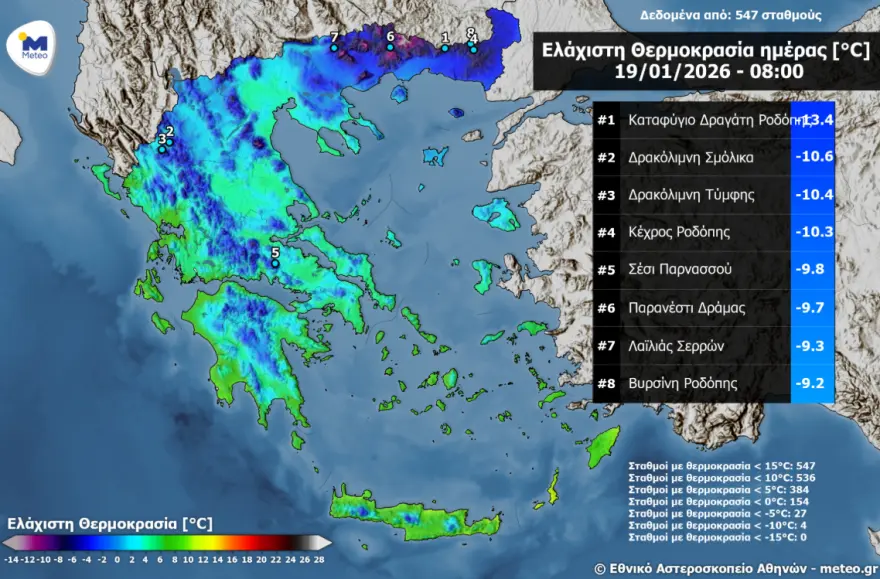
Conditions of polar cold have prevailed across the country in recent days, as it is affected by the “Aegean Sea Effect.”
As meteorologist Klearchos Marousakis explained, the polar air mass that has moved into our region is quite dry, and in order to produce weather phenomena it needs moisture, which it draws from the Aegean Sea.
The term “Aegean Sea Effect” refers to various phenomena, mainly the decisive role of the sea in the regional climate (such as strong winds, meltemi winds, and humidity), its impact on marine ecosystems (which are threatened by tourism and climate change), as well as a specific local meteorological phenomenon (the “Aegean Lake Effect”) that causes snowfall in winter in areas close to the coast.
It also includes significant hydrological processes (the formation of water masses) that affect the entire Mediterranean, as well as impacts from sea-level rise and seismic activity (tsunamis), which shape the environment and the history of the region.
Ask me anything
Explore related questions