




Being trustworthy and reliable is the most important baggage one carries through life. This is a piece of wisdom passed down through generations in many cultures. As with so many things, what applies to ordinary people in their personal lives also applies on a grander scale to states and international relations. It seems, however, that the West has difficulty remembering this basic principle -or, worse still, has chosen to ignore it.
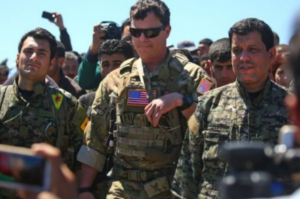
Over the past twelve years, Western forces, and primarily the United States, have worked closely with the Kurds of northern Syria against ISIS and its affiliated Islamist factions. During this period, the US in particular supported, trained, organised and supplied what was necessary for the People’s Protection Units (YPG) and later the Syrian Democratic Forces (SDF) to carry out this task. This cooperation proved instrumental in containing and ultimately uprooting Islamic terrorist groups from the region. The Kurdish contribution, however, came at an enormous cost, paid in rivers of blood. Meanwhile, Islamist forces were finding support and refuge under the wings of Turkey…
In 2025, the former emir of the Al-Nusra Front and Hay’at Tahrir al-Sham (HTS), Ahmed Hussein al-Sharaa, marched on Damascus and, with assistance largely from Ankara, seized power. That was the moment when amnesia struck the West…
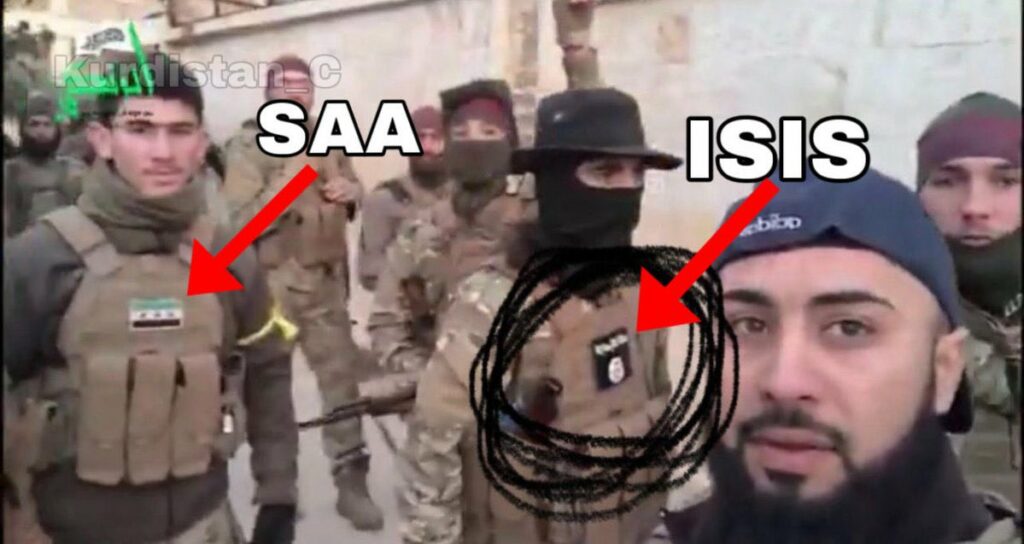
Suddenly, Hussein al-Sharaa (until very recently a wanted terrorist known as Abu Mohammad al-Julani) was accepted by the very same countries that had been hunting him down. Having overthrown their long-time enemy Bashar al-Assad, and faced with exhaustion from Middle Eastern wars, Western powers saw an opportunity for peace in Syria and chose to accept him as the country’s new strongman.
This might have been a pragmatic, if cynical, decision were it not for one crucial detail: al-Sharaa neither forgot nor forgave those who had fought against him and his kind. As he now seeks to reassert full control over the country, he has unleashed his fury on minorities (Alawites, Antiochian Greek Christians) and -inevitably- the Kurds, once again with Turkey at his side. For the Kurdish forces, the real shock was not al-Sharaa’s assault, but the absence and silence of their former allies.
The problem for the United States and the West is that they have violated the unwritten law of trust and reliability. No matter how powerful a country may be, it always depends on allies and friendly forces. War-by-Proxy is the name of the game in the post WWII era. Local actors on the ground, acting as leverage, are essential if any major power wishes to project influence in distant regions of the world.
But who will risk everything for a power that so casually abandons its allies for the sake of expediency? It appears that neither Washington nor the countries of the European Union have fully grasped the damage they have inflicted on their future efforts elsewhere.
The manner in which the Kurds were abandoned, and the immense suffering that now lies ahead of them, will take decades to be forgotten – if it is ever forgiven at all. This was not only a moral failure, but a strategic one as well. And while the world’s great powers may care little about the former, karma has a way of catching up with them over the latter…
Ask me anything
Explore related questions