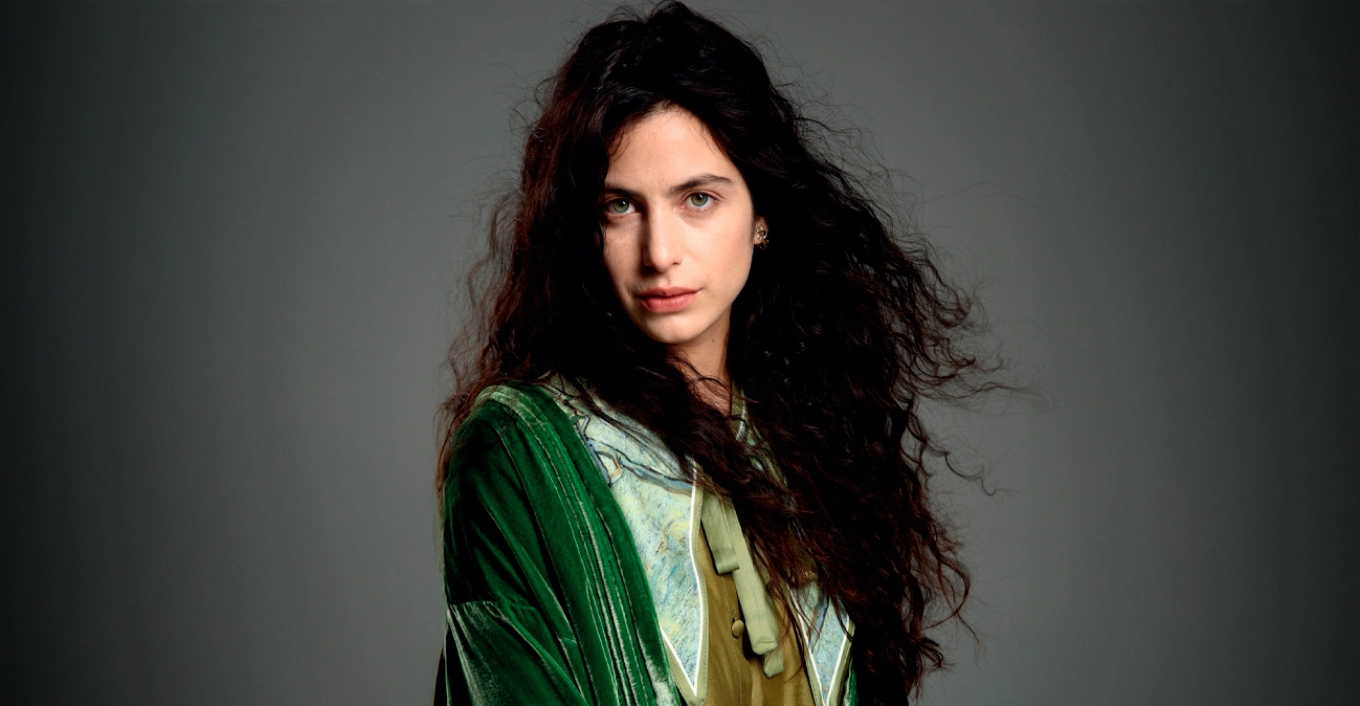
The star of The Great Chimera speaks to Gala:
“It was easy to say yes to the project, because I loved the story, the book, and the heroine.”
A lion’s head, a goat’s body, a snake’s tail. If you try to dive into her eyes like a scuba diver and travel from here to Syros and even farther, to the other sea that connects Greece with Italy, to discover the Chimera hidden in her gaze, in Fotini Pelouso you will meet the lion of the mythical beast—and in Marina, the character she portrays, the goat and the snake that her mother-in-law, Reizena, believes has entered her home.
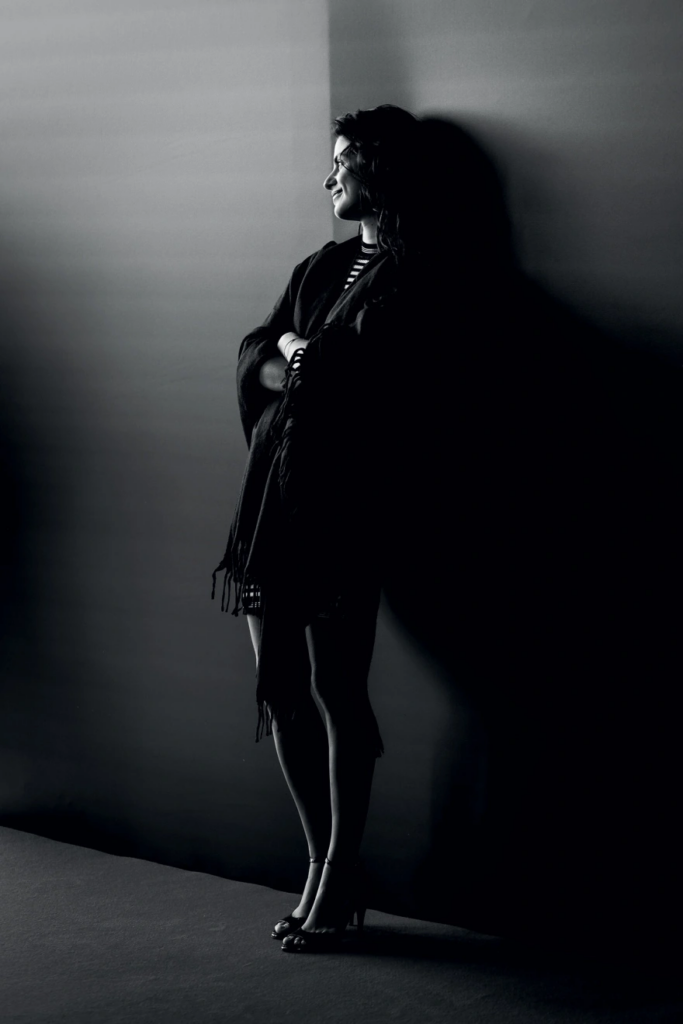
For the past few days, Pelouso has been the Chimera who achieved the impossible: she awakened an audience from the lethargy of mediocrity—or at least normality. Whether viewers agree or disagree, they see themselves in Karagatsis’ work, and that is precisely why it unsettles them.
She became the woman who made some of us wish we were in Giannis’ or Minas’ place—after all, what do moral rules matter when it comes to love—and others curse her fate and destiny, as if human passion and the act of love were a mistake of nature. Roman and Greek at once, Fotini Pelouso balances between her two homelands with the same ease that her role balances between innocence and temptation.
Postscript: the interview was conducted in Greek.
GALA: Did you speak Greek at home from a young age?
FOTINI PELOUSO: Yes. I learned Italian and Greek almost at the same time. My mother spoke and sang to me in Greek, and we were always very close to our Greek family—my grandmother and my cousins. I grew up with them.
G.: What is the most difficult Greek word you know and use?
F.P.: Skoulikomyrmigotrypa!
(“worm-ant-hole” – a famously difficult word)
G.: Where is your mother from?
F.P.: From Thebes.
G.: How did she end up in Italy?
F.P.: She went to Italy to study at university, and that’s where she met my father.
G.: Do you have siblings?
F.P.: I have one sister.
G.: What is the strongest Greek element you grew up with?
F.P.: I think the relationship with the sea and summer. Also, the philosophy of life and the concept of fate in Greek tragedies—that idea that “whatever is meant to come, will come.”
G.: Do you think Greek and Italian families share common traits?
F.P.: Absolutely. Italians and Greeks are very similar. Especially in southern Italy, there’s a strong sense of family and sharing life, things, and experiences—especially food—which feels very Greek. Both are warm, friendly cultures.
G.: What surprised you most about Greek mentality or behavior?
F.P.: Not much surprised me, since I grew up in a Greek family. But on the islands, the deep connection with the sea and nature is very strong—something rare in big cities—and that was a revelation for me. Waking up on an island, knowing you’re connected to the mainland yet isolated at the same time, seeing the sea first thing in the morning—it makes the day feel brighter.
G.: Do you think your Greek roots played a role in your casting?
F.P.: I still wonder! You’d have to ask the director! (laughs)
Joking aside, I believe my roots played a role, but also my desire and enthusiasm to embody this character.
G.: Was it easy for you to say yes to the project? Any doubts?
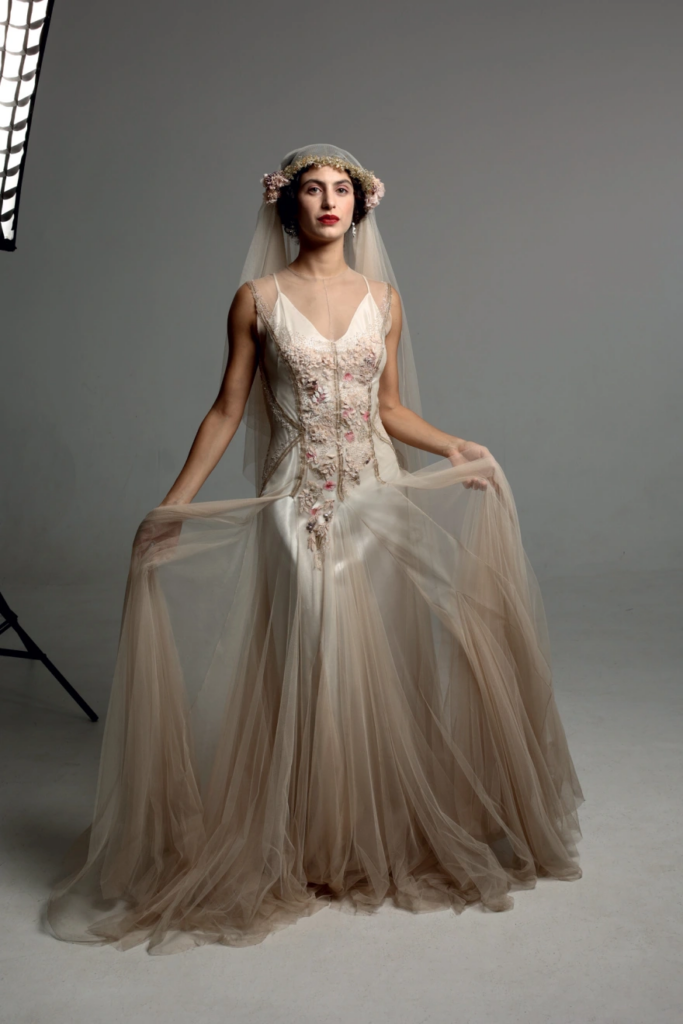
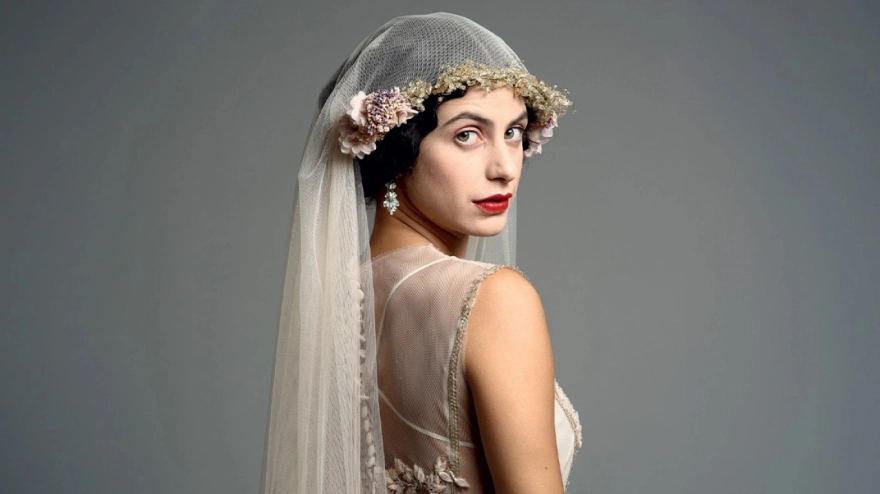
F.P.: It was easy to say yes because I loved the story, the book, and the heroine. At the same time, during the process, I had concerns about how everything would be translated visually and how this character and story should be portrayed. Often in this profession, your ideas don’t perfectly meet reality—that’s part of the job. I hope that in the end we managed to convey the message we wanted.
G.: Would you say The Great Chimera is one of the highlights of your career?
F.P.: Without a doubt, for my Greek career. But I’ve always believed that career highlights aren’t defined by “success” or the “size” of a project, but by the value it has for me and the people I work with.
G.: What aspects of Marina did you love most?
F.P.: I loved that Marina tries to break the walls around her, to find her place in a world and society that doesn’t recognize her. She’s curious, passionate, risky, and brave—sometimes even toward herself.
G.: Had you read Karagatsis before? What fascinated you most?
F.P.: Yes, I had read the book. It’s amazing how, as we grow older, we understand certain works completely differently. I especially loved the deep dive into Marina’s psychology—her mind, doubts, desires, and thoughts, which ultimately shape her path in life and the person she becomes.
G.: The series has sparked reactions—especially about explicit scenes. What would you say to critics?
F.P.: I’m an actress, not a politician or philosopher. I don’t act to teach or convince anyone. I simply hope that cinema and the arts help us develop different perspectives and reflect on ourselves, our beliefs, and the limits of our society. The fact that there are reactions means people are thinking and discussing—that a dialogue has opened.
G.: Which scene did you love the most?
F.P.: I really enjoyed the dance scene! I’m not a great dancer, so working with our choreographer to show the chemistry between the characters—and make it a bit crazy—was great fun.
Some of the final scenes were the most demanding. I wanted to stay faithful to the book and Marina’s character. The loss of a child and her journey toward death are extremely difficult and dramatic experiences, both to imagine and to portray.
G.: Have you ever imagined yourself as a mother?
F.P.: No, not yet.
G.: After this wave of success, what would you like 2026 to bring you?
F.P.: I’d like to focus more on my relationships and personal life, which are my center. In such a chaotic profession and a constantly moving world, it’s sometimes hard to stop and see what you already have and what you’ve achieved.
I also deeply hope for another world, another society, another future for all of us—more open, more compassionate, without borders, exclusions, or oppression.
Ask me anything
Explore related questions