




An institutional, open, and organized national dialogue, without surprises and without predetermined decisions, with clear institutional boundaries and a specific methodology, is what the Government and the Ministry of Education are opting for regarding the controversial issue of the National Baccalaureate. The central starting point of the dialogue is the need to break the “all in one go” model, without any compromise on the reliability and quality of the Panhellenic Examinations.
What is the goal of the National Baccalaureate – The content of the dialogue
The formation of a system that is reliable, fair, and socially acceptable is fundamental to the National Baccalaureate, with reliability being the basis of the design.
The Dialogue has a clear institutional boundary as it focuses on the Lyceum and the National Baccalaureate while starting from a common understanding of educational reality, based on data, international practices, the experience of school practice and the challenges of the future. It is clear that it does not start from ready-made solutions but poses questions, principles and conditions from the outset. As it is pointed out, the dialogue will not be exhausted in a technical discussion behind closed doors, nor will the announcement of a bill.
What applies to the Panhellenic Examinations
The Panhellenic Examinations are not being abolished or changed at this stage. And the changes under discussion do not affect either students currently attending high school or students in the third grade, but the first possible implementation horizon is the first grade of high school, the school year 2027-2028.
As for the Dialogue, it is stressed that it is about enhancing the value and credibility of the High School and the National Baccalaureate and in no way, increasing testing pressure.
What are the core and objectives of the reform
The core of the education reform is the credibility of the Lyceum qualification. Fairness and comparability of results. The reduction of exam-centric pressure – again, without sacrificing credibility. Social acceptance before implementation. The adoption of strong safeguards against grade inflation.
Who is involved in the National Dialogue
The National Dialogue is conducted with the input of an independent committee of scientists, consisting of university professors of renowned repute. Their role consists of scientific coordination, documentation and synthesis of the conclusions.
In addition, the Institute for Educational Policy (IEP), teachers and education executives participate in the dialogue with distinct and institutionally clear roles,
Higher Educational Institutions, parliamentary parties, institutional and scientific bodies, social partners, students, pupils and parents, in the context of an open and participatory process.
How the National Dialogue is organised
The five pillars are the basic structure of the dialogue. Specifically, Educational Content, School Life, Teacher Training & Professional Development, Infrastructure, and Governance.
The process includes thematic sub-working groups, regional fora, and
a digital consultation platform to provide an opportunity for greater participation. As noted, however, the participation of HEIs and political parties ensures academic continuity and political legitimacy, while maintaining the distinct roles of the parties, without the risk of confusion of roles.
Timetable
Within the current month, the dialogue is launched, working groups are defined and guiding questions are asked. Between March-April 2026, thematic discussions & the participatory dialogue will take place. From May to June 2026, synthesis & elaboration of specific issues is planned and in the two months of July-September 2026, the public consultation on the Position Paper will follow. The final Report & implementation map with pilot phases is expected in October 2026. It is underlined that the dialogue is progressing in stages, with milestones and independent evaluation.
Sofia Zacharaki: We start with a clear goal, for our country to acquire a durable, reliable, and internationally recognized baccalaureate
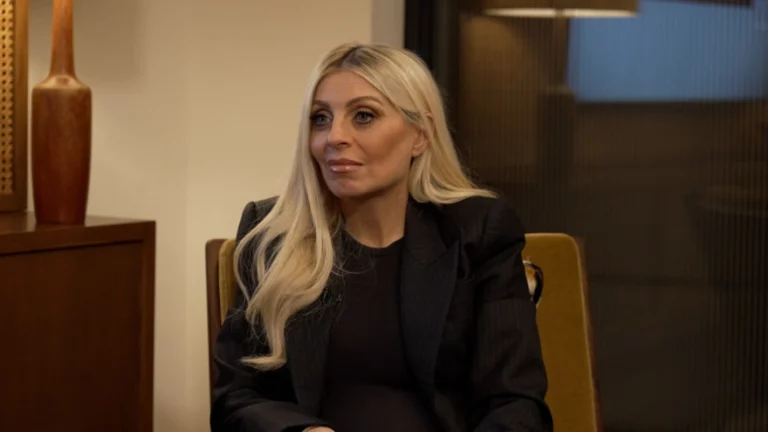
After the conclusion of yesterday’s meeting at the Maximou Mansion under Prime Minister Kyriakos Mitsotakis, Minister of Education, Religious Affairs and Sports, Sofia Zacharaki, noted: “Education is a national cause and requires institutional continuity. Today, the national dialogue on the National Baccalaureate and the new architecture of the Lyceum begins, with a clear goal: Greece should acquire a durable, reliable, and internationally recognized baccalaureate, which reflects real learning and gives equal opportunities to all children.
We want a Lyceum that is not exhausted by exam pressure, but cultivates knowledge, judgment, and perspective. A system that makes a practical difference for every young person, regardless of where they grow up or their family’s financial means.
Through dialogue, documentation, and incremental implementation, we are building a system that will stand the test of time. I want to say to the Greek family struggling for the education and advancement of their children that all our efforts are aimed at ensuring that the “paper” of high school can ensure life and work with perspective and dignity for every child, with skills necessary for tomorrow, but also with knowledge that is the foundation. Whether one chooses university or not.”
Ask me anything
Explore related questions