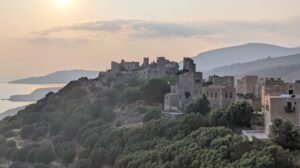
A new genetic study reveals that the inhabitants of Mesa Mani are a unique genetic “island” in Europe, one of the most genetically unique populations due to their geographical isolation for more than ten centuries. The findings, published today in the “Communications Biology” journal of the Nature group, demonstrate that many lineages of the current inhabitants of the region can be traced back to Greece from the Bronze Age, Iron Age, and Roman periods.
The Mesa Mani, i.e., the area south of Areopolis, with its rugged mountains, spectacular coastlines and famous stone towers, has at times fascinated leading travellers, historians and writers – most famously Jules Verne and Patrick Lee Fermor. The hardy character of the Manians and their warrior spirit allowed them to maintain their autonomy against various conquerors. The Maniats, after all, played a pivotal role in the 1821 Revolution.
An international research team, including scholars from the University of Oxford, the University of Tel Aviv, the National and Kapodistrian University of Athens, the Areopolis Health Centre, the European University of Cyprus, and the FamilyTreeDNA laboratories, made the origin of the population of Mesa Mani the focus of their study. “It is a region of mainland Greece, which is unlike any other. In terms of architecture, it has the war towers in all the villages, the dialect is archaic, we didn’t know where the population came from that has so many peculiarities. So we wanted to answer some historical riddles, but also to give voice to traditions that are being lost,” the head of the study, Dr. Leonidas-Romanos Davranoglou, an assistant professor at Tel Aviv University, a postdoctoral researcher at the University of Oxford, and the National and Kapodistrian University of Athens, told APE-MPA.
Researchers obtained genetic material from more than 100 male residents of Mesa Mani, which they analysed using highly innovative molecular techniques from the laboratories of “FamilyTreeDNA”, the company that helped isolate Beethoven’s DNA from a hair and clarify his ancestry. Researchers then compared the Mesa Maniacs’ DNA with thousands of ancient DNA samples and with the DNA of more than 1.3 million modern humans around the world to determine any affinities between the Mesa Maniacs and other populations.
The results of the research showed that the Mesa Maniates constitute a unique genetic “time capsule” within mainland Greece, as most of the paternal lineages of the Mesa Maniates date back to the Copper Age, the Iron Age and the Roman period. Their genetic origins were not affected by the major population movements that reshaped the demography and genome of the inhabitants of Greece and other Balkan populations after the fall of Rome. Unlike many other populations of mainland Greece, the Mesa Maniates show little evidence of assimilation of later populations, such as the Slavs, whose arrival in the 6th century AD drastically altered the genetic and linguistic landscape of southeastern Europe.
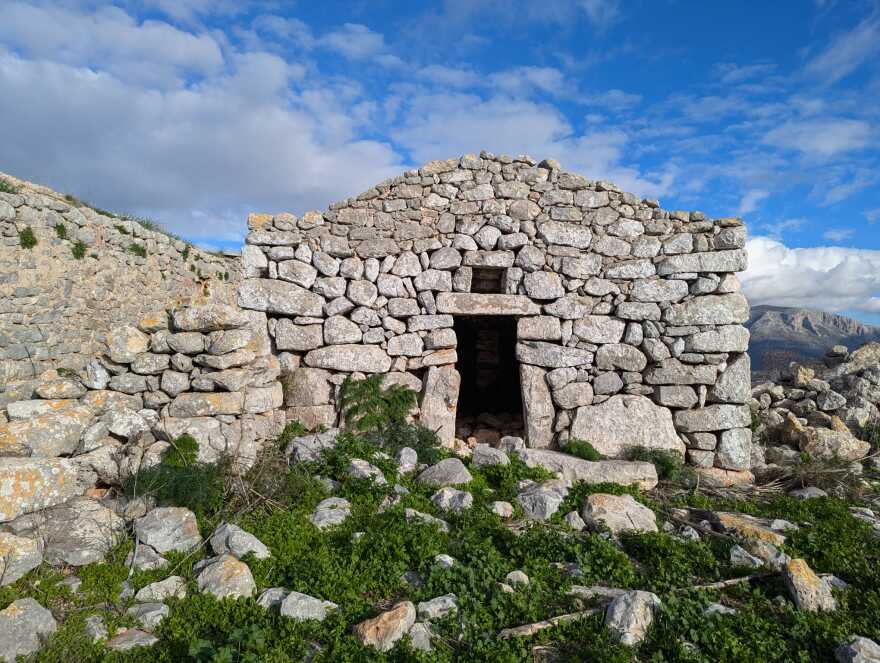
In fact, their geographical and temporal distribution faithfully reflects the spread of the characteristic and globally unique megalithic settlement architecture of Mesa Mani. “It has been established that for at least 1,400 years the Mesa Manians have been extremely isolated, and this is probably why they have managed to develop and preserve customs, traditions, and architecture that do not exist anywhere else in Greece. We could say that the Mesa Maniates are probably descended from the same people who built the unique megalithic structures of the region,” Mr Davranoglou explained to APE-MPA.
“Genetics does not separate us”
However, Davranoglou is quick to clarify that “DNA helps us to shed light on unknown aspects of the history of Greece, whatever it may be, and to understand how various historical and demographic processes took place. DNA, of course, does not tell us anything about a person’s identity or how Greek a person is. Greekness is a cultural trait, not a genetic one. After all, the Maniats may have been isolated for over 1,400 years, but, in the end, all humans are mixtures of different populations – genetics brings us together, not separates us. Numerous genetic studies show that ancient Greeks mixed with various populations, and the Roman and Byzantine empires were highly multi-ethnic. It was only after the 6th century AD that most of the populations of the Hellenic area assimilated additional groups of people, such as Slavs, Blachs, Arvanites, and others, who did not, however, come into contact with the Middle Maniacs.”
A common ancestor
The study revealed that over 50% of today’s men of the Mesa Mani are descended from a single male ancestor who lived in the 7th century AD. This finding suggests that in the turbulent history of Mesa Mani, there was a period in which the local population experienced an overwhelming decline, likely due to epidemics, wars, and general instability, and then the few survivors and their descendants remained in relative isolation within Mesa Mani for centuries.
In contrast, matrilineal descent tells a more complex story than patrilineal descent. “While many matrilineal lineages show the same characteristics of long-term localization as patrilineal lineages,” says the second corresponding author, European University Cyprus professor Alexandros Iraklidis, “others indicate limited contacts with populations of the eastern Mediterranean, the Caucasus, western Europe, and even North Africa. These genetic patterns are consistent with a strongly patriarchal society in which men remained rooted in their place of origin, while small numbers of foreign women were integrated into the local population.”
“Fertile soil does not easily produce heroes”
In addition to the genetic research, the scientific team studied Venetian, Ottoman, and more modern records and interviewed at least 60 elderly residents from almost every village in Mesa Mani.
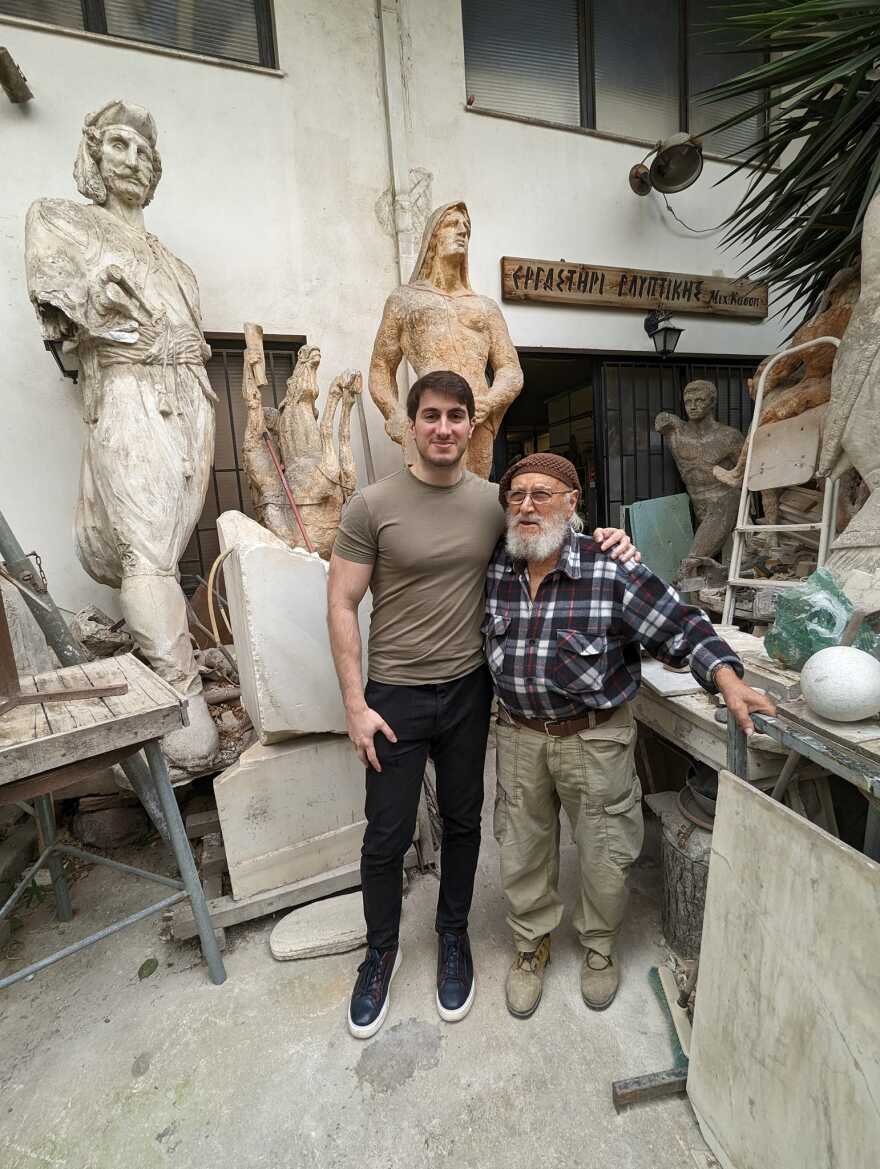
One important informant was the painter, writer, and sculptor, Michalis Kassis, who recounted, among other things, “It is no coincidence that no conqueror managed to establish himself in Mani. The place was inexorably difficult even to its own inhabitants. In winter, our bare feet ached from the cold; in summer, the sun burned us mercilessly. Stones, sun, sea – that is Mani. And so people became resilient and tough to cope. And if one had some bread, some cheese, and some olives, then one was really rich. Fluffy and fertile soil does not easily produce heroes.”
As many villages in Mesa Mani were historically inhabited by a single gender, the research team worked closely with the local community to ensure that volunteers came from many different genders and settlements, thus ensuring that the sampling was representative of the population.The sampling was done in collaboration with Dr. Anargyros Mariolis, director of the Areopolis Health Center.
The researchers then compared all the oral traditions with the genetic data, finding that the data converged very often. “Many oral traditions of common ancestry, transmitted for centuries, are now confirmed genetically,” notes Athanasios Kofinakos, co-author of the study and a research consultant on issues of Maniathan genealogy and history.
As Mr. Anargyros Mariolis describes, “this study gives voice to the stories of our ancestors. As a Mesa Maniati myself, I wish my ancestors had the opportunity to learn that many of their oral traditions are confirmed by genetic science.”
Search for genetic diseases
If funding is secured to continue the research, the scientific team plans to explore the information genetic science provides about population health and the search for diseases with any genetic background.
As noted by Theodoros Mariolis-Sapsakos, a professor of medicine at the National and Kapodistrian University of Athens and a surgeon, “the research team intends to talk again with the community to explore whether future analyses of clinically important genetic markers could contribute to further understanding of the health of the Mesa Maniatians and lead to new strategies for safeguarding and protecting it.” Dr Panagiota Soulioti, who spent her rural tenure at the Areopolis Health Centre and contributed significantly to the sampling, adds that “the example of Mesa Mani can be used as a model for similar studies in other regions of Greece, contributing both to our understanding of the past and to the identification of clinically important genetic markers of direct relevance to public health.”
Ask me anything
Explore related questions