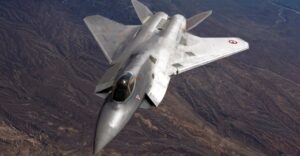
The project to create a next-generation Future Combat Air System fighter (FCAS), being developed by France, Germany, and Spain, according to four European officials in Paris and Berlin who spoke to Politico.
The program was to produce new fighter jets to replace the Eurofighter and the Rafale. According to the original plan, described as quite optimistic, operational readiness was expected in 2024.
However, an official familiar with Emanuel Macron‘s thinking said that “an announcement that the program is ending is more likely than a restart.” The same assessment was made by a French parliamentarian involved in defense issues, saying that “FCAS is dead, everyone knows it, but no one wants to say it.”
Serious blow for Macron as program fails
The failure of the three countries’ flagship project to build a sixth-generation fighter, along with drones and a combat cloud, would be a serious political blow to the French president.
Macron personally launched the program in 2017 with then-Chancellor Angela Merkel. However, for the past year, it has been paralyzed by intense industrial disputes.
A collapse would be “bad news. That’s why Macron is pushing to save it,” said the same official, who, like others speaking to the report, requested anonymity.
French officials, however, have publicly stressed that they still want the program to work. “We are doing everything we can to try to save this program. We’ll see how we can conclude,” the new head of the French armaments agency, Patrick Pailloux, told reporters this week.
European defence industrial cooperation
The problems surrounding FCAS reflect the difficulties of European defence industrial cooperation at a time when Europe is looking to arm itself, both because of Russia and the US, which has reduced its military presence.
At the core of the industrial clash between France’s Dassault and Germany’s Airbus is the drone. The dispute is over leadership, technology, and project allocation, with no solution in sight. Dassault is seeking greater control over the development of the Next Generation Fighter (NGF), a key component of the FCAS.
France and Germany have been trying for months to bridge their differences. Although they had set a deadline of December 17, 2025, they have not met it.
The alternatives Merz is considering
This pessimistic assessment comes as Berlin is privately considering a drastic change of course.
German Chancellor Friedrich Merz has weighed several options, from splitting the manned fighter into two national aircraft to ending German involvement altogether, according to government and industry officials.
Murch has conveyed those thoughts to envoys visiting Paris, two German defense officials said, though Berlin is still struggling to find a way to announce such a decision.
Interest in the programme from Italy, Britain, and Japan
The turmoil surrounding FCAS has heightened interest in the competing Global Combat Air Programme (GCAP), led by Italy, the UK, and Japan.
Two European defense officials told POLITICO that Berlin has been discreetly exploring the possibility of participating in the competing program.
According to the Italian newspaper Corriere della Sera, Prime Minister Georgia Meloni appeared positive about the possibility of Germany joining the GCAP when Merts raised the issue at a meeting last month.
Following reports that Germany was considering GCAP membership, the French president sent a letter to Merz asking for his position on FCAS, according to Le Parisien. The two leaders are likely to discuss the issue on the sidelines of this week’s informal European Council.
In Berlin, German officials insist the country still wants to keep parts of the program, notably the common combat cloud and other common systems, even if the fighter is eventually split into two different aircraft.
Ask me anything
Explore related questions