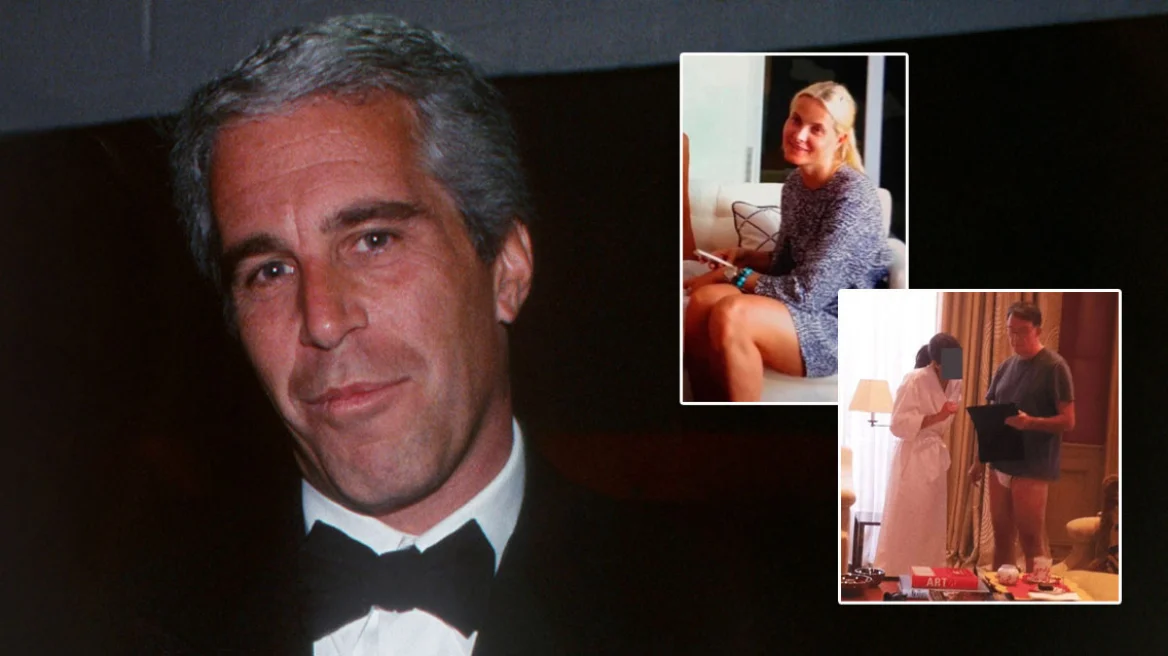
Three million pages of documents, 180,000 images, 2,000 videos, and a multitude of famous names such as Elon Musk, Bill Gates, and Richard Branson. With these, Jeffrey Epstein—or rather the ghost of the convicted and pedophile and trafficker—turns the global elite upside down once again. This time, perhaps more than ever, as many things come to light from the files of the scandal involving the financier–pedophile and pimp.
In any case, the impact of the revelations differs. For example, the Kremlin—through Peskov—dismissed with laughter Donald Tusk’s suspicions that Epstein was a Russian agent who had set up a trap that the KGB called a “honey trap.” This was not the case, however, with British Prime Minister Keir Starmer, who, furious that he believed the British ambassador to the U.S., Peter Mandelson, who claimed he “barely knew Epstein,” publicly apologized to Epstein’s victims. In Britain, King Charles is also furious with his brother, Prince Andrew, who is contradicted by an email from Ghislaine Maxwell regarding his claims that the photo of him with Virginia Giuffre was fake.
However, no matter how much Starmer apologizes for believing and appointing Mandelson, the scandal shakes his government to its foundations and likely leads it—through a storm—to a confidence vote. This is because Mandelson appears in his underwear at Epstein’s home, while their correspondence shows they were very close friends (the first person Epstein called when he was released from prison), so close that Epstein paid money for the treatment of Mandelson’s partner.
In Norway, the revelation of the correspondence of the (now 52-year-old) wife of the future king, Mette-Marit, with Epstein has caused an earthquake. “I showed poor judgment and deeply regret having had any contact with Epstein. It is simply embarrassing,” she said in a statement through the palace. However, this did not extinguish the fire that has been ignited. In Norwegian media—and beyond—the content of the emails is discussed every day; they were exchanged years after Epstein’s guilty plea for procuring a minor for prostitution in Florida.
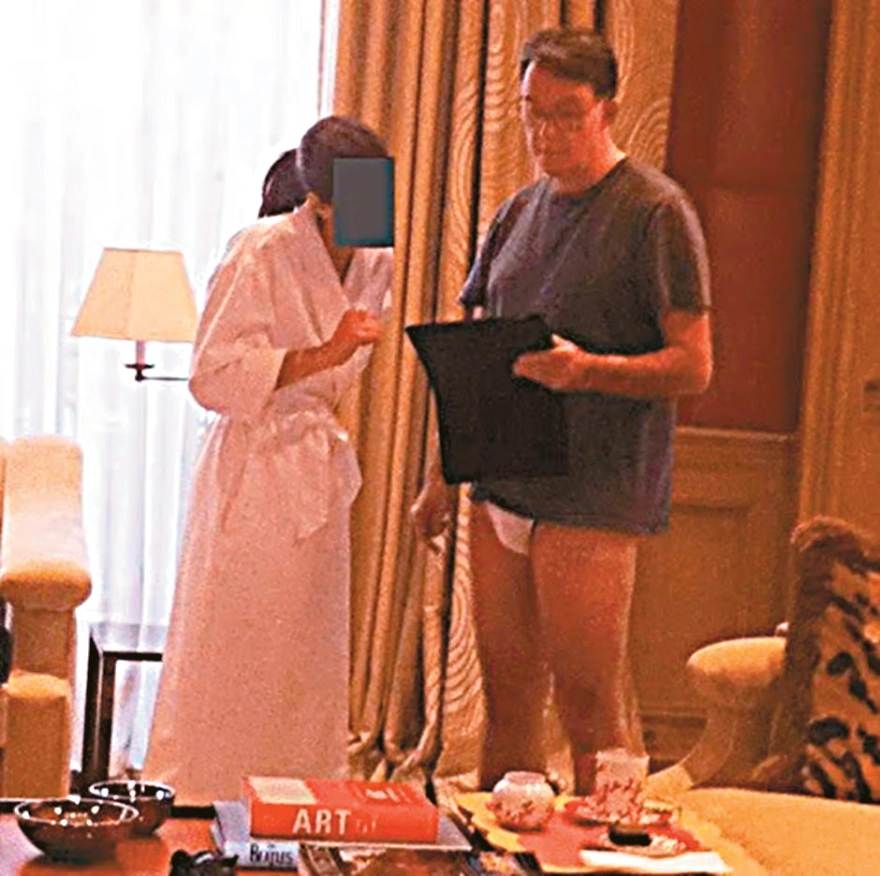

(The photo of Lord Mandelson in his underwear threatens to bring down the Starmer government in Britain, while the presence of Princess Mette-Marit at Epstein’s home has caused a storm of reactions in Norway)
The messages suggest a warm relationship between the two, with Mette-Marit writing to Epstein that “you tickle my mind” and calling him “tender” and “sweet.” It was neither the first nor the last time she allegedly behaved inappropriately, since in 2012 she described him as “very charming” and asked whether it would be “improper for a mother to suggest as wallpaper for her 15-year-old son two naked women holding a surfboard.”
In another message, the princess replied to Epstein (who said he was on a “search for a wife” in Paris) that the French capital is “good for adultery,” adding that Scandinavian women are “better wife material.”
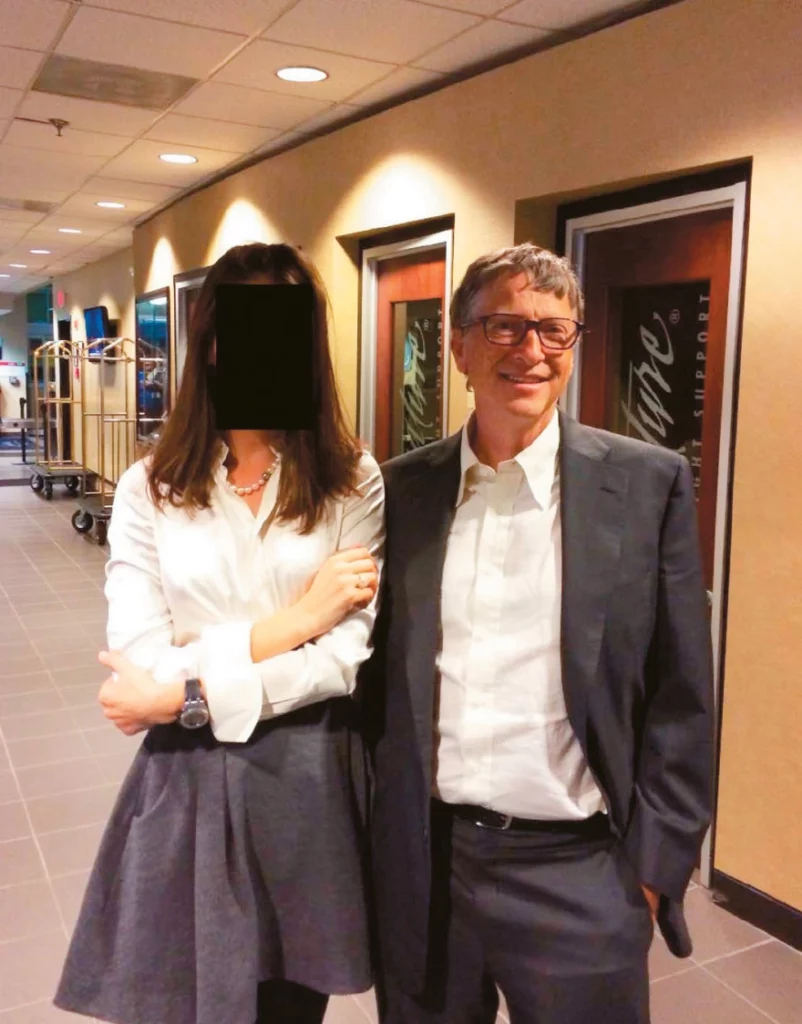
There is also the awkward, even comical side. That of Elon Musk, for example, who emerges from the emails as trying to secure an invitation to a “wild party,” but Epstein was avoiding him. Or that of Bill Gates, who allegedly took home from the island a sexually transmitted disease, passed it to his wife, and now says, “I was foolish to spend time with him; I regret knowing him.”
From the moment, of course, that prosecutors argue the convicted pedophile financier “created an extensive network of minor victims for the purpose of sexually exploiting them,” as there are testimonies of abuse of girls who “looked 14,” as well as complaints to the FBI from 1996 by Maria Farmer, 12, and her sister Annie, 16, that Epstein took naked and semi-naked photos of them, the last smile fades, as the mind is haunted by images of horror experienced by the minor and adult victims of Epstein’s ring.
The political front in the United States
In the U.S., interest is not limited to names. It also focuses on how the documents were released: how extensive the redactions were, who is seeking access to less-censored material, and what will happen with the part that has not yet been released.
In this climate, Bill and Hillary Clinton agreed to testify as part of a House investigation. The move was presented as avoiding a last-minute institutional clash. Here there is a delicate point: the Epstein case lends itself easily to political weaponization. Each camp can select excerpts, build a narrative, demand “full transparency” for opponents while simultaneously pushing for “protection of confidentiality” when documents touch their own people. The test for institutions is whether they can maintain a consistent principle: transparency where there is public interest, protection where there is a risk of further harm.
Storm in the United Kingdom
In Europe, and especially in the United Kingdom, the new wave of documents revived cases many thought were communicatively closed. In the material, Andrew Mountbatten-Windsor—until recently Prince Andrew—appears more than 3,000 times, even with nicknames. This does not mean every reference is substantive. It does mean, however, that Andrew is one of the main nodes of the archive, and therefore of public debate. New episodes described as under evaluation complaints are added, as well as new elements illuminating social contacts.
The Palace finds itself in the most difficult position a institution can be in: having nothing institutional to say about a case that is charged to it daily in the public sphere. The King receives questions/comments in public appearances and chooses not to respond.
In the political class, the case of Peter Mandelson offers a different narrative: not sexual, but one of power. The emails presented show searches for positions, moves toward major companies, and a style of communication that, read today, looks like a raw exposure of how “post-politics” politics works.
Nevertheless, Mandelson—who, according to British Prime Minister Starmer, deceived him by saying he merely knew Epstein—has burned and continues to burn.
He appears in photos with Epstein even after his release from prison, even after publicly denying knowing him; he tells him he supports him at every opportunity, is constantly with him, although Epstein said their relationship was “one-way” and that Mandelson exploited him.
In a message exchange after 2012, Epstein expresses his “disappointment”:
“…Jeffrey, can I have; Jeffrey, can you give; Jeffrey, can you organize? Can you call, can you arrange? You have not yet offered real help, a sign of gratitude or appreciation. Sorry.”
Lord Mandelson tries to show Epstein he has been hurt by the criticism and replies “how much I appreciate your support,” adding, “during your trials and difficulties, I never left your side; I was always there to offer advice and moral support and never abandoned you.”
The files show that Epstein paid about $75,000 to accounts connected to Mandelson, including his partner. The Metropolitan Police have launched a criminal investigation into claims that sensitive information was leaked.
Mandelson has said he will resign from the House of Lords, expressed regret for knowing Epstein, and claims he did not participate in crimes and did not act for personal gain. He maintains he sought Epstein’s help for the national interest during the 2008 financial crisis.
Elon Musk
The documents include email correspondence between Epstein and the until-recently richest man on the planet, in which Musk appears almost to be begging to go to the pedophile’s island. It is obvious that Musk had no idea what was happening on the island—Epstein even warns him that his wife would misunderstand—but he insists he wants to take part in a “wild party,” while Epstein ultimately avoids him. This contrasts with Musk’s narrative that Epstein invited him but he was… snobbish.
In a November 2012 message, Musk asks: “Which day/night will be the wildest celebration on your island?” In another message from December of the same year he writes: “I want to immerse myself in the party scene, in St. Barts or elsewhere”—as opposed to a “peaceful island experience.” In the correspondence, we see Epstein politely avoid him once and the second time forward the email to his secretary, asking her to get rid of him—which she does.
Bill Gates
The documents include two messages dated July 18, 2013, which appear to have been drafted by Epstein, but it is unclear whether they are authentic or ever reached the Microsoft co-founder.
One is presented as a resignation letter from the Bill and Melinda Gates Foundation, referring to medications Gates needed “to deal with the consequences of sex with Russian girls.” Gates’ ex-wife, Melinda, said in an NPR interview that the release of the documents revived memories of difficulties in their relationship and expressed sympathy for the victims. On the other hand, a Gates spokesperson described the alleged accusations as “absolutely absurd and completely false.” That someone is lying here is certain.
Donald Trump
The former U.S. president’s name appears hundreds of times in the documents, including on a list of complaints recorded by the FBI from calls to the National Threat Reporting Center. Many are based on unverified information without evidence and refer to sexual abuse by Donald Trump and other figures.
Trump has repeatedly denied any abusive or illegal behavior in relation to Epstein and says he cut off contact with him decades earlier.
Andrew Mountbatten-Windsor
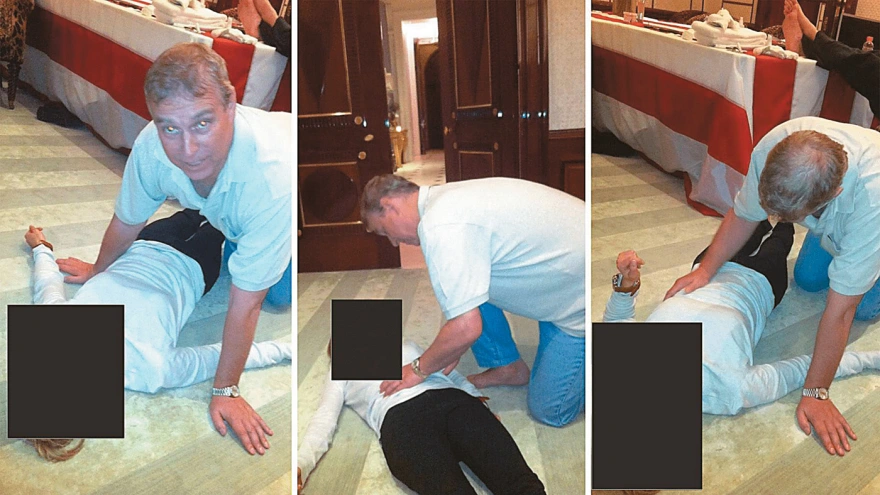
The files include photos showing the former prince and brother of King Charles in an intimate pose over a woman who is fully clothed and unidentified. In two images he appears touching her stomach and in one looking directly at the camera. There is no accompanying context as to when or where the photos were taken.
Andrew has repeatedly denied any illegal behavior, but in the U.K. his relationship with the pedophile financier has not been taken well.
Richard Branson
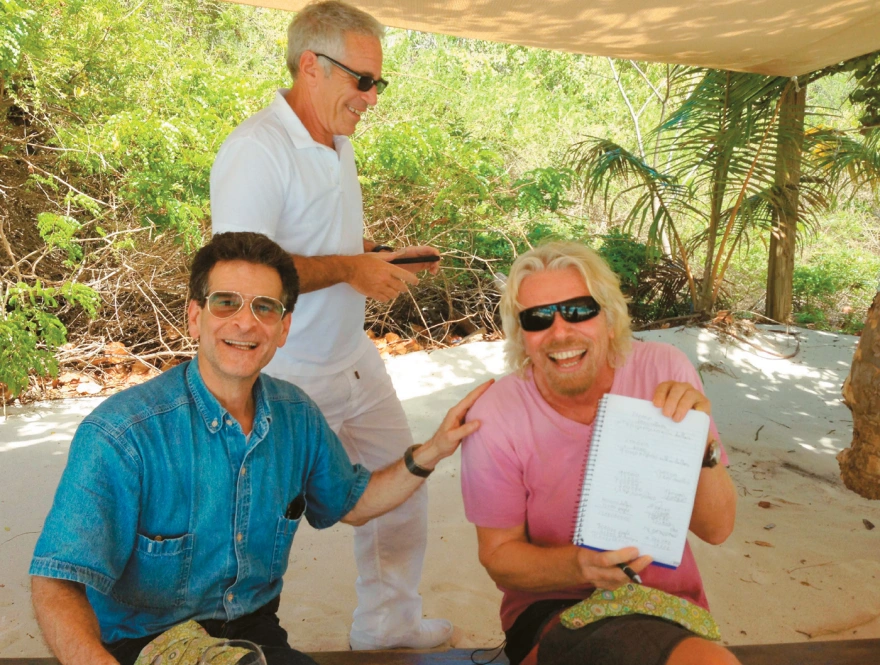
Branson’s name is mentioned hundreds of times. In a 2013 email, Epstein thanks him for hospitality and PR advice, with Branson replying: “Whenever you’re in the area I’d be happy to see you—just bring your harem too!” Virgin Group clarified that the term “harem” referred to three adult members of Epstein’s team.
Virgin Group said Branson’s contacts with Epstein were limited to a few occasions more than 12 years ago, mostly in group or professional contexts. When Epstein offered a charitable donation, due diligence revealed serious allegations against him and the donation was not accepted. Branson, the company added, would have avoided any contact entirely had he had full knowledge of Epstein’s actions.
Sarah Ferguson
In many emails, including from the period when Epstein was under house arrest, messages appear such as “I think now Fergie can say: I’m not a pedophile,” and an invitation for “a quick tea,” with expressions of admiration.
Steve Bannon
The alleged exchanges of thousands of messages between Epstein and Trump’s former adviser show discussions in 2018–2019 about strategies to change public image and defense after the exposure of Epstein’s crimes.
Miroslav Lajčák
Messages from October 2018 between the then Slovak foreign minister and Epstein contain references to girls and “games” without further context. Lajčák resigned from his position as Slovakia’s national security adviser after publication. He is not accused of illegal acts.
Other appearances
Howard Lutnick: Emails show plans for a family visit to Epstein’s private island. U.S. authorities said contacts were limited and there is no accusation.
Larry Summers: Mentioned in messages with Epstein, commenting also on Trump. Summers had already resigned after a previous disclosure.
Steve Tisch: Asked for information about a woman he met at Epstein’s home. Says he never accepted invitations to parties or the island.
Brett Ratner: A photo shows the director on a couch near Epstein with two women. No indication of illegal behavior.
Peter Attia: Hundreds of email exchanges with crude comments. Said he never attended a flight or island.
Casey Wasserman: Flirted via messages with Ghislaine Maxwell—expressed regret.
Sergey Brin: Planned a dinner and island visit, without indication of criminal involvement.
Ehud Barak: Acknowledges regular communication; says he did not see or participate in inappropriate behavior.
Noam Chomsky: Appears to advise Epstein on publicity; his appearance does not indicate illegal action.
Brad Karp: Former president of a major law firm resigned after disclosure of extensive email exchanges with Epstein.
Bill Clinton
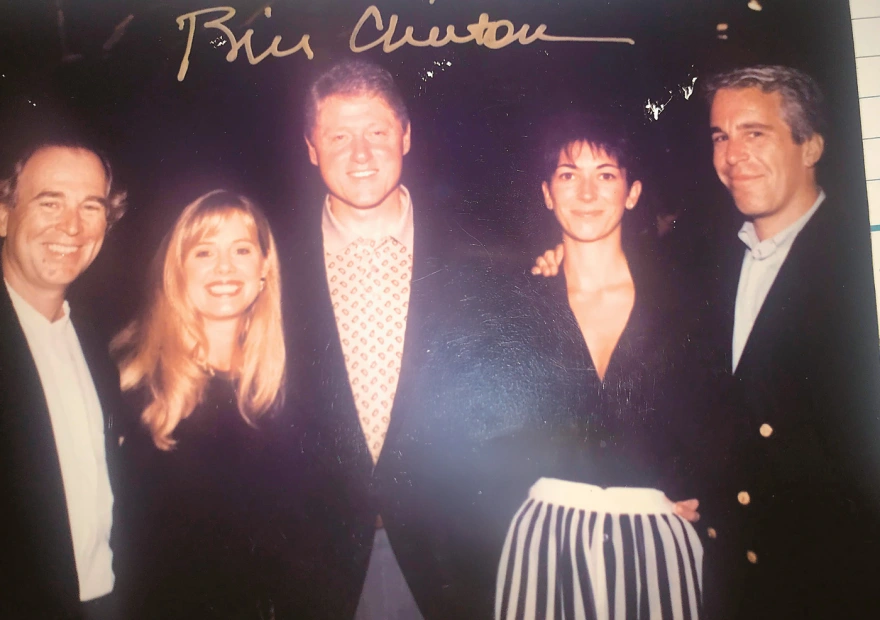
In a previous batch of documents, photos appear of the former U.S. president in the same space as Epstein in the 1990s and early 2000s, long before Epstein’s arrest. A Clinton spokesperson clarified the photos are over 20 years old and reiterated the matter does not concern the former president.
Steve Tisch and “servicing” as normality
Another striking piece is the case of Steve Tisch (co-owner of the New York Giants). Reports say that emails from 2013 show Epstein arranging meetings between Tisch and women, with descriptions that today appear toxic and revealing of how Epstein operated as a “broker” of people. According to reporting, the NFL stated that it would “review the facts” surrounding the relationship. And this alone marks a major shift: the case moves from the courts into the realm of institutional corporate and sports governance.
The darkest pages: Staley, Black, and the file of allegations
The heaviest side of the new files is the one that touches on allegations of violence. The Guardian reported that an internal prosecutors’ memo (2019) contained serious allegations concerning Jes Staley (former CEO of Barclays), with descriptions of assaults and abuse in the context of “massages” at Epstein’s residence, as well as references to another powerful financial figure (Leon Black). The report clarifies that no charges have been filed and that Staley denies the allegations.
Jeffrey Epstein: how the Manhattan “schoolteacher” became a tycoon
Among the millions of questions surrounding his case, one of the most important remains unanswered: how did Jeffrey Epstein amass a vast fortune of hundreds of millions of dollars—with mansions, a private island, planes, and helicopters? What did he actually do for a living? Was he a stockbroker, an investor, a financial adviser, or something else? The story of his social and financial ascent is capable of revealing much.
His unbelievable story—worthy even of a Hollywood script—begins in 1976, when he is hired as a mathematics teacher at the prestigious private Dalton School in Manhattan. The pay is not very high ($12,000, which in today’s inflation-adjusted terms corresponds to about $68,000), but it is enough to live decently in the heart of what was then the financial capital of the world. How exactly this happened is unknown, but Epstein was a personal choice of the school’s headmaster, who hired him. That headmaster was the famous author and former OSS intelligence officer Donald Barr. Barr was the father of Bill (William) Barr, who in the year Epstein was hired at the school was leaving his job at the CIA (as an analyst) and would later serve as the 77th and 85th Attorney General of the United States, under George H. W. Bush and during Donald Trump’s first term (until 2020).
Epstein worked at the school for only two years, since it soon emerged that his résumé contained lies about studies at Columbia and other universities (in fact, he never completed his studies). However, the “job” had already done its work: he had managed to mingle with the parents of his students—children as young as 12—who were “the elite of the elite.” And he had managed to charm several of them with his personality, leading them to speak of an “exceptional, talented, extraordinary young man,” even though today Dalton students admit they “were unsettled by the way he behaved toward girls.”
Thus, a parent invited him to an art exhibition in Manhattan and introduced him there to Ace Greenberg. Greenberg was head of the investment bank, asset-management firm, and brokerage Bear Stearns (which collapsed in 2008, after Lehman Brothers) and was a legend of investments, having transformed Bear Stearns from a small bond-trading shop into the fifth-largest investment bank in the U.S. “He’s a wunderkind,” the intermediary says of Epstein and invites Greenberg to try him out.
Greenberg, known as a talent hunter on Wall Street, offers Epstein a job on the trading floor of the New York Stock Exchange. Epstein declines, and in 1978 (when Dalton fires him) he is already working as a broker at Bear Stearns, earning $25,000 a year. Epstein proves so good at handling major clients that he climbs the hierarchy of the investment bank rapidly, becoming a partner by 1980 and earning $200,000 a year. It is then that he meets media tycoon Robert Maxwell and takes on the role of mentor to Maxwell’s then-teenage daughter, Ghislaine—who today has been convicted of luring children and women so that Epstein and his circle could sexually abuse them.
The fairy tale does not last long. In 1981, Greenberg—now CEO of the firm—receives orders to fire Epstein immediately. Lies on his résumé are revealed, along with charges of more than $10,000 for jewelry and dresses for his mistress on the corporate account, and a loan (without collateral) to a friend from school. Publicly, Epstein lets it be known that he is leaving to pursue on his own the career he was talented at: managing other people’s wealth.
In reality, what he does is engage in small- or medium-scale frauds, all with the same result: they filled his bank accounts but did not send him to prison. For example, in 1982 he raised money from investors for a supposed oil deal for which he claimed inside information. A master manipulator, he managed to swindle $450,000 from investor Michael Stroll, who never saw the money again. He continued such activities until 1987 (or earlier), when he partnered with tycoon Steven Hoffenberg. Hoffenberg, however, would soon be revealed not as a tycoon but as the architect of a $460 million pyramid scheme. Hoffenberg says Epstein was “the most extraordinarily charming person who manipulates people in the world of the rich and famous” and admits he alone set up the fraud.
Epstein was not arrested and moved on to his next victim. In 1987 he met retail magnate Les Wexner. Wexner had extraordinary talent in businesses related to fashion and women (the most characteristic example being the Victoria’s Secret empire he built from a small lingerie shop), but he was not very successful in relationships with women. Epstein sensed this and introduced him to woman after woman. Among them was the woman Wexner would fall in love with and marry. Their relationship became very personal, and it was not difficult for Epstein to convince him that his financial adviser was stealing from him. Wexner fired the adviser and handed over full control of his finances to Epstein, while simultaneously acting as his benefactor.
And thus the miracle happens. According to a Swiss bank document, in 1988 the former “little schoolteacher” was fabulously wealthy, with $14,906,483. He continued the “recipe” of lies, manipulation, theft, and abuse. In the meantime, as his wealth allowed, he set up the sex trafficking and blackmail operation and began accumulating enormous riches. A decade later, in 1999, corporate documents found by the FBI show Epstein with a net worth of $100 million. He grew so rich so quickly that by mid-year his fortune had risen to $110 million. He continued to rely on Wexner, as well as Leon Black of Apollo Global Management, from whom he received most of his money.
At his peak, his wealth exceeded $600 million—possibly even approaching $1 billion. When he committed suicide in 2019, his fortune stood at $559 million. Two days before being found hanged in his cell, he placed all his assets into a trust, the 1953 Trust, which contained at least $56 million in cash, more than $14 million in income-generating investments, more than $18 million in “aviation assets, automobiles, and vessels,” while the most valuable items were stocks, real estate, and collections of artworks, antiquities, and other collectibles.
It was impossible to determine his exact wealth, since just one asset—a stake in a Peter Thiel venture capital fund—boosted its value from $40 million to $200 million in one year. And how much was the rest of the fortune worth? The Manhattan townhouse alone is worth at least $70 million. He owned other homes as well, such as in Palm Beach, while even more valuable were his private island (Little Saint James) and the second island under development (Great Saint James) in the Virgin Islands. He also owned a vast ranch in New Mexico, an apartment in Paris, and a fleet of transportation assets, including his massive private Boeing 727.
He named as heirs his partner, then 36-year-old Karina Shuliak, his brother, Ghislaine Maxwell, his lawyer Darren Indyke, his accountant Richard Kahn, and ordered millions to be distributed to about 40 people. Indyke and Kahn used this money to establish a fund that paid $121 million in compensation to Epstein’s approximately 200 victims, while about $49 million was paid in court settlements to victims through liquidation of the convicted pedophile’s properties.
In a twist of fate, just as Epstein’s career began with a connection to Bill Barr—whose father hired him at Dalton—it also ended with him. As Attorney General, Barr ordered changes to U.S. detention facilities after Epstein’s death, for which three minutes of prison camera footage are missing…
The glossary of the Epstein files
Are they codes, or do they simply mean what one reads? A series of names, numerical codes, and letters are used in the Epstein case files. These are the most important and their interpretation:
– Pizza – grape juice – hot dog
The word “pizza” appears more than 900 times in the Epstein list. Although, according to U.S. authorities, the word is used simply to denote the well-known food, many people doubt this. That is because a theory is widely circulated according to which “pizza” is used by pedophiles as a code, as are other words. For example, grapes or grape juice (grape – g-rape) refer to rape; “hot dog” to a preference for young boys, etc.
– FD302
Many of the published files bear this code. It is the FBI file code. It includes investigative reports by FBI agents, as well as statements by Epstein’s victims and those of his network.
– Little Black Book
The little black book is a 97-page phone directory containing names, phone numbers, and emails of politicians, celebrities, businesspeople, etc. associated with Epstein.
– Lolita Express
Yes, it is what you think. The infamous Boeing 727-200, Epstein’s private jet, was called the “Lolita Express,” a direct reference to the novel Lolita and to the term used by pedophiles for underage girls they find attractive. Parties and orgies often took place on the jet, frequently involving minors. The files include the flight logs of the “Lolita Express,” i.e., flight records and passenger identities of Epstein’s aircraft traveling to his island.
– EFTA, J, and jeevacation
Many files mention the email [email protected], which was Epstein’s personal email, as well as the initial “J,” referring to his first name. The FBI grouped Epstein’s emails under the code name EFTA.
– WJC
These initials refer to former U.S. President Bill Clinton—William Jefferson Clinton.
Mysteries, conspiracy theories, and chills
One might think that publishing millions of documents would shed light on the Epstein case. In reality, however, it raised more questions, reviving or generating new conspiracy theories, creating mysteries, and bringing chilling allegations to the surface.
– Cannibals
In 2009, Mexican model Gabriela Rico Jiménez was filmed in a frantic state outside a luxury hotel, crying and shouting that “the disgusting ones ate people. I knew about the murders, but not that they ate people.” Immediately afterward, she disappeared. The publication of the new files brought her video back into public discussion.
More than two FD302 reports contain similarly chilling descriptions. There are references to U.S. presidents linked to cannibalism (the specific word is used), and testimony describing an event on a yacht where, in 2000, guests—members of the global elite—participated in rituals and dismembered babies. The victim of sexual assault told the FBI that participants ate the feces contained in the intestines of the dismembered infants. It is noted, however, that the witness was brought to the FBI offices by journalist Michael Moore, who is known for spreading extreme conspiracy theories.
There are 56 references to cannibalism in the Epstein files. There is also a complaint by a woman trafficked by Epstein alleging that Trump witnessed the murder of her newborn, whose body was thrown into Lake Michigan.
– Opening the pizza box
The publication of the files reopened the pizza box, many say. They refer to the case of 28-year-old Edgar Welch’s invasion of the “Comet Ping Pong” pizzeria. Its basement supposedly hid children abducted and raped by the powerful, and the owner, Greek-American James Alefantis, allegedly coordinated pedophile rings. The theory was debunked, especially after the armed Welch found not even a trace of children in the basement—but it has resurfaced due to references to pizza in the files.
– Clinton’s painting, the dress, Monica, and the frames
Among the photos published from the Epstein list stands out a painting of Bill Clinton sitting on a couch, wearing a blue dress—a reference to Monica Lewinsky’s stained dress—and red high heels, pointing his finger Uncle Sam–style. Also notable are photos placed throughout the house depicting a woman—or girl, unknown whether a minor—lying unconscious on a bed. Since the face is blurred in the photos released by the U.S. Department of Justice, the mystery deepens. Who is this girl, and why did Epstein display this photo everywhere as a trophy?
– What does Putin have on them?
In an email exchange, Jeffrey Epstein speaks with his brother Mark. “I’m fine, here with Bannon (i.e., Trump adviser Steve Bannon),” Jeffrey says, and his brother replies: “Ask him if Putin has the photos of Trump performing oral sex on Bubba.” Since “Bubba” is also a nickname of Bill Clinton, Epstein’s brother felt compelled to issue a public statement saying only that “Bubba” was not Clinton but an obscure private individual—without explaining whether it was a joke or what he meant.
– Activision, Xbox, and microtransactions
Epstein was also a gamer. The released files include an email from Xbox stating that his account was banned from the popular game Call of Duty for threats and verbal abuse. Epstein had a strong interest in gaming and is allegedly the one who convinced Activision’s management to adopt microtransactions, aiming to involve underage gamers in spending money on games.
What Epstein was looking for in Greece
Jeffrey Epstein showed intense interest in Greece and Greek affairs. In the more than three million pages of files, there are references to Greeks with whom the convicted pedophile—or his associates—had relationships or expressed interest.
Although the more than 1,500 references to Greece and Greek individuals are numerous, none indicate illegal or even suspicious activity. In most cases they concern business, attempts at business, or social networking. There are, however, some strange references, such as a woman informing Epstein that she gave birth to a “Greek boy” (implying she met the child’s Greek father through him), and another woman who messages Epstein in 2018 with the subject “Don’t tell anyone,” describing how she met “an older man,” naming a Greek tycoon with whom she began a relationship. She asks for discretion and describes him as “a very sweet and good guy,” telling Epstein “you will be proud of me.” The names of the correspondents are redacted by U.S. authorities. Further communications describe her “permanent vacations” from Mykonos to Saint-Tropez, London, Normandy, and elsewhere.
This is not the case with everything. For example, in message exchanges with Greek-American journalist Thomas Landon, the latter asks Epstein for the contact details of a Greek tycoon (name removed) to discuss the crisis in Greece. References are made to the Goulandris, Niarchos, and Livanos families, to Pavlos and Marie-Chantal, and others. There are also messages from Greek-Americans such as Dimitris Catsimatidis, who informs Epstein that he met then-Greek minister Dimitris Avramopoulos and asks for support in his run for mayor of New York.
Special mention is made of the shipowner Dimitris Lyras, founder of Ulysses Systems. The writer Roger Schank, with whom he maintains friendly relations, speaks to him in glowing terms about the Greek shipowner, describing him almost as a genius and trying to persuade him that the three of them should do business together. Epstein appears to try to avoid this, explaining to him in an almost paternal manner that Greeks have their own… way of succeeding in shipping and that they are a risk for outsiders, but eventually a conference call is arranged with the participation of all three.
The trip to Patmos
Among other things, the files contain an exchange of messages regarding a trip to Turkey and Greece. These messages refer to Greek individuals and specifically to hosting/an invitation to Patmos in 2012, with named references to Kalliopi Karella, Giorgos Votis, and Olga Geroulanou-Votis, as well as to a meeting with a “Greek foreign diplomat” (without a name).
Since nothing illegal or even unethical emerges from the conversations—as opposed to the thousands of other acts described in the published files—in this specific case what is recorded is the conversation between Epstein’s associate Peggy Siegal, an executive of a Greek airline company, and Olga Geroulanou-Votis. She is a cousin of former PASOK minister Pavlos Geroulanos and the daughter of the renowned cardiologist Theodoros Geroulanos, who is related by family ties to the family of the great mathematician Constantine St. Carathéodory. Ms. Geroulanou is treasurer and an active member of the Society Against Child Abuse (ELIZA), which was founded by Marina Karella together with her late husband Michael de Grèce.
In the email exchange, Epstein’s associate—who was accused of attempting to influence U.S. media after the revelations regarding the financier’s involvement in a child and broader pimping ring and of trying to discredit Virginia Giuffre—describes the holidays on Karella’s yacht and then addresses Milto Mouzakis, founder and CEO of Magna Aviation, an airline specializing in executive charter brokerage, aircraft marketing, and Leisure & Corporate Travel, as well as Olga Geroulanou, regarding the transfer from Turkey to Patmos.
She directs a series of practical questions to them: where she will find a car (taxi) and someone to help with luggage, whether she should purchase a ferry ticket to Kos (where she obviously wants to go), while noting that she will meet Olga (Geroulanou). The experienced CEO of the Greek airline replies that he has sent her the information she is asking for twice by email, “but it seems it escaped your attention.” Peggy Siegal appears to be… extremely anxious because Epstein himself will ultimately also be participating in the trip.
The crisis, swaps, shorting, and inside information
So what exactly was Epstein looking for in Greece? The answer, as emerges from correspondence, memos, market analyses, and travel traces, is not one-dimensional. There is, however, certainly a purely financial gaze: banks, recapitalizations, government bonds, debt swaps, bets on the crisis by an Epstein who cynically admitted in an email that he was not… long on Greece.
In the files, Greece appears mainly in material centered on the period 2010–2015: email correspondence about the banking system and investment opportunities, press articles and market analyses, as well as exchanges of views on the political situation. At the center is how Epstein and his associates read the Greek crisis through the mechanisms of the Eurozone and especially the European Financial Stability Facility (EFSF).
Epstein, however, does not remain at the level of theory. In an internal memo from June 2012 from the U.S. Global Investment Office, a teleconference is recorded regarding the impact of the Greek elections on international markets and the possible effect of the results on Greece’s position within the Eurozone.
This is followed by reports from March 2012 on how Epstein learned about Greek debt swaps, while in 2013 a window appears for an investment opportunity in illiquid five-month Greek government bonds as short-term sovereign debt.
In 2014, attention shifts more strongly to Greek banks. In correspondence concerning bank warrants, it is recorded that Tazia Smith speaks about creating local accounts in order to prepare transactions in “long-term Greek bank equity acquisition instruments.” In the same context, information is included about the history of recapitalization after the PSI, as well as that banks had high state participation (35%–70%) but were “expected to return to profitability.”
In another version of the same thread, Nav Gupta from Deutsche Bank sends Epstein an analysis of Alpha Bank warrants, arguing that they are the best way to “bet” on the Greek recovery. The correspondence also includes Epstein’s close associate Richard Kahn, with reference to the creation of a local “passenger account” in Greece, necessary for such transactions.
Talking about Greece with Chomsky
In an email of 31 July 2015 to Noam Chomsky, Epstein attempts an extensive deconstruction of banking accounting, characterizing it as paradoxical: loans are recorded as assets instead of available cash, while interest can appear as profits even on doubtful or essentially “imaginary” claims. In the same conversation, he cites economist Mark Blyth and notes that the EFSF raised €440 billion through bond issuance to support countries such as Greece.
Chomsky, for his part, nails down the path of the money: Greece, he says, functioned as a conduit, while the real beneficiaries were mainly French and German banks. The essence, along this line, is that the bailout package does not necessarily rescue a country but the European banking system exposed to it. Epstein agrees.
Further conversations follow with his associates about the situation in Greece and the possible opportunities arising from shorting its economy. In another email exchange with Chomsky (29 June 2015), the core of the argument about “odious debt” emerges: Chomsky states that, according to economists who tried to comb through the details, about 90% of the payments to Greece actually end up with German and French banks that had made risky investments and were now demanding repayment. He concludes that these debts, in his view, should be considered odious and radically restructured or canceled.
Epstein does not disagree that the money ends up in the banks of the North, but his own response is characteristic of the cynicism with which he views the crisis as a mechanism: he speaks of zero interest rates, a “Mediterranean intimidation game,” and goes so far as to comment that Greece does not have a real tax collection system and that a large part of the economy is “black,” therefore austerity programs or the tax regime will not have a “real effect.”
Varoufakis’ “head” and Rothschild
Within the material, the link between economics and politics stands out as if they were the same thing: a variable you can discount or exploit. In the files there is an email exchange with Ariane de Rothschild, chair and CEO of the Edmond de Rothschild Group, regarding the imminent removal of then-finance minister Yanis Varoufakis, dated 6 July 2015, one day after the referendum. On that same day, Varoufakis indeed announces his departure with a sharp statement, saying it had become known that participants in the Eurogroup would appreciate his absence and that the prime minister judged it might help reach an agreement.
In the communication, Rothschild writes that “Tsipras wanted Varoufakis’ head and got it,” that he would be replaced by Euclid Tsakalotos, and that thus “Tsipras will gain time” ahead of the Eurozone Summit, where “they expect a solution to be found.” Epstein’s reply is blunt: he says the resignation presents a “harder problem” and that now “they will be asked to come with a solution, not proposals.”
During the same period, invitations are also recorded for closed briefings by Deutsche Bank (July 2015), immediately after the referendum, with speakers former prime minister George Papandreou and former finance minister Philippos Sachinidis, on the topic “Outlook post Greek referendum.”
In other documents, Epstein’s communication with Giorgos Mantzavinatos, a former Eurobank and National Bank executive and real-estate figure who passed away in 2023, is recorded regarding investments and opportunities in Greece and Central-Eastern Europe, with the assessment that Greece would likely reach an agreement with the EU and IMF by the end of June 2015, securing temporary stability until September, when an additional €35–40 billion would be required. Here the proposal to Epstein is identified: to consider entering the Greek market, especially the banking sector and banks with large exposures, alongside reference to geopolitical risks such as Ukraine.
In another communication, Epstein asks Mantzavinatos directly (March 2016): “Do you think Greece will leave the euro?” Mantzavinatos replies with data on systemic banks and non-performing loans (NPLs) at 42%–45%, adding that if Kyriakos Mitsotakis became prime minister, the probability of Grexit would be significantly reduced.
In the same “package” of information, Mantzavinatos appears to promote to Epstein an investment opportunity from the CEO of Piraeus Bank in Ukraine, while in another message he informs him that he will create a construction company with direct government contracts and is seeking financing. At the same time, he is presented as a “mutual friend” of Epstein and Sheikh Jabor al-Thani of Qatar, to whom Epstein apparently sends a message titled “Is it you?” with a link stating that “Al-Thani bought a Greek island.” Epstein, moreover, had excellent relations and cooperation with the Qatari royal family.
Returning to Greece, a revealing document shows how Epstein appears to move in circles seeking “inside information” on the Eurozone. According to messages, Bill Gates and Epstein wanted to organize a meeting in 2012 with leading economists and institutional market figures to receive internal briefings on the course of the Eurozone, and the first name put on the table for invitation was Lucas Papademos.
Another document, purportedly from a Deutsche Bank archive (with a note that it was deleted by an executive, Vinit Sahni), describes an internal briefing on Greek bonds with very high yields, which the bank believed would not be included in the “haircut.” That is, while the haircut and the crisis were sweeping away the weakest, in the secondary market a game worth millions was being played for a few select investors, among whom Epstein is said to have been included.
Antiquities and the cleric
In documents of U.S. authorities, a cleric of the Greek Orthodox Church (likely in the U.S.) is mentioned, who allegedly abused a young woman under the control of a “known Russian criminal family.” The woman, who was in Israel, is described as a “victim of long-term, sadistic sex trafficking” in Israel, Canada, and the U.S. It is also stated that she had information about Epstein’s network and could testify if she were granted a visa to enter the U.S., while the allegations speak of rape and horrific torture from the age of five.
At the same time, there are many traces of Epstein’s involvement in the buying and selling of Greek and Roman antiquities: he appears to be seeking provenance (official ownership history) so that the objects could be sold legally at auctions of major houses. In a message exchange with his accountant Richard Kahn, they discuss two statues of boys (estimated at $800,000) and a Hercules without further details (estimated at $1.5–2.5 million), requesting information from former appraisers of the Metropolitan Museum of New York and from the former vice president of Christie’s, G. Max Bernheimer, who in an email refers to “marbles.” The very fact that Epstein did not initially know whether the antiquities had been legally acquired raises questions.
Ask me anything
Explore related questions