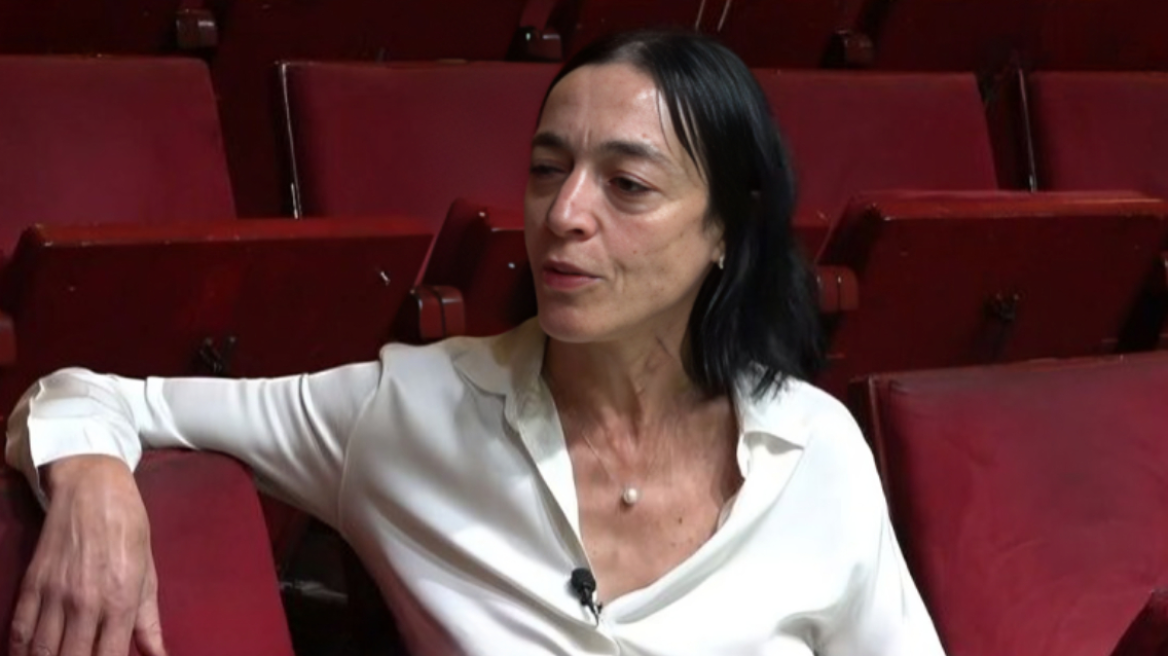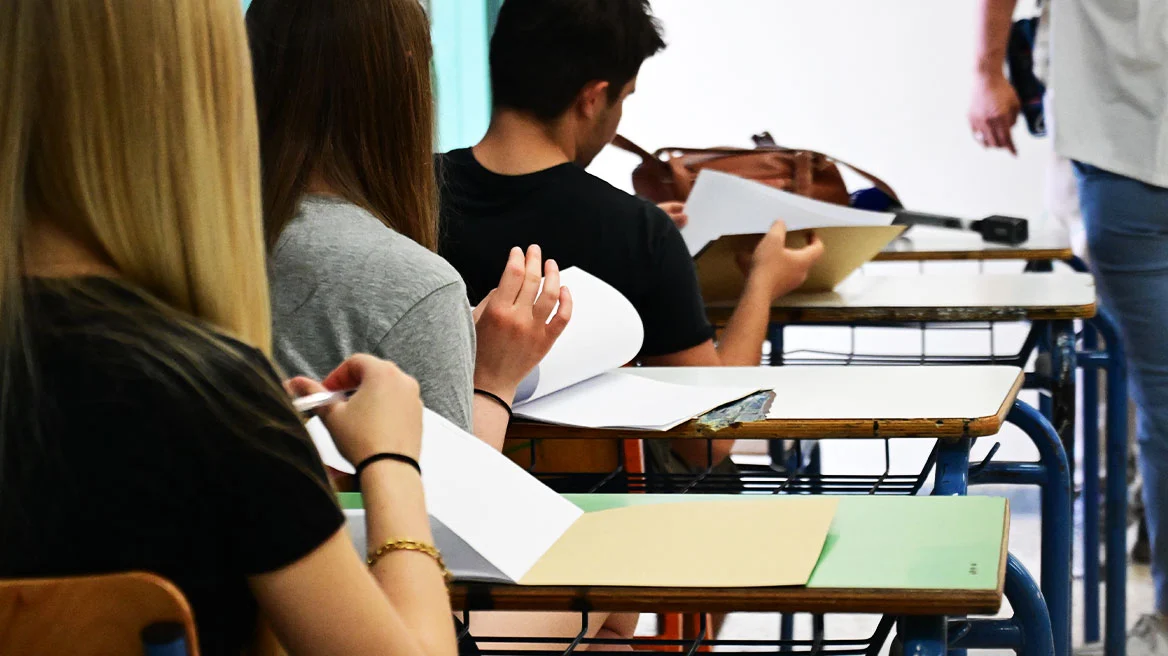
The proposals presented by Education Minister Sofia Zacharaki to Parliament’s Committee on Cultural and Educational Affairs are being put forward for public dialogue. Among the key ideas are strengthening the Question Bank and including Upper Secondary School grades in the final assessment.
Education Minister Sofia Zacharaki presented for discussion to Parliament’s Committee on Cultural and Educational Affairs the main directions for the new Upper Secondary School and the establishment of the National School-Leaving Certificate.
The Ministry of Education’s proposals include:
- a reduction in curriculum content and the number of examined subjects, especially in Grade 12;
- strengthening the Question Bank, establishing a body of examiners, and creating a unified examination framework;
- reinforcing the school-leaving certificate as a substantive qualification with international recognition;
- inclusion of Upper Secondary School grades in the final assessment, with emphasis on Grades 11 and 12, and discussion regarding the weighting of Grade 10;
- development of a mixed evaluation system combining in-school performance with national examinations.
Launching the National Dialogue
Addressing the Committee, Ms. Zacharaki outlined the framework for launching the National Dialogue on the structure of the New Upper Secondary School and the introduction of the National School-Leaving Certificate.
She called on all opposition parties to engage in a meaningful discussion aimed at consensus, stressing that education is a national matter and should not be subject to surprise measures or unilateral decisions.
Problems with the Current System
In her closing remarks, the Minister highlighted the shortcomings of the current operation of Upper Secondary School, noting:
“Upper Secondary School has largely become a pre-exam waiting room. The educational process—especially in Grade 12—has been deeply devalued. Grade 12 students are frequently absent from school, particularly toward the end of the year. Teachers feel they lack the time to transmit knowledge due to an overwhelming syllabus. Real learning is transferred very early outside the school, to private tutoring—not by family choice, but out of necessity created by the system itself.”
Ms. Zacharaki stressed that the aim of the dialogue is a fairer and more reliable system for certifying knowledge, one that reflects students’ overall learning journey rather than performance at a single moment.
Assessment Model and International Comparisons
The National Dialogue will also address whether performance in Grade 10 should count toward the final score. As the Minister noted, in 12 European countries, university admission is based on a system where 30% comes from oral assessment and 70% from written exams.
“We are not talking about multiplying exams,” she emphasized, “but about fewer subjects.” She clarified that for Grade 12, the number of examined subjects would be reduced from six to four, along with a reduction in curriculum content.
“This is about a fairer representation of overall effort, with weighted oral and written assessment in Grades 11 and 12. What that ratio will be, and what reliability safeguards will be in place, is precisely the subject of the National Dialogue.
“Upper Secondary School should not simply be a preparation space for university entrance. It must have its own autonomy and equip young people with useful skills, whatever path they choose.”
Gradual Implementation and Teacher Support
Ms. Zacharaki placed particular emphasis on the gradual implementation of any changes, including pilot phases, independent evaluation, and a sufficient transition period. She also stressed the continuous professional development of teachers as a prerequisite for success.
As she stated:
“No reform will succeed without teachers. Continuous training and support for their profession must come before implementation, accompany the reform, and support daily classroom practice.”
Next Steps
The Minister reiterated that the National Dialogue begins without predetermined decisions and with open questions, inviting all political parties to contribute to shaping a system with greater credibility, less exam pressure, and a more substantive pedagogical role for Upper Secondary School.
“The goal,” she noted, “is that by the end of this process, next November, we arrive at a legislative initiative that could ideally be supported by more than one party.
A meaningful Upper Secondary School.
A credible school-leaving certificate.
A fairer system for students and their families.
This will not be the success of a government, but the success of the country.”
Concluding the committee session, Ms. Zacharaki outlined a nine-month timetable:
- launch and institutional framework,
- thematic working groups and participatory dialogue with regional forums,
- synthesis,
- public consultation,
- final report with an implementation roadmap.
Ask me anything
Explore related questions