






New questions have resurfaced regarding the cause of death of Jeffrey Epstein, who was found dead in his jail cell in August 2019 while awaiting trial on child sex trafficking charges. The doubts have been raised by forensic pathologist Michael Baden, who observed the autopsy on behalf of Epstein’s family.
Dr. Baden has said he is “not yet convinced” by the conclusion of the New York City Office of Chief Medical Examiner, which ruled that Epstein died by suicide by hanging. In an interview with The Telegraph, he stated, “In my opinion, the evidence suggests that the death was more consistent with strangulation than with suicidal hanging.” He added that “based on all the information currently available, further investigation into both the cause and manner of death is warranted.”
Although Dr. Baden did not perform the August 11, 2019 autopsy himself, he attended as an observer. He has said that at the time, both he and the medical examiner’s office agreed that additional evidence was needed to determine the cause of death definitively. In a declassified version of the autopsy report released in December as part of the Justice Department’s first disclosure of the so-called “Epstein files,” the manner of death was listed as “pending,” with both the “suicide” and “homicide” boxes left blank.
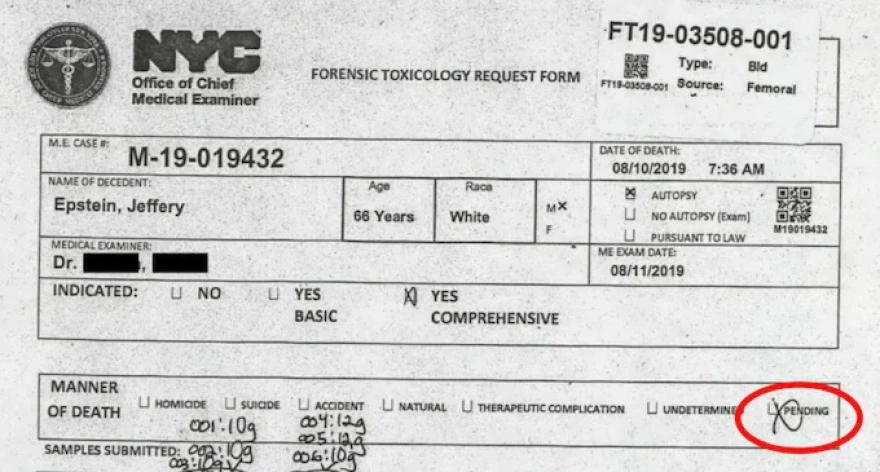
According to Dr. Baden, five days after the death certificate was initially issued stating that the cause was “pending further investigation,” New York City’s then Chief Medical Examiner, Barbara Sampson, concluded that Epstein had died by hanging and classified the manner of death as suicide. Dr. Baden maintains that Dr. Sampson did not attend the autopsy. She has publicly rejected his claims and stated that she stands “unwaveringly” by her findings.
The Three Neck Fractures
At the time, Epstein’s attorneys said that Dr. Baden’s concerns aligned with their own and that they were “not satisfied” with the medical examiner’s conclusions. Dr. Baden has also stated that he has seen no evidence of additional studies being conducted before the final ruling was made.
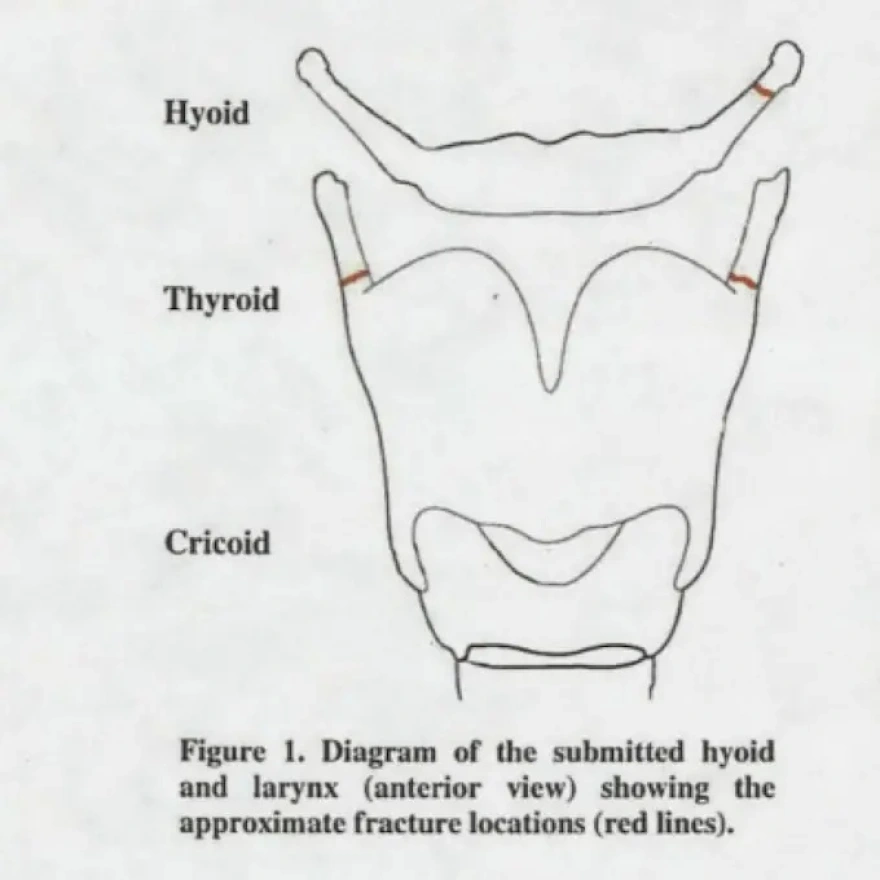
The official findings documented three fractures in Epstein’s neck: one to the left hyoid bone and two to the thyroid cartilage, on the right and left sides. Dr. Baden has said that in 50 years of reviewing inmate deaths, he has never encountered a case of suicide by hanging involving three such fractures. “Even one fracture warrants investigation for possible homicide. Two certainly require a full investigation,” he noted. Dr. Sampson, however, has stated that fractures of the hyoid bone and thyroid cartilage can occur in both suicides and homicides.
The “Missing Minute” in the Camera Footage
Further questions have emerged following the release of government documents and surveillance footage. A “missing minute” was identified in video recordings from the night of Epstein’s death, prompting speculation that a third person may have entered the area. In another still image, an orange “flash” appears in a stairwell leading to the isolated cell; authorities have suggested it was “possibly” another inmate.
In addition, prison guards reportedly failed to check on Epstein for several hours, despite regulations requiring checks every 30 minutes. Two security cameras near his cell were either malfunctioning or failed to record usable footage.
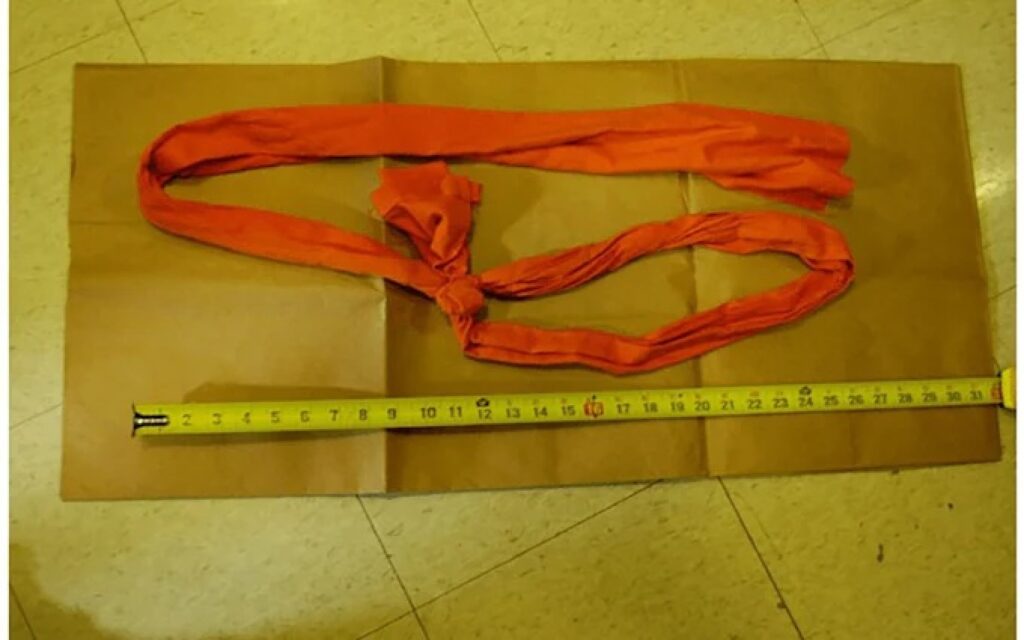
Dr. Baden has also questioned the rope found at the scene—reportedly fashioned from orange bedsheets—arguing that it “did not correspond to the marks on the neck.” He further described the movement of the body and its transport to the prison infirmary as “highly unusual,” suggesting that these actions may have compromised critical evidence and contributed to uncertainty regarding the precise time of death.
Ask me anything
Explore related questions