




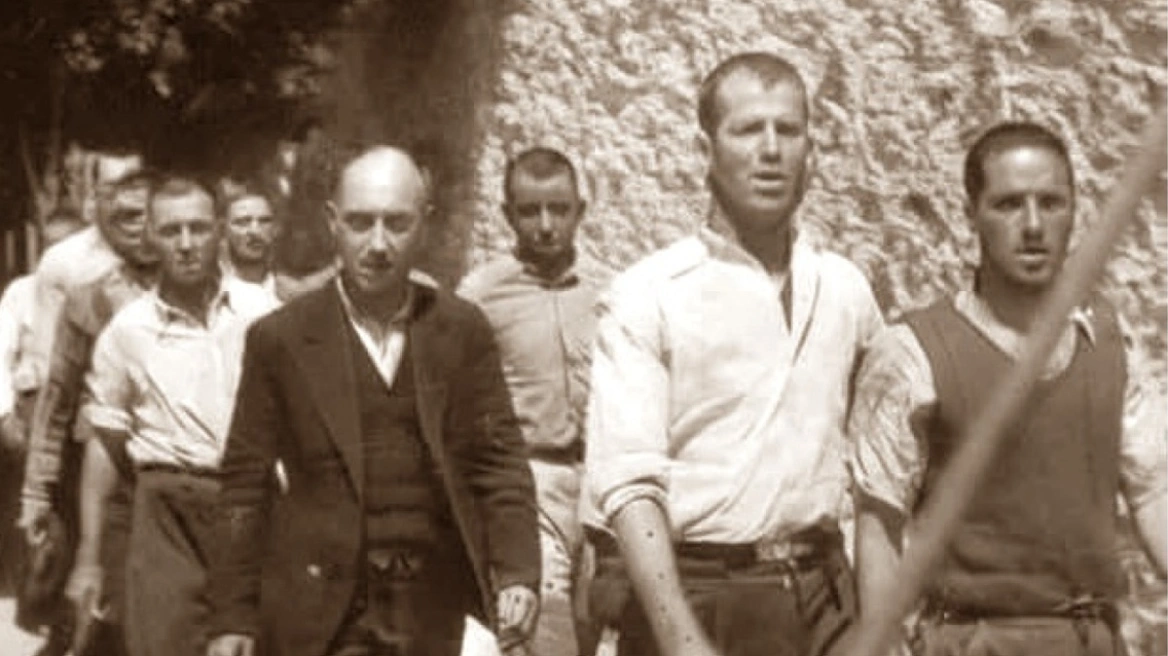
Hundreds of “hits” from interested parties have driven the value of each image up to €2,100 from the starting price of €36.50, in the eBay auction of photos that are said to depict the execution of 200 Greek resistance fighters at the Kaisariani Shooting Range on May 1, 1944.
If the images are proven authentic, however, their value will be far greater than monetary, as they would capture one of the darkest chapters of the German occupation.
Even more so since historians and collectors, who are seeking additional information about the photos being sold on eBay by a Belgian antiquarian, attribute them to the German lieutenant Hermann Hoyer, who served in the 1012 Festungs-Battalion based in Malakasa and later at Isthmia.
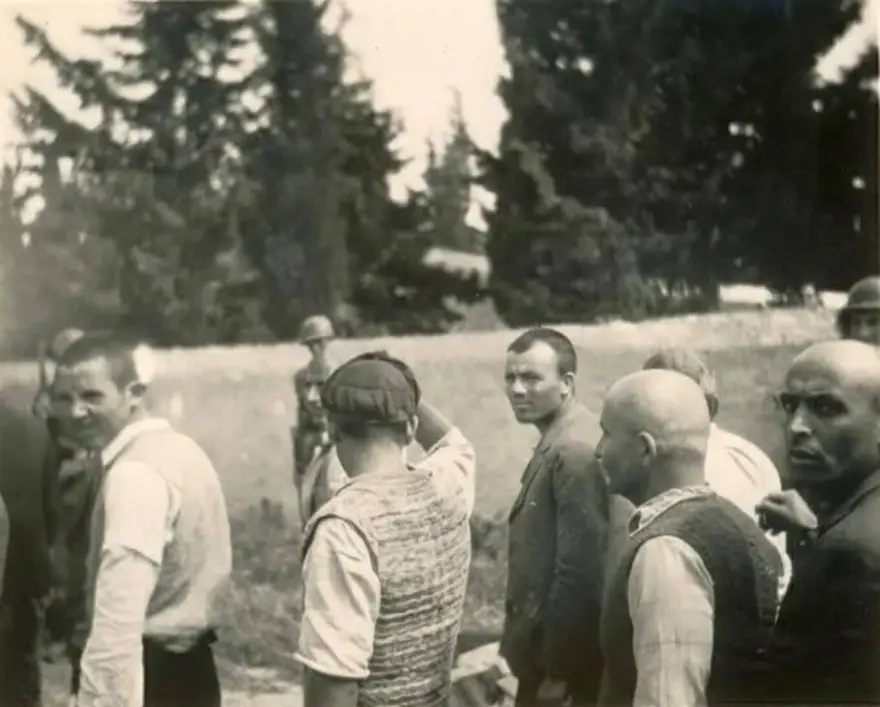
Given that the Belgian seller also states that they come from the collection of a German officer, it is very likely that the photos were taken by Lieutenant Hermann-Otto Hoyer, who, despite having only one arm (the left, as a result of an injury in World War I), was one of Germany’s most renowned painters and indeed a favorite of Hitler (his work “In the Beginning Was the Word” was purchased by Adolf Hitler and printed by the Nazis in their propaganda editions), and had voluntarily joined the SS.
This is something that remains to be confirmed/verified by an official archival authority, as do the authenticity of the material and the identification of the individuals depicted in the collection of photographs taken by the German officer during the execution of the 200 in Kaisariani. Until that happens, however, the first identifications of the people shown are already being made through social networks.
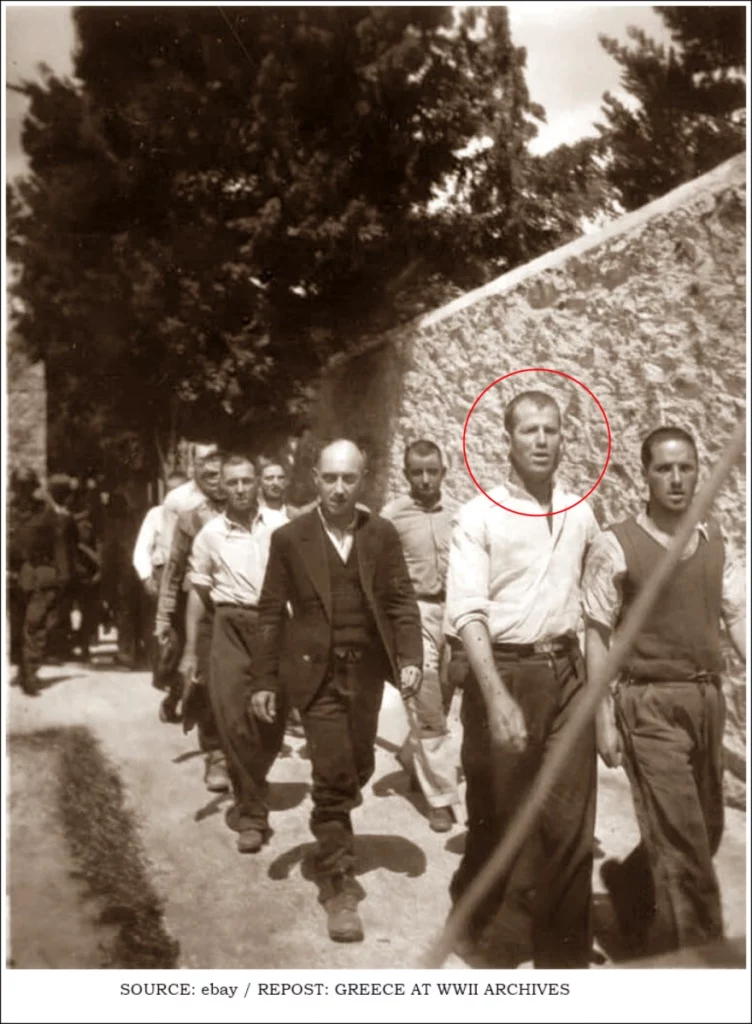
The first person reportedly identified by his family is the tall man in the white shirt among the prisoners being led to execution. He is Basilis N. Papadimas, an engineer at the factory of the Anonymous Company of Distillation in Messinia, born in Pylos, brother of publisher Dimitris Papadimas, who had been arrested in August 1941 by Italian carabinieri.
The identification, certification of the material, and investigation of its authenticity and provenance should be undertaken by a state authority. This is what the association of employees of the Ministry of Culture says, which has already requested that the Greek state purchase these specific photos as historical documents of a dark period and safeguard them in the State Archives before they are lost in the drawers of some collector—as usually happens with photographs from World War II.
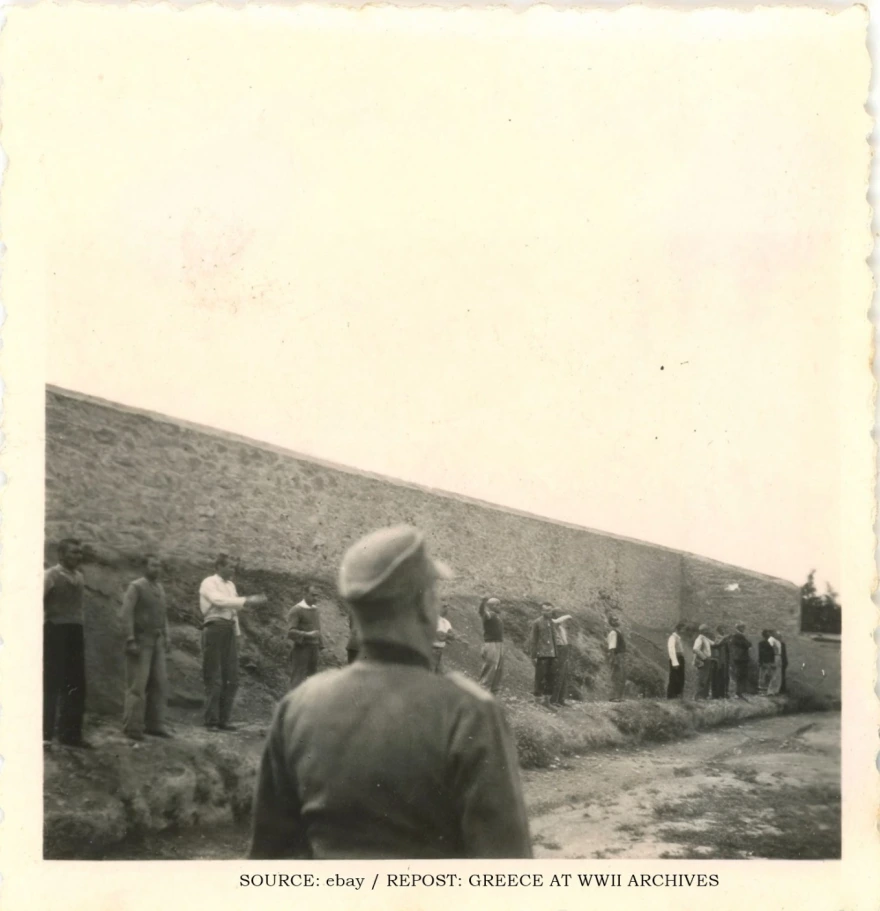
Another question is whether these are the only photographs from the execution, given that the specific photos were pasted into an album. How likely is it that the photographer’s relatives are concealing additional photos, having kept images from the moment of the execution, or after it, in order to avoid conviction for war crimes? Or that the Belgian seller might be doing something similar, intending to sell the remaining photos at a private auction?
In any case, the purchase of the photos depicting the Nazi crime by Parliament is requested by Alexis Tsipras in a letter to its president, Nikitas Kaklamanis.
In his letter to the President of Parliament, the former prime minister writes:
“Dear Mr. President,
You will obviously have noticed the reports that a seller from Belgium has put up for auction on eBay photographs whose existence no one knew and which concern the 200 communists executed in Kaisariani on May 1, 1944, and according to indications are authentic.
These are unique documents of a period of darkness and terror, but also of heroism of our people. The Greek patriots depicted there, the faces that found no comfort except in the sun and whom no fear alters as they stand shortly before the wall, give substance to a shocking moment of our modern history.
I therefore take the liberty of proposing that the Parliament Foundation purchase these photographs, as a tribute to the resistance and its dead, but also as evidence of the heroism with which the Greek people confronted the scourge of Nazi occupation. I believe, as I am sure you do as well, and every Greek woman and man, that the final moments of Greek patriots, the depiction of their tragedy and their courage, must not become an object of transaction, but should come into the ownership of Parliament and the homeland.”
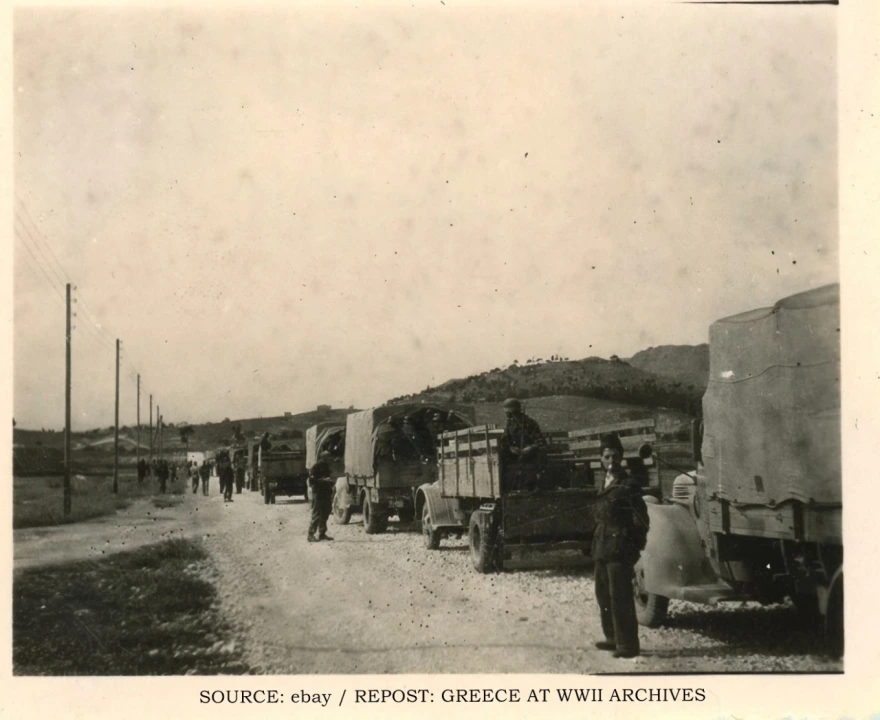
And as the debate has intensified over the issue of the commercial circulation of historical material connected to war crimes—sparked by the revelation of the auction of the historical photos on eBay by the Facebook page “Greece at WWII Archives”—the Communist Party of Greece (KKE) announced that it will promptly submit a specific proposal for the utilization of these documents.
In its statement, the KKE notes that “given that these photos appear authentic, they constitute the only photographic document of this enormous sacrifice, a symbol of the heroic struggle of our people and an inseparable part of the history of the KKE.” It emphasizes that their value “cannot be measured in money and their place is not in commerce, in private collections, or in online auctions, with an uncertain fate. A serious historical and moral issue is therefore raised, and it should be the responsibility of the state to acquire these documents and return them to where they belong: to the Museum of the EAM National Resistance of the Municipality of Kaisariani, the Municipality of Haidari, and the KKE, so that they are accessible to the people and the youth as a source of historical knowledge and inspiration for today and tomorrow.”
A few hours after the publication of the photos, the monument to the executed communists in Kaisariani was vandalized by unknown individuals. The municipality announced that the damage will be repaired immediately. The monument will also be protected from “anyone who hinders the preservation of historical memory.”
The Municipality of Kaisariani emphasizes that “historical memory does not fade, no matter how much it may bother some.”
Ask me anything
Explore related questions