





Greetings. Yesterday, three issues dominated the news agenda, apart from the signing on the Chevron explorations, which I will mention later. The first topic was produced by us at protothema.gr and was a truly shocking (at moments even heart-rending) interview of Nikos Plakias by Angelos Moschovas. Three years after the national tragedy of Tempi, a man—Nikos Plakias (with beside him his wife, steadfast like a rock though publicly unseen)—spoke about everything. About the personal drama of a family that was almost entirely wiped out, but also about everything we have been hearing for three years now regarding the causes of the national tragedy. Far from lies, exaggerations, vile political propaganda, and everything that ultimately does not help responsibilities— which are obvious and enormous—be assigned so that such a disaster never happens again. If one can bear it, it is worth watching.
The second topic of the day (also ours) is the revelation of the revocation of refugee status from the president of the Pakistani Community in Greece. Honestly, this very characteristic figure—whom we mainly remember from the rallies and celebrations of the governing SYRIZA (2015–19), arm in arm with Alexis, Vitsas, and other figures of the struggle—who ever considered him a refugee? From what exactly had his refugee status from Pakistan arisen for decades? As for the third topic, about Zoitsa who, according to the complaint, was mistreating her daughter-in-law, the daughter-in-law of MP of Plefsi Georgia Kefala, I have nothing to say. I don’t know whether the complaint is for laughter or for tears, but in any case I am waiting with interest for the developments, because, you see, the complainant also has a family relationship (in-laws) with one of Zoitsa’s five MPs. If, for example, she takes it… personally and leaves the parliamentary group of Plefsi, our president will have to speak in Parliament with a megaphone, since she will lose the right due to falling below the minimum threshold for forming a parliamentary group, which is five people. And what will become of us!
The… victory celebration at IODIO
Yesterday, a source of mine saw great activity at the elegant restaurant Iodio on Loukianou Street, as several “heavy” cars stopped on the uphill road. The occasion was the dinner hosted by EDEYEP and CEO Aris Stefatos after the signatures that were “put down” in Athens for the activation of Chevron in the blocks of Crete and the Peloponnese, together with Helleniq Energy. Present, besides the host, were Stavros Papastavrou, Chevron’s VP Gavin Lewis who traveled to Athens, Andreas Siamisis from Hellenic Petroleum, and of course the ever-energetic Kimberly Guilfoyle, who sweeps everything away with ease. The menu was rich, with the main course being the valley prawns for which the restaurant is famous, and I understand that within the government there is satisfaction over yet another issue that “scores positively” and touches on the exercise of sovereignty and sovereign rights.
The ailing Sheikh and the postponement
You may have seen that yesterday K.M. and the Sheikh of the United Arab Emirates, Mohamed bin Zayed Al Nahyan, spoke by phone about everything. What has not been officially announced is that the visit of Mitsotakis to Abu Dhabi scheduled for today was postponed, as the Sheikh is ill—and in the Emirates they do not take such matters lightly. Erdogan got caught out the other day as well, wishing him “get well soon,” and then the Turkish presidency was running to delete and correct its posts. In any case, Mitsotakis’ visit will be rescheduled in the coming weeks, as the Emiratis are our friends and we also have a Defense Cooperation Agreement with them.
Why we are going to Trump
Some were surprised by the fact that in the end both Greece and other European countries are going—albeit at ministerial level—to the Peace Council for Gaza convened by Trump in Washington on Thursday. I asked the competent authorities and was told that… refusing the Americans twice is not easy, especially since we are talking exclusively about Gaza. We, however, like other European countries, are going there to listen without committing ourselves, since the framework for Gaza is defined by UN decisions and we are a member of the Security Council. Under normal circumstances Alexandra Papadopoulou would be going, but she is suffering from the side effects of influenza A, hence the task falls to Haris Theocharis, who will handle the “hot potato” after the handling of the agreements at the Mitsotakis–Erdogan meeting.
Gerapertritis’ briefing and Zoe’s shouts
For about three hours yesterday, Gerapertritis briefed the MPs of the Foreign Affairs and Defense Committee on all open issues, from Mitsotakis’ visit to Ankara, to the prospect of our participation in the peace mission for Gaza, the SAFE program, the Cyprus issue, the Greece–Cyprus–Israel cable, and of course migration. While the tone was low and the MPs’ questions and comments were to the point and without excesses—since Gerapertritis was in an analytical mood in the closed-door session—I learn that President Zoe was in the mood regarding Israel and was shouting about “genocide,” while Dora Bakoyannis was explaining a few things about the situation in Gaza. She was also saying something like “you will go under the IDF,” but the performance was rather low-key, partly because no one followed her and partly because there were no cameras to broadcast the show.
Tasoulas–Samaras
Today Antonis Samaras will pass through the door of the Presidential Palace, thus completing Tasoulas’ contacts with former prime ministers. The two have known each other for decades, as they were “children” of Evangelos Averoff, and Tasoulas also served as a minister in the Samaras government. Obviously they have much to discuss, although I am told that Samaras is generally irritated by the fact that his name was involved in “leaks” about the President’s contacts with the “former” prime ministers, given that Tasoulas has a close relationship with Mitsotakis and Samaras does not want to appear to be communicating with someone who could function as a channel to Maximos Mansion. For this reason, I estimate that after the meeting we may have “counter-leaks” about the content, as also happened with Tsipras.
Optima talks with Europa Insurance and the Alpha Trust trio
That the market is in a state of boiling in the areas of bancassurance and asset management is nothing new. What is new is that we have a new entrant into the processes taking place between banks and insurers, specifically Optima. According to information, Optima Bank is in talks with Europa Insurance. I don’t think we can prejudge anything about the future of the discussions between Optima and Europa. Meanwhile, activity continues in asset management, with Alpha Trust under siege as… three banks are in talks to buy it. On the other hand, the founder and main shareholder Phaedon Tambakakis consistently follows the same tactic summarized by the phrase “I talk but I don’t sell.” Note also that banks that are not talking with Alpha Trust are in contact with other asset-management companies. Otherwise, we are waiting for National Bank, together with its financial results, to make announcements about the cooperation with Allianz.
The Italian headache for PPC
In neighboring Italy, the Meloni government, besides banks, has set its sights on the energy sector, causing disturbances that go beyond Italian borders. The government, through a draft energy law, proposes the imposition of a “clawback” mechanism of about €35 per MWh on electricity producers with fixed production costs. In simple terms, this is a mechanism through which the state would recover part of companies’ revenues when these are deemed increased due to high electricity market prices and carbon costs. The essence is not only the measure itself in Italy, but the fear that it could set a precedent and be applied in other European countries. This was mentioned by Eurobank Equities, adding that something similar had occurred during the energy crisis, when price caps spread across many markets. Consequently, if investors begin to consider it likely that such carbon clawbacks could become widespread in Europe, they will reassess downward future profitability expectations for power-generation companies. The brokerage noted that for PPC this could potentially be a negative development, as the market may value the stock more conservatively, incorporating the additional regulatory risk into the company’s profile. It is noted that PPC also has a presence in Italy with renewable-energy projects in Central and Southern Italy, while in London management had mentioned that it does not rule out the acquisition of a small energy supplier in Italy. This may possibly be an explanation for the sharp correction in PPC’s share price, which fell for two consecutive sessions and returned to the area of €18.60.
The three poles in the Stock Exchange
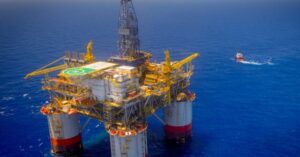
The picture of OPAP on the Athens Stock Exchange board yesterday did not resemble the well-known stable behavior of the stock. With the price slipping toward the €16 area and losses approaching 3%, the stock significantly weighed down the General Index, which recorded its second consecutive decline. The merger with Allwyn to create an international player with a more aggressive growth profile seems still to be causing investor unease. As a result, it closed at its lowest level since mid-January 2025. By contrast, for Metlen the market seems to be gradually digesting the group’s recent profit warning. Yesterday’s reaction of Metlen, up about 2%, pushed the stock above €36, at a time when the shipment of gallium packages to interested buyers in the U.S., Europe, and Japan is imminent. Finally, although it closed far from the day’s highs, HelleniQ Energy was at the center of buying interest, capitalizing on the positive climate created by the official signing of the contracts with Chevron for hydrocarbon exploration in Crete and the Peloponnese. The stock “celebrated” yesterday from the peak of €2.8 billion in market capitalization the official signing of the lease agreements between the Hellenic Republic and the Chevron–Helleniq Energy consortium, which concern the granting of exclusive rights for the exploration and exploitation of hydrocarbons in marine areas south of the Peloponnese and Crete. Motor Oil (-0.9% at €35.2) did not follow; it let HelleniQ Energy (which eventually closed up +0.33% at €9.055) enjoy its victory and, above all, its transformation from a simple refining company into an integrated energy player with high-level activities. As Europe seeks alternatives to Russian gas and Greece establishes itself as an energy hub, HelleniQ Energy secures 30% in 47,000 sq. km of marine areas without bearing the operator’s burden (which Chevron takes on with 70%). The €790 million in potential investments and the prospect of production in 2032–2035 create a long-term upgrade narrative. The broader message of yesterday’s ceremony, however, was that Greek companies can attract very large protagonists of international markets, such as Chevron, into strategic partnerships.
The new tax rate on the island and Bank of Cyprus’ payout
Tomorrow morning, before the start of the stock exchange session, the management of Bank of Cyprus will announce its 2025 results. Information indicates that the last quarter of 2025, due to extraordinary and non-recurring revenues, was much better than the third quarter. In addition, deleveraging of non-performing loans continued, as did the recovery of lending activity in Cyprus. A point of interest in today’s announcements will be the impact of the increased tax rates in Cyprus. The corporate tax rate in Cyprus, at the end of 2025, rose from 12% to 15%. The 15% taxation brings the Republic of Cyprus closer to the European average and aligns it with the global minimum tax framework promoted by the OECD. The management of Bank of Cyprus obviously realizes that these 3 additional percentage points in taxation burden the bottom line of the balance sheet, and for this reason it will announce that it will maintain its “70% payout” strategy. In simple terms, it will send the message that the bank will not “retain” the tax difference at the expense of its shareholders. Bank of Cyprus’ market capitalization exceeds €4.1 billion. (€9.38 +1.3%).
The new strategic orders of Andreas Jr. and Maria
The shipping market is watching with particular interest the gradual reactivation of strong Greek groups in the field of newbuildings, against the backdrop of optimistic forecasts for specific segments and shifting balances at Asian shipyards. The recent agreement of China’s Hengli Shipbuilding for the construction of 4+2 Capesize bulk carriers on behalf of Maran Dry Management, interests of Maria Angelicoussis, is not just another order. It is Maran Dry’s first move in the newbuilding sector since 2017, a fact that in itself sends a message to the market. The choice of Capesize is not random. The largest-capacity bulkers are showing strengthened prospects, as long-term estimates for iron ore and coal transport demand, combined with the limited orderbook relative to the active fleet, create expectations of healthy returns over time. When a group with the weight and historically conservative strategy of Angelicoussis returns dynamically to Capes, the market reads it as a sign of confidence in the upcoming cycle. At the same time, on the tanker front, activity is equally revealing. Minerva Marine placed an order for two 158,000 dwt suezmaxes, with possible delivery in 2028. The choice of delivery horizon clearly shows a long-term strategy: shipowners are not investing for today, but for the regulatory and freight-rate environment of the next three years. The conclusion for an experienced observer is twofold. On the one hand, Greek shipowners are reading the fundamentals positively in Capesizes and suezmaxes. On the other, they are carefully choosing the timing, investing in deliveries that will likely find the market in a fleet-renewal phase, with stricter environmental regulations and increased energy-efficiency requirements.
A steady vote of confidence in the Greek flag from the Angelopoulos brothers
At a time when several shipowners weigh registry choices with cold cost–benefit logic, Panagiotis and Giorgos Angelopoulos insist on sending a different message to the market. The Greek flag is not merely symbolism, but a strategic choice. The recent delivery of the newbuilding tanker AEGEAN FIGHTER by Arcadia Shipmanagement confirms this consistent choice. The modern Suezmax, with a capacity of 157,000 DWT, departed on February 12, 2026 for its maiden voyage from Hyundai Heavy Industries shipyards in South Korea, constituting the second delivery within the current seven-tanker shipbuilding program. However, what carries particular weight at the political–business level is not only the size or technical specifications of the vessel. It is the fact that, like all Arcadia vessels, AEGEAN FIGHTER raised the Greek flag. At a time when the competitiveness of registries is constantly under scrutiny, this choice acts as tangible support for the Greek registry. Behind the scenes in the shipping community, this stance is interpreted as a clear positioning in favor of maintaining a strong Greek footprint in the global fleet. It is no coincidence that Arcadia chooses to invest in ultra-modern vessels, ensuring that the Greek flag is associated with quality, technological superiority, and regulatory compliance.
Electricity is invisible, but the bet is burning
The CEO of HEDNO (DEDDIE), Anastasios Manos, described with almost technocratic bluntness what politically sounds simple: we plug ships into sockets and clean the air. In practice, however, each “socket” can draw as much electricity as a small city. And every abrupt on–off can blow the stability of the grid. Cold ironing, or the electrification of docked ships from shore, is neither a startup nor an app. It is transformers, substations, line reinforcements, investments of hundreds of millions. In Greece, 41 ports belong to the TEN-T network and 13 must install Onshore Power Supply (OPS) by 2030. Power needs exceed 600 MW. Simply put, we are talking about a “small PPC” within the ports. Europe already counts 23 of 51 major ports with installed capacity of 301 MW. The target of covering up to 90% of port calls is not only environmental. It is also geo-economic. Any port that cannot offer shore power risks losing routes, companies, competitiveness. At the port of Igoumenitsa, the contract between HEDNO and PARALOS S.A. for three supply points (two of 3 MVA and one of 0.5 MVA) shows that the project is entering the implementation phase. With 85% funding from the Connecting Europe Facility, the risk is limited. The technical burden, however, remains here. And this is where the political-business interest begins. HEDNO is calling for a unified implementation model, with the Distribution Operator holding the wheel: technical adequacy, safety, pricing transparency, coordination. In simple words? That cold ironing should not become a new field of chaotic contracting, with each port “plugging in” as it sees fit to a grid that does not forgive mistakes.
The shortlist of the 8 law firms
The Chambers Europe Awards is a multi-layered evaluation process of the legal deals completed by each major law firm in Europe. The process includes extensive research and evaluation by clients, colleagues, and competitors. Next May, in Madrid, candidate firms from across Europe will gather for the announcement of the winners by country. This year, the final shortlist for Greece includes eight major Athens law firms: Kyriakides–Georgopoulos (KG Law Firm), Potamitis–Vekris, Zepos & Yannopoulos, Karatzas & Partners, Bernitsas Law, Koutalidis Law Firm, Lambadarios Law Firm, and Lamnidis Law.
Funds’ new tactic is roll-up consolidation
For a long time, the government has been trying to persuade small entrepreneurs to merge voluntarily, with tax incentives and legislative facilitations. The market response has not been impressive. Recently, another method has appeared. Investment companies, well-known funds with deep pockets, are submitting attractive acquisition proposals. In recent months, pharmacies, small clinics, and small-to-medium commercial enterprises have been receiving approaches with valuations reaching even twice their official annual turnover. Funds target healthy, dynamic businesses with broad clientele, reputation, and a position in the local market. Their strategy is described as roll-up consolidation. They gather similar small units, create economies of scale, apply centralized management, and negotiate as a strong group with suppliers and banks. The result is the creation of new dynamic business entities that can borrow more cheaply, invest in technology, and even attract professional management. The obvious goal of investment capital is to sell each new business entity to a strategic investor or list it on the stock exchange. For current small-business owners, the proposal is attractive as it offers liquidity here and now, without the headache of negotiating with competitors and without the legal complications of corporate mergers. Many small entrepreneurs, exhausted from years of survival during the memorandum era, see an exit opportunity.
Behind the scenes of Hélène Rey’s official premiere at the Eurogroup
Many may have been surprised by yesterday’s participation of Ms. Hélène Rey in the Eurogroup meeting on the economic orientations of 2026. Reliable information from Frankfurt reports that the French professor at London Business School, invited as chair of the independent academic expert group of the G7 on global imbalances, is the absolute favorite for the position of Chief Economist of the European Central Bank when the term of Irishman Philip Lane expires. Ms. Rey appears to gather all the credentials: academic prestige, international recognition, and French nationality that balances the composition of the Executive Board even after the term of Christine Lagarde. Professor Rey introduced into international thought the concept of the “Global Financial Cycle” and has studied the “exorbitant privilege” of the dollar, capital flows, and financial crises after 2008. She has received a series of important international distinctions, holds a doctorate from the London School of Economics, has served at Princeton, and maintains close (and useful for Europe) ties with the Bank of England.
The U.S. two-year bond as… the Oracle of Delphi
There are many analysts and fund managers trying to guess Jerome Powell’s next moves based on movements in the U.S. two-year government bond. Their strategy is simple: the Fed currently keeps dollar interest rates at 3.5% to 3.75%. At the same time, the two-year bond stands around 3.4%, that is, below the Fed’s interest-rate range. According to these analysts, this small interest-rate difference means that the market expects more rate cuts, regardless of the Fed’s official announcements. Furthermore, despite the spread of Trump’s tariffs, the market does not appear to fear inflationary flare-ups—quite the opposite. If markets truly feared a new inflation explosion, the two-year would not be making new lows; it would be rising. The three-month U.S. Treasury bill remains higher than the two-year, and this—according to this group of analysts—means that today’s rate will not hold. It prices in a softer economy and a Fed that will ultimately be forced to respond. Fund managers combine this technical analysis with real events such as payment delays, stress among low-income borrowers, refinancing pressures in commercial real estate, and bankruptcies. All these together foreshadow a “forced” rate cut by the Fed.
Ask me anything
Explore related questions