





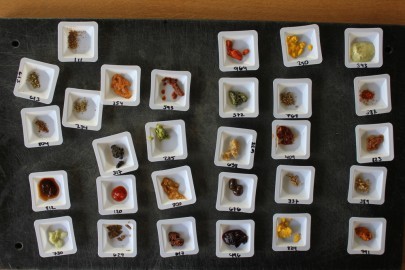
The thought of eating bugs, faeces or blood doesn’t sound very enticing, but according to a team of scientists in Denmark, they are a few of the things we should eat if we want our food to be both sustainable and healthy.
Set up on a boat in 2008 in the Danish capital of Copenhagen by Michelin-starred head chef René Redzepi and culinary entrepreneur Claus Mayer, the Nordic Food Lab’s initial goal was to acquire a deeper understanding of the flavors and gastronomical potential of Scandinavia.
Now housed in a lab at the University of Copenhagen, the Nordic Lab’s researchers have been travelling the world to piece together a holistic and sustainable approach to eating that is also delicious. Along the way, the Nordic Lab team has galvanized scientists, artists, chefs, designers and educators to join their cause.
“We try to work with every type of produce,” explains Roberto Flore, Head of Culinary Research and Development at the lab. “Insects, blood, jelly fish, fermented products that sometimes smell and develop mould, and the products look rotten. It’s about giving people more confidence with different produce and reconnecting with process of producing food. One of the main problems with sustainability is we are completely disconnected to food,” he says. “We don’t know how it is produced or to how handle certain products. That is a huge problem, and we risk losing knowledge collected over thousands of years in the next few decades. It’s important for us to document this knowledge and make it available to the world.”
Researchers are currently attempting to come up with ways of making edible insects, such as ants and larvae, more appetizing to the unintiated palate. They have also studied how animal blood could be used as an egg substitute for those allergic to it due to its coagulating properties. They have even gone so far as to suggest that faeces should be studied as a potential food source, arguing that young elephants, hippos, koalas, rabbits and pandas eat their mothers’ faeces in order to bolster their immune systems.
Flore points out that caterpillar faeces is already fermented and used to flavor rice in Japan, while kopi Iowak, digested by the civet, is the most expensive coffee in the world. He says that working at the lab has transformed how he views food given the exposure he has had on his travels around the world, which has opened his eyes to what is truly edible and inedible.
“At the moment, gastronomy that is high-quality and sustainable is only available for people who are in the position to buy luxury produce. We want good food available for everyone. That is our main goal. Embracing other cultures is one of our main aims. Recognising other cultures and someone else’s values teaches us something and changes our approach to food. We are living now in an international system and we should really recognise ourselves as world citizens.”
Source: Independent
Ask me anything
Explore related questions