×
GreekEnglish

×
  • Politics
  • Diaspora
  • World
  • Lifestyle
  • Travel
  • Culture
  • Sports
  • Cooking
Thursday
15
Jan 2026
weather symbol
Athens 14°C
  • Home
  • Politics
  • Economy
  • World
  • Diaspora
  • Lifestyle
  • Travel
  • Culture
  • Sports
  • Mediterranean Cooking
  • Weather
Contact follow Protothema:
Powered by Cloudevo
> World

Forget about the Space Race, there was a Drilling Race during Cold War…

...and the Russians drilled the deepest hole humans have ever made!

Newsroom May 19 09:07

We are all familiar with the Space Race between USA and USSR during the Cold War era, but there was another race that wasn’t so well known, a race that took place between the two nation’s greatest drillers.

The Americans and the Soviets began planning separate efforts to drill as deep as possible into the Earth’s crust. There wasn’t any specific reason or goal for these projects, they just wanted to know how far they could get. The drilling largely went unnoticed by the media because the world was focused on the Space Race.
m

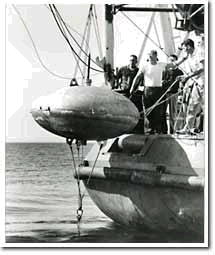
(One of the six submerged buoys used for dynamic positioning in Project Mohole. They were lowered to about 200 feet into a circular pattern. The CUSS I would then use sonar to manoeuvre itself in the centre of that circle)


The Americans started the “Project Mohole” which took place off of Mexico’s Pacific coast. They eventually stopped the project due to lack of funding but set an important precedent for future off-shore drilling programs.

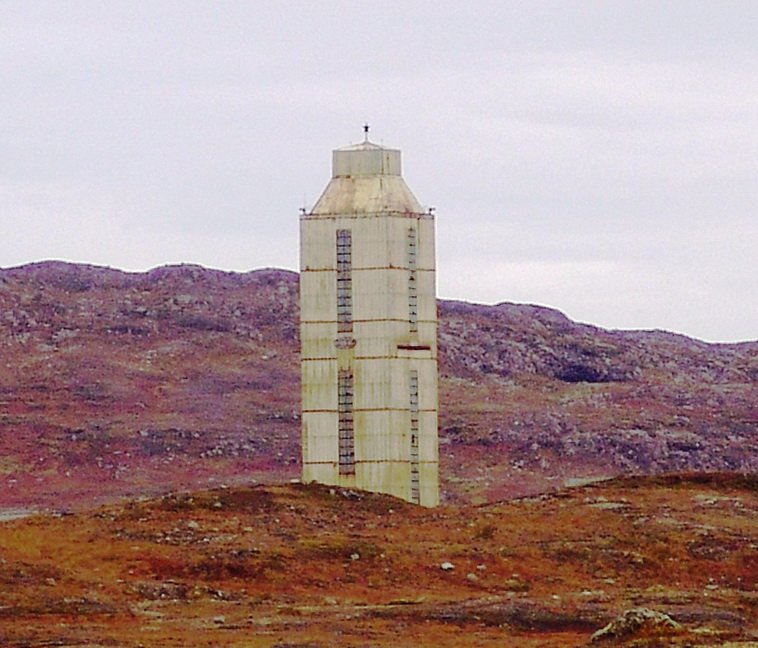
The Russians, after hearing about America’s attempt, started their own drilling operation on the Kola Peninsula. They drilled for 24 years between 1970 and 1994, and made the deepest hole ever created by humans – Kola Superdeep Borehole.
zniepre

(Kola Superdeep Borehole, 2007)


They started drilling the hole just to show the Americans that they were better, but the project actually ended up producing a significant amount of valuable scientific data. One of the most important discoveries was the detection of microscopic plankton fossils in rocks over 2 billion years old, found four miles beneath the surface. These microfossils represented about 24 ancient species and were encased in organic compounds which somehow survived the extreme pressures and temperatures that exist so far beneath the surface of the Earth.

Other interesting findings were the absence of a transition from granite to basalt at a depth between 3 and 6 kilometers below the surface as predicted by scientists, and the discovery of unexpected, large quantities of Hydrogen gas.
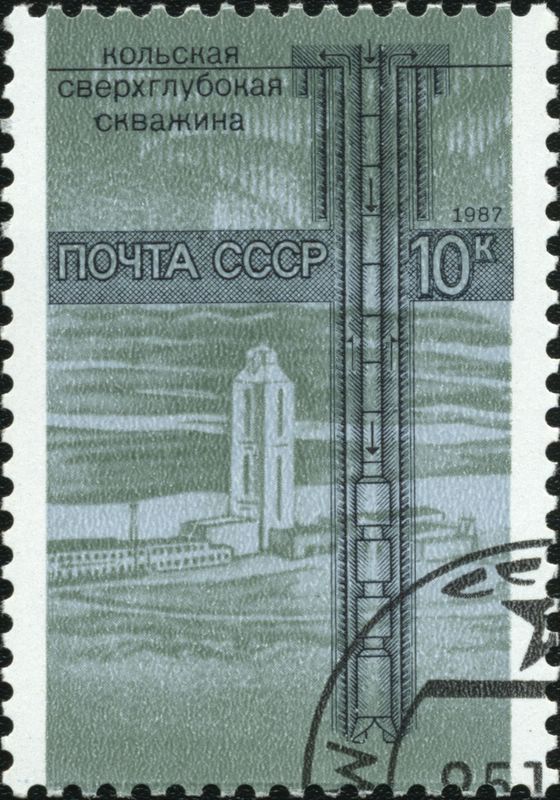
znie

(Kola Superdeep Borehole, commemorated on the 1987 USSR stamp)


>Related articles

Bloomberg: Trump’s son-in-law and Steve Whitcoff plan to meet with Putin in Moscow

“This time there will be no mistake”: Pro-government activists in Tehran remember Trump’s ear shot and threaten

Reza Pahlavi to the Iranian army: “Abandon the regime and protect the people”

After many years drilling, they reached 40,318 feet deep before they stopped. The project had to be abandoned because, at the hole’s maximum depth, temperatures skyrocketed to 356 degrees Fahrenheit, which was much higher than the 212 degrees Fahrenheit originally predicted. The drill was rendered useless at such temperatures.

The project was officially closed down in 2005, leaving only a rusted metal cap as a marker of its existence.

Source

Ask me anything

Explore related questions

#CCCP#Cold War#deep#drilling#earth#hole#russia#usa#USSR
> More World

Follow en.protothema.gr on Google News and be the first to know all the news

See all the latest News from Greece and the World, the moment they happen, at en.protothema.gr

> Latest Stories

“You think you are descendants of Plato and Aristotle, but you’re not” – Rama’s tirade against Greek journalist, watch video

January 15, 2026

“Aunt Pecu,” who lived outside all protocol: Who the unconventional and eccentric princess Irene was

January 15, 2026

High-tech fraud – SMS blaster attack: Bank data stolen using special equipment installed in a car’s trunk

January 15, 2026

Ballistic missile strike hits pier in Ukraine

January 15, 2026

Ursula von der Leyen from the Green Line: Pushing for a solution to the Cyprus issue is a priority

January 15, 2026

The ordeal of a 28-year-old Greek man in Australia: He went on holiday to visit relatives, was injured at a beach, and is at risk of quadriplegia

January 15, 2026

Princess Irene dies at the age of 83

January 15, 2026

Scientists uncover why the moon has a “two-faced” nature

January 15, 2026
All News

> Greece

“Aunt Pecu,” who lived outside all protocol: Who the unconventional and eccentric princess Irene was

Princess Irene, the younger sister of Queen Sofía of Spain, will be laid to rest at Tatoi on a date to be announced by the Spanish royal household

January 15, 2026

High-tech fraud – SMS blaster attack: Bank data stolen using special equipment installed in a car’s trunk

January 15, 2026

Ursula von der Leyen from the Green Line: Pushing for a solution to the Cyprus issue is a priority

January 15, 2026

Princess Irene dies at the age of 83

January 15, 2026

Commander Ioannis Kizanis leads Greece’s newest Frigate “Kimon”

January 15, 2026
Homepage
PERSONAL DATA PROTECTION POLICY COOKIES POLICY TERM OF USE
Powered by Cloudevo
Copyright © 2026 Πρώτο Θέμα