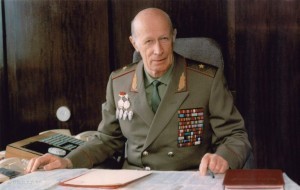
Yuri I. Drozdov, a Soviet superspy who played a role in key events of the Cold War, from Berlin to Kabul, and masterminded a mysterious network of K.G.B. operatives known as the “illegals,” died June 21 in Moscow. He was 91.
His death was announced by Russia’s foreign intelligence service, known as the S.V.R., a successor agency of the K.G.B.
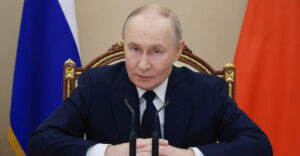
“General Drozdov devoted his life to serving the Motherland and enhancing the country’s national security,” President Vladimir V. Putin, who was a lieutenant colonel in the K.G.B., said in a statement on the Kremlin’s website.
At a 95th anniversary ceremony last month for a Russian foreign intelligence unit, Mr. Putin named General Drozdov a hero of what is known in Russia as illegal intelligence, which he said “helps identify and block external threats in a timely manner and protect our sovereignty and right to be a free and independent country.”
The agents overseen by General Drozdov were planted in other countries disguised as residents and lived there while making contacts and gathering information.
In his memoir, “No Fiction: Notes of the Chief of Illegal Intelligence” (2016), General Drozdov spoke of the psychological burden of a life of subterfuge. In an initial meeting with a Soviet illegal intelligence chief, he wrote, he was asked just one question: Would he be able to “make up” the life of another person?
“So many years have passed since then, but I remember this question,” he wrote. “It’s possible to ‘make up’ a life, but it is so difficult, it requires such knowledge.”
General Drozdov, who had been an artilleryman during World War II and reached Berlin with the Red Army, was fluent in German, having graduated from a military language institute in the 1950s. That skill became useful when he was offered a transfer from the military to the K.G.B. in 1956.
In his memoir, he described countering his wife’s objections — she feared the new job would destroy their family — by saying that the opportunity would make it possible “to see other countries, earn a bit more money and maybe solve the housing question,” referring to a critical shortage of adequate housing in the Soviet Union at the time.
In 1958, General Drozdov posed as a Silesian in Leipzig, then in Communist-controlled East Germany, and was concerned that he might slip up.
“I spent hours going around West Berlin, listening to the speech of Germans, taking in its emotional color, and tried to take on their manner of behavior,” he wrote. He attended lectures at a theater school and read everything he could find — even a brochure about the behavior of male visitors to the public toilet, to get a grasp of local vulgar humor.
In 1962, he played a key role in a famous exchange of captive spies between the Soviet Union and the United States.
The captured American was the military pilot Francis Gary Powers, who had been held for 21 months after his U-2 reconnaissance plane, operated by the Central Intelligence Agency, was shot down by the Soviets in 1960. In the United States, Vilyam Fisher, who went by the alias Rudolf Abel, had been seized by the F.B.I. and convicted of espionage in 1957.
General Drozdov, inspired by a nameplate saying “Doctor Drews J.” that he happened to see, took on the persona of Jurgen Drews, Abel’s purported German cousin. His interaction with Abel’s lawyer, James B. Donovan, led to the exchange of Abel and Powers on the Glienicke Bridge, between West Berlin and Potsdam in East Germany. (The episode was dramatized in the 2015 Hollywood movie “Bridge of Spies.”)
General Drozdov later served in China during the Cultural Revolution, and amid Sino-Soviet tensions. In 1975 he was sent to New York, where he worked undercover as the Soviet Union’s deputy representative to the United Nations.
He did not take kindly to betrayal. He described Arkady Shevchenko, the Soviet diplomat at the United Nations who defected to the United States in 1978, as “a Judas.”
In 1979, he was one of the commanders of Operation Storm-333 to overthrow Afghanistan’s potentially anti-Soviet president, Hafizullah Amin, which he described in his memoirs in dramatic and occasionally gruesome detail: The carpets of Amin’s Tajbeg Palace, he wrote, were “steeped in blood and sloshed underfoot.” The operation prompted General Drozdov to initiate the formation of the Vympel special forces unit with the blessing of Yuri V. Andropov, then the head of the K.G.B. and later the leader of the Soviet Union. The unit carried out secret combat operations everywhere, from the Middle East to Nicaragua.
General Drozdov had a “sweet spot” of a combination of technical skills including language ability, Mark Galeotti, a senior researcher at the Institute of International Relations in Prague and a specialist in Russia’s secret services, said in a phone interview.
“Patience is one of the key elements of a spy’s job,” Mr. Galeotti said. “The capacity to be self-effacing, not put themselves forward but actually let the mission run.”
Mr. Galeotti likened General Drozdov to a character out of fiction: the Soviet intelligence officer who spars with the agent George Smiley. He was, Mr. Galeotti said, probably the “closest that there really was to a figure like John le Carré’s Karla” as a “committed tradecraft professional.”
Yuri Ivanovich Drozdov was born Sept. 19, 1925, in Minsk. His father, Ivan, had been a czarist army officer who went over to the Bolsheviks after the Russian Revolution; his mother, Anastasia, was a typist.
General Drozdov and his wife, the former Lyudmila Yudenich, met when he was hospitalized briefly during World War II.
“All 35 years that I gave to intelligence, my wife was by my side,” he wrote. “She is able to keep silent and to wait and wait under great stress, depriving herself of a great deal due to my work.”
In one espionage episode, he recalled, she picked up a container of film for him at a dead drop because he was being followed too closely. She tossed it at him and said: “Take it. Now I know why you die of heart attacks.”
General Drozdov’s survivors include his wife and two sons, Yuri and Alexander. He also had three grandchildren and three great-grandchildren as of 2016, according to his memoir.
Back in Moscow, as the Soviet Union began to decline, General Drozdov became chief of the K.G.B.’s illegal intelligence directorate and continued training a new generation of illegals. In the early 1990s, after his retirement from active duty, he created a consulting company, Namakon, that provided security and logistics support for foreign businessmen.
“It was not a teacher, not a scholar, not a theoretician who spoke with us, but a professional practitioner, an architect and director of operations,” one trainee, Serguei Jirnov, wrote in a blog post. “Magic happened: History came to life.”
Ask me anything
Explore related questions