
×
GreekEnglish

×
  • Politics
  • Diaspora
  • World
  • Lifestyle
  • Travel
  • Culture
  • Sports
  • Cooking
Monday
12
Jan 2026
weather symbol
Athens 6°C
  • Home
  • Politics
  • Economy
  • World
  • Diaspora
  • Lifestyle
  • Travel
  • Culture
  • Sports
  • Mediterranean Cooking
  • Weather
Contact follow Protothema:
Powered by Cloudevo
> Economy

Eurobank unveils analysis on why Greece remains in memoranda programmes

The country’s path during the years of crisis was due to a series of other factors beyond debt sustainability

Newsroom August 24 11:35


The reasons why the Greek crisis was so profound and long-lasting, and why Greece was currently the only country that had yet to emerge from memoranda programmes, were the focus of a Eurobank analysis unveiled on Wednesday. According to the study’s authors, the country’s ability to service its debts could not alone explain the protracted loss of confidence in its prospects.

These were the conclusions of a study entitled “The cost of uncertainty” carried out by Eurobank’s Economic Analysis and Financial Markets Research division, supervised by Eurobank non-executive Chairman Nikolaos Karamouzis and the bank’s head of Group Strategy Anthony Kouleimanis.

The report noted that confidence in Greece’s prospects appeared to be returning for the first time since 2014, following eight years of memoranda programmes and a decade-long recession of unprecedented duration and depth. This reviving confidence was reflected by the country’s recent return to the markets after a three-year exclusion and the successful issue of a five-year state bond, the report noted.

Among others, the report highlighted that Greece had remained economically stagnant and stuck in a regime of memoranda, supervision and uncertainty for many years, despite carrying out a raft of reforms with an unprecedented social and economic impact and correcting many of the macroeconomic imbalances that had led to the crisis.

This raised a series of questions, according to the authors, about why Greece remained in this disadvantaged condition and why the essential macroeconomic adjustment had such a major social and economic impact.

“Why did financial markets but also citizens, business people and investors have doubts about the Greek economy’s course and its ability to overcome the crisis after so many years, in spite of the progress made in key macroeconomic and structural parameters? Why did markets ask for a higher risk premium in order to lend to us? Finally, why, when all the other countries forced into a memorandum regime have returned to growth, does Greece continue to move at a slow pace in this direction?”

>Related articles

Hardliners at the blockades put obstacles to dialogue with Mitsotakis – “We do not operate with ultimatums,” the government responds

Intervention of the Federation of Truck Drivers to the Ministry of Transport for the drivers’ working hours due to road blockades

Tax returns: AADE platform now live for filing separate tax declarations by spouses

According to the report’s authors, if debt sustainability was not seen as the only and perhaps not even as the main factor explaining the low credibility of Greek economic policy and the markets’ confidence in the country’s ability to exit the crisis, this meant that the current situation and the country’s path during the years of crisis was due to a series of other, interacting factors.

“The factors in question fuelled the low credibility of economic policy, the uncertainty and the limited confidence of the markets over time and, finally, the broader international distrust of all involved in the Greek affair,” the report said.

Source

Ask me anything

Explore related questions
#debt#debt relief#debt sustainability#ecb#ESM#eu#Eurobank#greece#greek economic recovery#greek economy#imf#markets
> More Economy

Follow en.protothema.gr on Google News and be the first to know all the news

See all the latest News from Greece and the World, the moment they happen, at en.protothema.gr

> Latest Stories

Coordination Committee of Thessaly’s “hardline” roadblocks meets; Trip to Athens for meeting with Mitsotakis in doubt

January 12, 2026

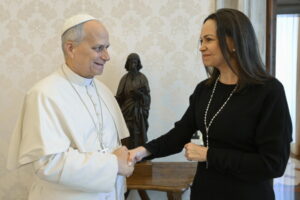
Maria Machado at the Vatican, a few days before she meets Trump

January 12, 2026

Hardliners at the blockades put obstacles to dialogue with Mitsotakis – “We do not operate with ultimatums,” the government responds

January 12, 2026

Winter sales kick off, which Sundays shops will be open

January 12, 2026

The local judicial authorities decided to detain the owner of the bar in Crans-Montana for three months

January 12, 2026

Elon Musk: Don’t save for retirement – It won’t matter

January 12, 2026

Intervention of the Federation of Truck Drivers to the Ministry of Transport for the drivers’ working hours due to road blockades

January 12, 2026

Tax returns: AADE platform now live for filing separate tax declarations by spouses

January 12, 2026
All News

> World

Maria Machado at the Vatican, a few days before she meets Trump

The Venezuelan opposition leader has been sidelined by Washington after the US intervention that overthrew Nicolas Maduro.

January 12, 2026

The local judicial authorities decided to detain the owner of the bar in Crans-Montana for three months

January 12, 2026

Ukraine: 35,000 households in Odessa are without electricity after a Russian drone attack

January 12, 2026

Bloomberg: Britain and Germany discuss the presence of NATO forces in Greenland

January 12, 2026

Who are the Basij militias who are spreading terror among protesters in Iran?

January 12, 2026
Homepage
PERSONAL DATA PROTECTION POLICY COOKIES POLICY TERM OF USE
Powered by Cloudevo
Copyright © 2026 Πρώτο Θέμα