

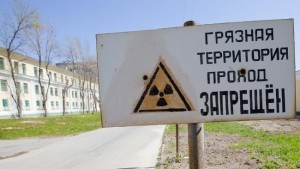
×
GreekEnglish

×
  • Politics
  • Diaspora
  • World
  • Lifestyle
  • Travel
  • Culture
  • Sports
  • Cooking
Sunday
18
Jan 2026
weather symbol
Athens 7°C
  • Home
  • Politics
  • Economy
  • World
  • Diaspora
  • Lifestyle
  • Travel
  • Culture
  • Sports
  • Mediterranean Cooking
  • Weather
Contact follow Protothema:
Powered by Cloudevo
> World

Russia reports radioactivity 986 times the norm after nuclear accident claim

Moscow says "extremely high" levels of ruthenium-106 discovered as Greenpeace urges inquiry into possible cover-up

Newsroom November 21 01:49

Russia’s meteorological service has confirmed “extremely high” concentrations of the radioactive isotope ruthenium-106 were found in several parts of the country in late September, confirming European reports about the contamination this month.

“Probes of radioactive aerosols from monitoring stations Argayash and Novogorny were found to contain radioisotope Ru-106” between September 25 and October 1,” the Rosgidromet service said.

The highest concentration was registered in Argayash, a village in the Chelyabinsk region in the southern Urals, which had “extremely high pollution” of Ru-106, exceeding natural background pollution by 986 times, the service said.

Greenpeace Russia on Monday called on Rosatom to open “an in-depth inquiry and publish the results about the incidents at Mayak”. “Greenpeace will send a letter asking prosecutors to open an inquiry into potential concealment of a nuclear incident,” it said in a statement.

In mid-October, Rosatom had issued a statement cited by Russian media outlets saying “in samples tested from September 25 to October 7, including in the southern Urals, no trace of ruthenium-106 was found, except in Saint Petersburg”.

Rosgidromet said on Monday the isotope was detected in Tatarstan and southern Russia, eventually reaching “all European countries starting in Italy and toward the north of Europe” from 29 September.

It did not point to any specific source of the pollution, but the Argayash station is about 30km (19 miles) from the Mayak nuclear facility, which in 1957 was the site of one of the worst nuclear disasters in history. Today Mayak is a reprocessing site for spent nuclear fuel.

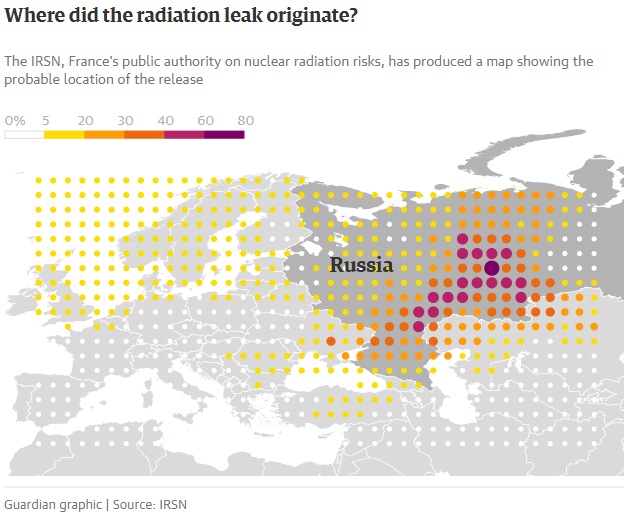
On 9 November, France’s Institute for Radioprotection and Nuclear Safety (IRSN) issued a report saying ruthenium-106 had been detected in France between 27 September and 13 October.

(Click to enlarge image)
ruth

It said the source of the pollution was probably an accident somewhere between the Volga river and the Ural mountains, adding that the concentrations measured in Europe were not a danger to public health.

Ruthenium-106 is a product of splitting atoms in a reactor, and is also used in certain medical treatments. It does not occur naturally.

>Related articles

Zelensky: If an agreement is reached, we are ready to sign even next week

Industry: Energy deadlock after Commission’s “no” to Italian pricing model

Hydrocarbon contracts in Parliament, Greece as an energy hub with Saudi Arabia and investments in the background

Russia’s nuclear corporation Rosatom said at the time that “radiation around all objects of Russian nuclear infrastructure are within the norm and are at the level of background radiation”.

France’s IRSN had said a nuclear reactor could not have been the source of the Ru-106 since other radioactive elements would also have been detected. It suggested instead a discharge from an installation linked to the nuclear fuel cycle or which produced radioactive materials.

Source: theguardian.com

Ask me anything

Explore related questions

#accident#announcement#energy#europe#France#leak#nuclear#russia#ruthenium-106#safety
> More World

Follow en.protothema.gr on Google News and be the first to know all the news

See all the latest News from Greece and the World, the moment they happen, at en.protothema.gr

> Latest Stories

War, diplomacy, or insurrection: What’s next in Iran

January 17, 2026

New tensions in the Middle East as Trump invites regional leaders to the Gaza Peace Council

January 17, 2026

Weather: A return to winter in the coming days – Cold and strong northerly winds – Kolydas’ post

January 17, 2026

A view of Nikolaos Stasinopoulos of Viohalco – The “enduring imprint” of Greece’s greatest industrialist

January 17, 2026

The horror of the “Tariff of the Dead”: how the Iranian regime prices the bodies of protesters

January 17, 2026

Mitsotakis on the Karystianou party: “There is a long distance between being the parent of a tragedy victim and being the leader of a political party”

January 17, 2026

Patras in carnival mode – This evening, the city’s official opening ceremony

January 17, 2026

Greenland as the first line ofdefense for the U.S. and NATO:

January 17, 2026
All News

> Greece

Weather: A return to winter in the coming days – Cold and strong northerly winds – Kolydas’ post

Winter tightens Its grip across Greece as cold spell persists

January 17, 2026

A view of Nikolaos Stasinopoulos of Viohalco – The “enduring imprint” of Greece’s greatest industrialist

January 17, 2026

Patras in carnival mode – This evening, the city’s official opening ceremony

January 17, 2026

Weather: Noticeable drop in temperature from today – Where it will snow and at which altitudes

January 17, 2026

President of Air Traffic Controllers: Another communications blackout possible in the near future

January 16, 2026
Homepage
PERSONAL DATA PROTECTION POLICY COOKIES POLICY TERM OF USE
Powered by Cloudevo
Copyright © 2026 Πρώτο Θέμα