×
GreekEnglish

×
  • Politics
  • Diaspora
  • World
  • Lifestyle
  • Travel
  • Culture
  • Sports
  • Cooking
Monday
12
Jan 2026
weather symbol
Athens 7°C
  • Home
  • Politics
  • Economy
  • World
  • Diaspora
  • Lifestyle
  • Travel
  • Culture
  • Sports
  • Mediterranean Cooking
  • Weather
Contact follow Protothema:
Powered by Cloudevo
> World

Diamonds from meteorite may be from lost planet!

Scientists concluded they were most likely formed by a proto-planet at least 4.55 billion years ago

Newsroom April 18 09:19

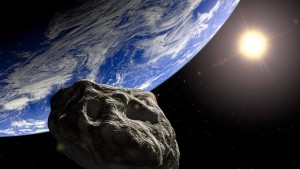
Fragments of a meteorite that fell to Earth more than a decade ago provide compelling evidence of a lost planet that once roamed our solar system, according to a study published Tuesday. Researchers from Switzerland, France and Germany examined diamonds found inside the Almahata Sitta meteorite and concluded they were most likely formed by a proto-planet at least 4.55 billion years ago.
The diamonds in the meteorite, which crashed in Sudan’s Nubian Desert in October 2008, have tiny crystals inside them that would have required great pressure to form, said one of the study’s co-authors, Philippe Gillet.
“We demonstrate that these large diamonds cannot be the result of a shock but rather of growth that has taken place within a planet,” he told The Associated Press in a telephone interview from Switzerland.
Gillet, a planetary scientist at the Federal Institute of Technology in Lausanne, said researchers calculated a pressure of 200,000 bar (2.9 million psi) would be needed to form such diamonds, suggesting the mystery planet was as least as big as Mercury, possibly even Mars.
Scientists have long theorized that the early solar system once contained many more planets – some of which were likely little more than a mass of molten magma. One of these embryo planets — dubbed Theia — is believed to have slammed into a young Earth, ejecting a large amount of debris that later formed the moon.
“What we’re claiming here,” said Gillet, “is that we have in our hands a remnant of this first generation of planets that are missing today because they were destroyed or incorporated in a bigger planet.”
Addi Bischoff, a meteorite expert at the University of Muenster, Germany, said the methods used for the study were sound and the conclusion was plausible. But further evidence of sustained high pressure would be expected to be found in the minerals surrounding the diamonds, he said.
Bischoff wasn’t involved in the study, which was published in the journal Nature Communications.

source: AP

Ask me anything

Explore related questions
#diamonds#germany#meteorite#planet#switzerland
> More World

Follow en.protothema.gr on Google News and be the first to know all the news

See all the latest News from Greece and the World, the moment they happen, at en.protothema.gr

> Latest Stories

Tax returns: AADE platform now live for filing separate tax declarations by spouses

January 12, 2026

Joint statements of Mitsotakis – Sánchez from Madrid (video)

January 12, 2026

Erich von Däniken, Swiss bestselling author who linked ancient civilizations to extraterrestrials, dies at 90

January 12, 2026

Ukraine: 35,000 households in Odessa are without electricity after a Russian drone attack

January 12, 2026

Greece prepares the first bond issue for 2026

January 12, 2026

Pierrakakis to Tasoula: Greece has increased authority in decision-making at the European level

January 12, 2026

The first snow fell on Parnitha, see impressive photos

January 12, 2026

Bloomberg: Britain and Germany discuss the presence of NATO forces in Greenland

January 12, 2026
All News

> Greece

The first snow fell on Parnitha, see impressive photos

From Crete to Serres in white many areas of the country - Snow in Parnitha

January 12, 2026

Passports: Deadline until January 31 for the old process — Which documents are being abolished

January 12, 2026

Ecumenical Patriarch comments on ‘bad omen’ after knife mishap at pie-cutting ceremony

January 12, 2026

Severe cold wave hits Greece: Snow expected – Weather in Attica

January 12, 2026

Urgent Weather Alert from the Hellenic National Meteorological Service: Severe cold wave from this afternoon – Areas where snowfall is expected

January 11, 2026
Homepage
PERSONAL DATA PROTECTION POLICY COOKIES POLICY TERM OF USE
Powered by Cloudevo
Copyright © 2026 Πρώτο Θέμα