





Scientists at the Nuclear Research and Consultancy Group (NRG) the Netherlands, are looking back to the 1970s to meet the energy needs of the future. For the first time since 1976, the NRG team is conducting experiments in thorium molten salt reactor technology that could lead to cleaner, safer nuclear reactors capable of supplying energy on a global scale.

In a world marked by strong political pressure to create a carbon-neutral economy, nuclear energy seems like an ideal alternative. Despite their reputation, nuclear reactors have a remarkable record for reliability, produce carbon emissions that are lower than even wind and solar when construction, operation, and life cycles are taken into account, and have the lowest fatality rate per watt of any competitor.
However, nuclear power does suffer from four major drawbacks. First, the uranium needed to power reactors is rare and expensive to process. Second, the technology to produce nuclear fuel can also be adapted to create weapons. Third, there is the danger in older reactor designs of an unlikely, but frightening catastrophic meltdown. And fourth, no one has come up with a long-term nuclear waste disposal strategy that is acceptable to everyone.
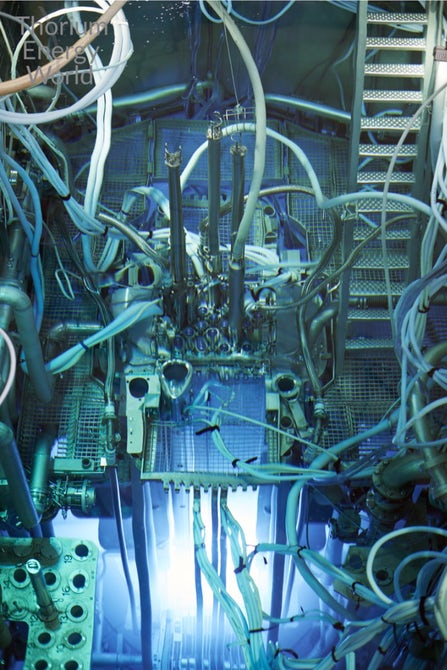
One way of overcoming these issues is to replace the uranium and the plutonium derived from it with a different fissile material. Since the 1940s, the most attractive alternative has been thorium. Unlike uranium, thorium is abundant and widespread, it doesn’t require the sort of elaborate enrichment process that uranium needs, and it isn’t easily made into bombs. In addition, thorium reactors have an inherently safe design that shuts down if the reaction goes out of control, and the radioactive waste products from thorium are relatively short lived – becoming harmless in only a matter of centuries.
The main obstacle is that thorium can’t achieve critical mass on its own. If you take enough uranium that’s been refined to fuel grade and stack it together, the amount of neutron radiation released will start a chain reaction that will cause the uranium atoms to split in a self-sustaining process. Unfortunately, thorium can’t do this, so thorium fuel must be mixed with uranium or subjected to an outside neutron source to start the reaction cycle.
From the 1960s until 1976, the Oak Ridge National Laboratory in the United States carried out reactor experiments using thorium fluoride dissolved in a molten salt instead of solid fuel elements. Though the results were promising, that approach was abandoned. Since then, India, China, Indonesia, and others have been experimenting with thorium reactors and have toyed with the idea of using molten salts as fuel, but it wasn’t until NRG took up the baton that the Oak Ridge approach was resumed.
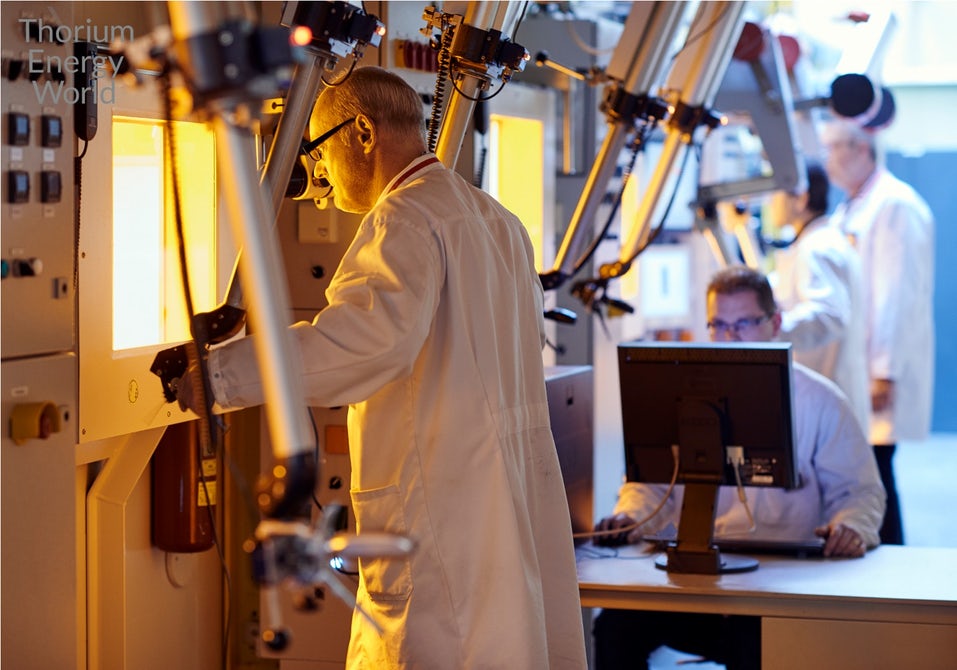
Working in cooperation with the European Commission Laboratory Joint Research Center, NRG’s SALt Irradiation ExperimeNT (SALIENT) is a multi-stage experiment aimed at turning Thorium Molten Salt Reactors (TMSR) into an industrial scale energy source with commercial possibilities.
According to advocacy group Thorium Energy World, the first phase of the experiment is focusing on removing the noble metals produced by the thorium fuel cycle. That is, the metals created in the steps in the nuclear fission process where the thorium transmutes into uranium before splitting to give off energy.
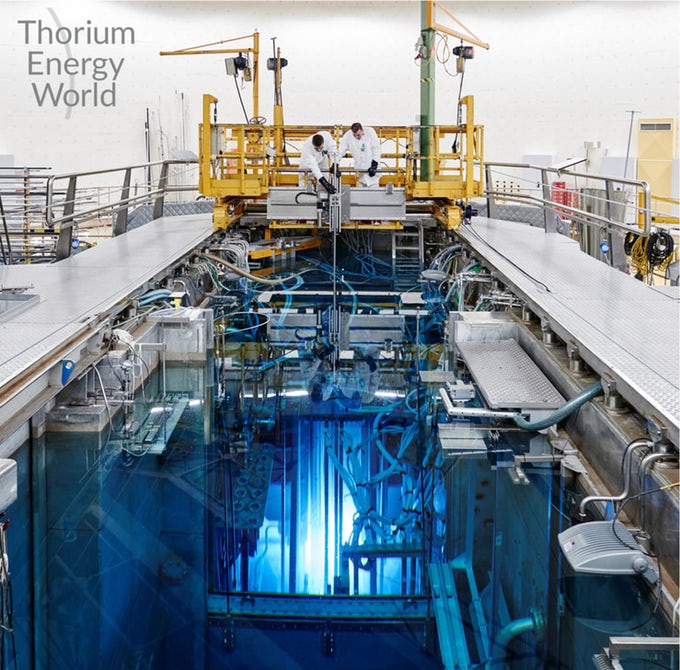
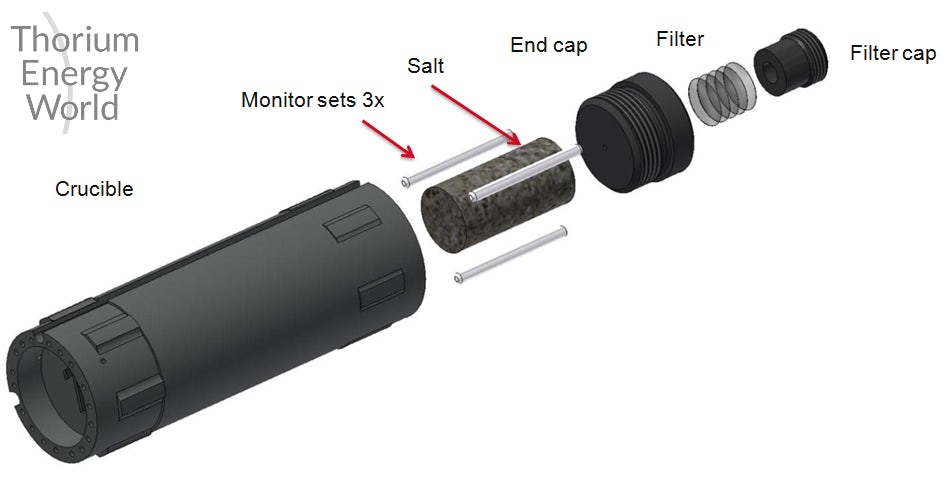
Once this has been achieved, the next step will be to determine how well commonplace materials used in the construction of TSRMs stand up to the corrosive high-temperature salt mixture or to find alternatives to keep down maintenance and operation costs. These might include an alloy of nickel called hastelloy, or Titanium-Zirconium-Molybdenum (TZM alloy).
The ultimate goal is to create TMSRs that are modular and scalable to meet local energy demand, yet provides 24-hour power that is available year round. In addition, using molten salts mean that refueling can take place while the reactor is still in operation, drastically reducing downtimes.
The video below introduces the SALIENT experiment.
Source: Thorium Energy World
Ask me anything
Explore related questions