




Turkey and the United States recently took an important step in the right direction by endorsing the road map for Syria’s Manbij province that will lead to the withdrawal of the People’s Protection Units (YPG) at a meeting between Foreign Minister Mevlüt Çavuşoğlu and Secretary of State Mike Pompeo in Washington.
Although it is regarded as a positive development for the normalization of ties, there are still some very important pending disputes between the two long-standing allies, including Turkey’s procurement of S-400s from Russia.
Senior Turkish and American officials have been in close dialogue and negotiations to overcome the troubled waters on ties for some time, with a special emphasis on two main issues: S-400s and the Manbij process.
Speaking to diplomatic sources who asked to remain anonymous due to the sensitivity of the issues, the Hürriyet Daily News has obtained important background information about closed-door talks between the two countries on these key matters. They have engaged in hectic diplomacy in the last few months at almost every level, with the last one being between Çavuşoğlu and Pompeo on June 4.
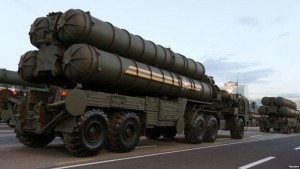
One track of this Turkish-American diplomacy was focused on Turkey’s bid to augment its air defense with the sophisticated Russian-made S-400 anti-ballistic missile systems. The U.S. has long been against this procurement for three main reasons.
First, it is against NATO’s plans to further isolate and deter Russia. A bill legislated at the U.S. Congress in 2017 imposes sanctions on countries and companies who engage in contracts to purchase Russian weaponry. Second, there are concerns that this deployment would endanger the flights of NATO aircrafts, particularly F-35s that are also on Turkey’s procurement plans from the U.S. Third, there are trade concerns that prioritize the sale of U.S.-made Patriot air defense systems to Turkey and other allies.
Sanctions will be retaliated
Talks between Ankara and Washington on S-400s were therefore shaped around these three concerns. The main U.S. demand from its ally was the cancellation of the purchase of S-400s on the grounds that it could trigger sanctions on Turkey. Turkish officials firmly rejected this call, stressing that these systems will be bought and deployed because Turkey needs them.
“All countries surrounding us have missile systems. Imagine if, for example, relations with Iran deteriorate over Syria and they launch missiles on us. How Turkey will be able to protect itself?” was the question posed to American officials.
They also denounced threats imposed on Turkey, making clear that “any sanctions on Turkey will not be left unanswered.”
Following Turkey’s firm stance on the purchase of these systems, U.S. officials hinted that “Turkey should not use the S-400s even if it does buy them from Russia,” while Turkish diplomatic sources said this was not a realistic expectation.
‘Let’s work together’
Having dismissed calls for the cancellation, Turkey suggested joint work with the U.S. to look into potential consequences of the deployment of S-400s and to address U.S. concerns on the safety of NATO aircrafts.
In talks with U.S. officials, Turkey made clear its sensitivity in not putting NATO allies’ aircrafts in danger through the weapon systems it acquires from non-NATO sources. They also stress that it has not opted for a nine-month quick delivery option offered by Russia.
“If we had accepted a nine-month delivery option then we would have no control on the use of S-400s. They would be used only by Russian experts, as national software would not be ready to be uploaded. Instead, we have chosen the 19-month option so that we could prepare our technical works and use them under fully Turkish control. We are very sensitive on this,” officials stated.
Trump offers Patriots
The third aspect of Turkish-American conversations was about the latter’s revisited attempts to sell Patriot air defense systems to Turkey in place of the S-400s.
U.S. President Donald Trump was as direct as possible in trying to convince President Recep Tayyip Erdoğan that the U.S. was ready to sell Patriots right away, after his counterpart complaint that previous administrations introduced difficulties in front of Turkey on this purchase. In talks on Patriots, Turkey said it could consider procuring these systems from the U.S. on the condition that the administration could assure congressional approval.
Three-stage road map for Manbij
The second main topic between Turkey and the U.S. was the Manbij road map. Talks had been delayed due to the replacement of Rex Tillerson by Mike Pompeo as secretary of state. However, diplomatic sources underline that the road map endorsed on June 4 between Pompeo and Çavuşoğlu was not much different the version agreed with Tillerson.
The road map reportedly consists of three stages starting from June 4: In the first 10 days, both countries’ experts, officers, and intelligence institutions will conduct initial preparations for the implementation of the road map. From the 11th to the 30th day, preparatory talks will be held to shape the modalities of the withdrawal of YPG troops from the province as well as on how the security of the city will be provided. On the 31st day, in early July, the withdrawal will begin and the entire process will be terminated within 90 days after June 4. This includes the establishment of a local government.
US sought delay on YPG pull back
Diplomatic sources told that U.S. wanted a six-month withdrawal process instead of three months. But this proposal has not been accepted by Turkey as it could undermine the road map. Another demand from the U.S. was to introduce this road map to the relevant bodies for its ratification. Turkey has opposed this amid concerns that congressional approval could never come and therefore the road map would never be implemented.
One important question was about the motives of the U.S. in endorsing this road map, despite the expectation that its cooperation with the YPG will continue afterwards. According to sources, there are two main drivers behind the endorsement. The first was about a growing concern in the Washington that the U.S. has been losing its main ally in the region. Sources recalled that Turkey made clear its counterpart that ties risk to be broken if U.S. continues its support to the YPG. This message has found its place, they stress.
The second is more important. Many U.S. officials, including President Trump, were very concerned about the possibility of an armed conflict with Turkey because of the situation in Manbij. Sources said Trump raised this concern in one of his conversations with Erdoğan, who told him that Turkey was primarily concerned with YPG militants rather than U.S. troops.
Source: hurriyetdailynews
Ask me anything
Explore related questions