

×
GreekEnglish

×
  • Politics
  • Diaspora
  • World
  • Lifestyle
  • Travel
  • Culture
  • Sports
  • Cooking
Friday
16
Jan 2026
weather symbol
Athens 14°C
  • Home
  • Politics
  • Economy
  • World
  • Diaspora
  • Lifestyle
  • Travel
  • Culture
  • Sports
  • Mediterranean Cooking
  • Weather
Contact follow Protothema:
Powered by Cloudevo
> World

How Jesus died: Extremely rare evidence of 2.000-year-old Roman crucifixion discovered (PHOTO)

The discovery marks only the second time direct evidence of the practice has been found

Newsroom June 8 06:36

The 2,000 year old corpse of a man buried in northern Italy shows signs he may have been nailed to a wooden cross and crucified in the same manner as the Bible describes Jesus Christ died.

Although crucifixion in the Roman Empire was a common form of capital punishment, the discovery marks only the second time direct evidence of the practice has been found, reports Live Science.

The remains were discovered near Venice in 2007 but a new study by researchers at two universities in Ferrara and Florence reveal tell-tale, albeit inconclusive, signs the man had been nailed to a cross.

The study revealed a lesion and unhealed fracture on one of the heel bones suggesting his feet were nailed to a cross, but the skeletal remains were in poor condition and the other heel bone is missing.

The researchers were unable to find evidence the man’s wrists were nailed up in the same way Jesus was executed. However, his arms may have been tied to the cross using rope, another method common at the time.

“A depressed, unhealed fracture in the heel bone suggested a metal nail had been driven through it, from the inside to the outside of the right foot, either directly onto the wood of a cross or into a wooden footrest attached to a cross,” reports Live Science.

Medical anthropologist Emanuela Gualdi, lead researcher in the study, said, “We found a particular lesion on the right calcaneus [heel bone] passing through the entire bone.”
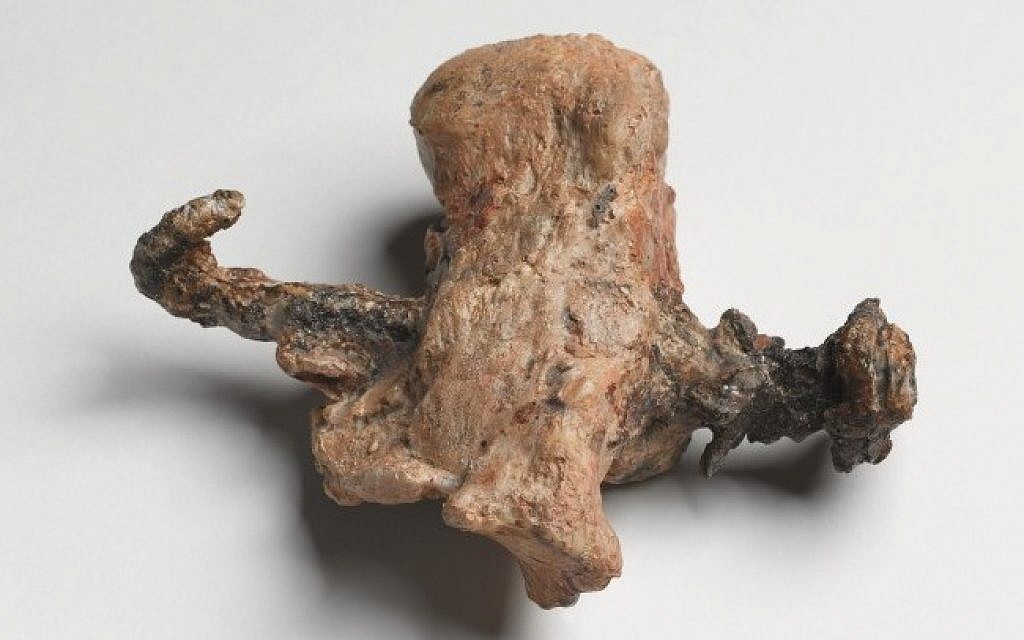
Heel-bone-and-nail-from-the-ossuary-of-‘Yehohanan-son-of-Hagkol”-Jerusalem-1st-century-CE-1024x640

(Nail through a heel bone found in 1968)

The body was found about 25 miles southwest of Venice during an excavation before workers prepared to lay a pipeline. The researchers published their findings on April 12 in the journal Archaeological and Anthropological Sciences.

Genetic testing showed the short, slim man was between 30 and 34 years old when he died and was buried directly in the ground, rather than the usual Roman burial method of being placed in a tomb or accompanying the body with goods and artifacts.

The nature of the burial and his slight stature suggests the man may have been a malnourished slave. The Romans learned crucifixion from the Carthaginians and used it as a form of punishment for over 1,000 years until Emperor Constantine banned the practice in the 4th Century A.D.

>Related articles

“All cash”: Netflix is preparing a strategic move to accelerate its $83 billion deal with Warner Bros.

Why Gen Z is returning to religion: what new research in the United Kingdom shows

Natalia Kapodistria, the last descendant: “The film was extraordinary — It took my breath away”

The only other time evidence of a crucifixion has been discovered occurred in Jerusalem in 1968. During an excavation archeologists found a 7-inch-long metal nail driven through the heel bone of a body found in a tomb. The nail was attached to a piece of olive wood.

Despite the large number of crucifixions that occurred during the time, evidence is hard to come by because metal nails were often salvaged after death, the remains are often in poor condition, and the type of lesions usually caused bones to easily fracture, making scientific interpretation of the injuries more difficult.

Source: dangerous

Ask me anything

Explore related questions

#agrophotovoltaics#archaeology#christianity#crucified#crucifixion#culture#discovery#evidence#excavations#history#israel#italy#Jesus Christ#religion
> More World

Follow en.protothema.gr on Google News and be the first to know all the news

See all the latest News from Greece and the World, the moment they happen, at en.protothema.gr

> Latest Stories

Rama persists after rant at Greek journalist and questions the link between Greek speakers and Plato and Aristotle

January 16, 2026

CIA chief in Venezuela meets with Rodriguez

January 16, 2026

Less alcohol and lower speeds with the new Highway Code and strict fines

January 16, 2026

The historic cafes of Athens: 12 legendary hangouts lost to time

January 16, 2026

Why seasonal flu is so “aggressive” this year: An infectious disease specialist from “Sotiria” explains the two main causes

January 16, 2026

Mitsotakis attends the inauguration of the renovated Emergency Department at Red Cross Hospital

January 16, 2026

Where insects go in winter

January 16, 2026

Zelensky: If an agreement is reached, we are ready to sign even next week

January 16, 2026
All News

> Greece

Less alcohol and lower speeds with the new Highway Code and strict fines

Overall reduction in violations by 27% during the holiday period – A notable decline in high-risk offenses, such as driving under the influence of alcohol, which fell by 23%

January 16, 2026

Why seasonal flu is so “aggressive” this year: An infectious disease specialist from “Sotiria” explains the two main causes

January 16, 2026

Study in Greece: International students apply for a place in Greek universities through a single platform

January 16, 2026

Users on X respond to Rama’s comments on whether modern Greeks are descendants of the ancient Greeks

January 16, 2026

Cold wave from Ukraine to hit Greece: Temperatures drop to 10°C, Gale-Force winds in the Aegean and Ionian Seas

January 16, 2026
Homepage
PERSONAL DATA PROTECTION POLICY COOKIES POLICY TERM OF USE
Powered by Cloudevo
Copyright © 2026 Πρώτο Θέμα